African wild dog populations are continuing to decline due to habitat loss and fragmentation, conflict with humans, and infectious diseases that are spread by domestic animals.
Join a creative community focusing on a unique animal each month.
FaunaFocus releases a new FaunaFact every single day! These bite-sized bits of information are interesting facts paired with a unique image of that animal.
African wild dog populations are continuing to decline due to habitat loss and fragmentation, conflict with humans, and infectious diseases that are spread by domestic animals.

African wild dogs cooperate in caring for young, wounded, and sick pack members and will regurgitate hunted food for them.
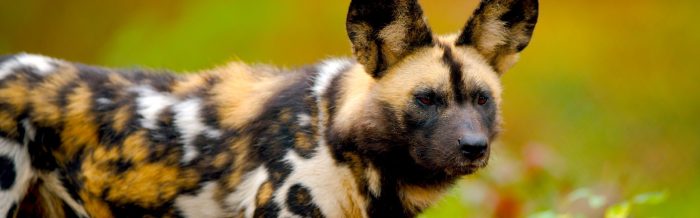
The African wild dog is known by several different common names including hunting dog, hyena dog, painted wolf, ornate wolf, and Mbwa mwilu in Swahili.
African wild dogs are generalist carnivorous predators and mostly hunt medium-sized antelope that are about twice their weight or larger, such as impala, kudu, gazelle, and wildebeest.
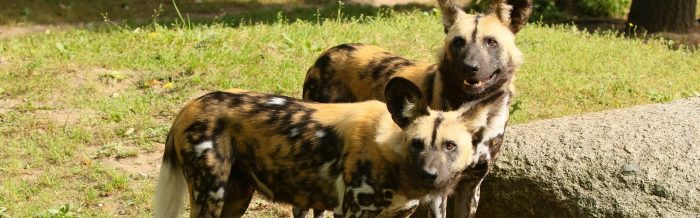
Each African hunting dog pack has a dominant monogamous breeding pair that prevents subordinates from breeding.
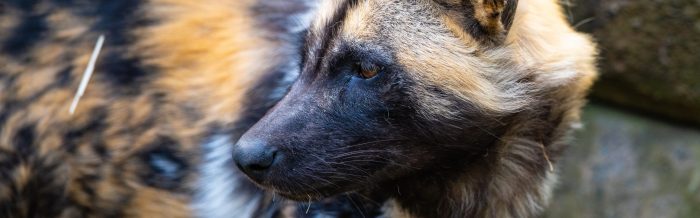
The African wild dog's scientific name, Lycaon pictus reflects the color of its spotted pelage and translates to painted or ornate wolf.
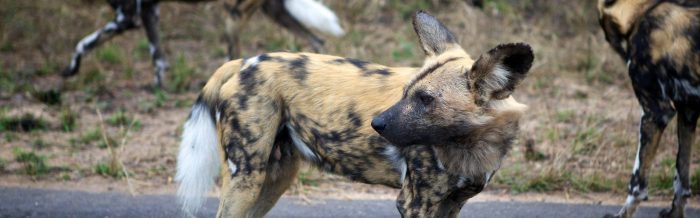
African wild dogs are social animals that form packs of up to 40 members, with an average of 7-15.
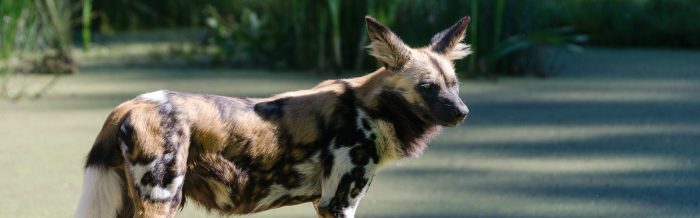
African wild dogs inhabit forests, savannas, shrublands, grasslands, and even deserts with abundant prey, permanent water sources, and a low concentration of lions and hyenas.

Because African wild dogs rely on their sight to hunt, they are primarily diurnal, hunting in the morning and early evening, and will only hunt at night if there's a bright moon.
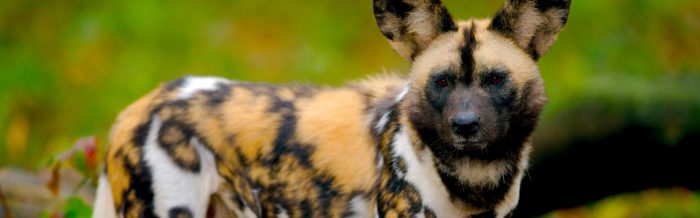
Although the African wild dog is genetically diverse, five subspecies are generally recognized but are not universally accepted.
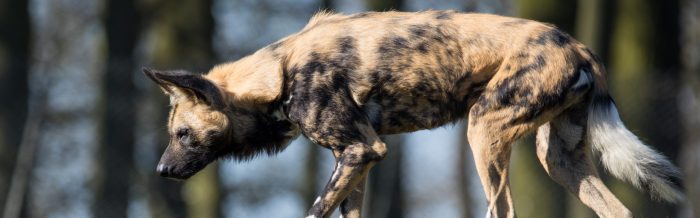
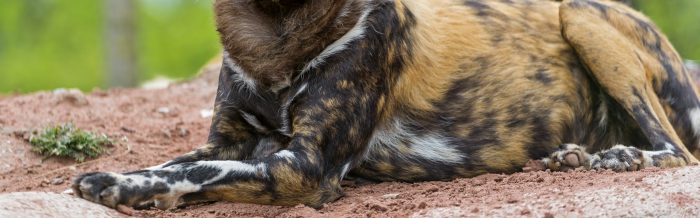
Each African wild dog has a uniquely patterned coat of irregular reds, browns, black, yellows, and whites, different from any other dog.
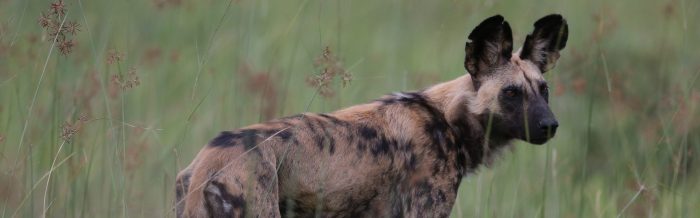
African wild dogs do not generally exhibit sexual dimorphism and are about the same size as a German shepherd dog with large, rounded ears, a thin body, and long, muscular legs.
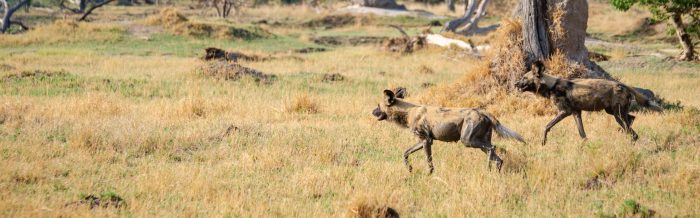
African wild dogs are cooperative hunters and hunt in packs led by the alpha male.
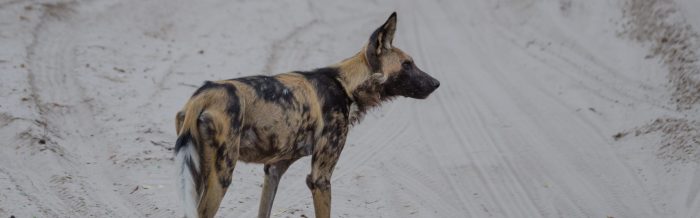
African wild dogs were once found throughout most of Africa, but are now more fragmented and mainly restricted to Namibia, Botswana, Mozambique, Zimbabwe, Swaziland, and the Transvaal.

African wild dogs have unique social concerns and structures within their packs and have separate dominance hierarchies for males and females.
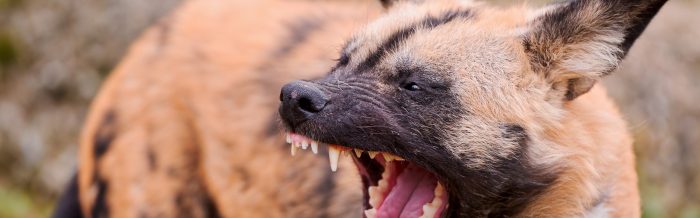
Because of their names, African wild dogs are often misidentified, thought to be dogs, wolves, or even hyenas, when actually categorized in their own genus.
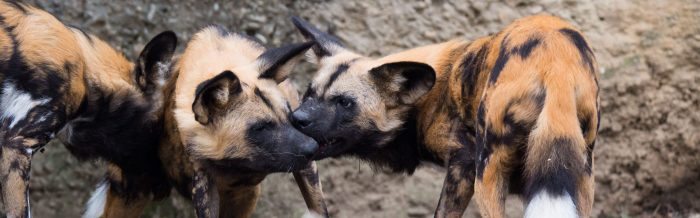
African wild dogs are not aggressive except for occasional fights between a dominant female and a subordinate female over breeding rights.
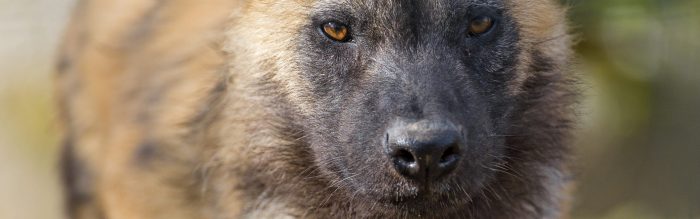
With only 6,600 individuals left, the African wild dog is Africa's second most endangered carnivore after the Ethiopian wolf.
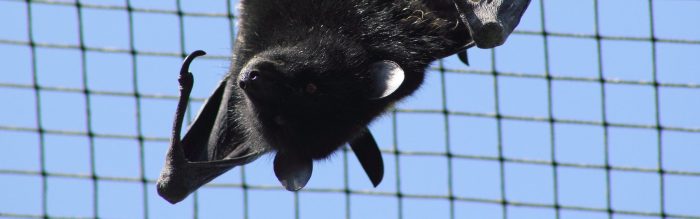
The Conservation Action Plan for Livingstone’s Flying Fox has been adopted by the government of the Union of the Comoros and is just one of many programs intended to help the Livingstone's flying fox.
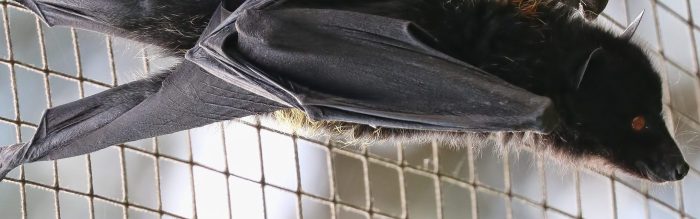
The generation length of the Livingstone's flying fox is unknown, but is estimated to be 8.1 years.
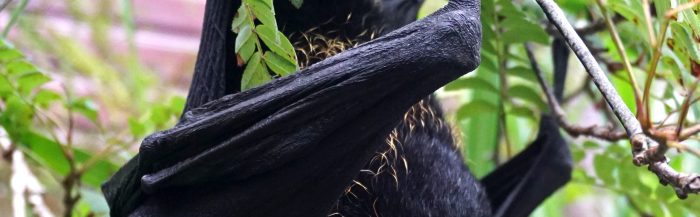
The continued loss of large areas of foraging habitat in the lower parts of the Livingstone's flying foxes elevational range could result in seasonally restricted food availability.
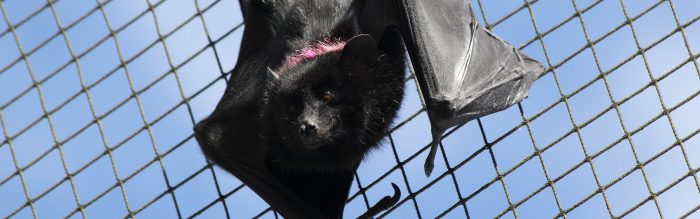
The Livingstone's flying fox receives the highest level of legal protection available within the Union of the Comoros, "integrally-protected species" and is listed on Appendix II of CITES.
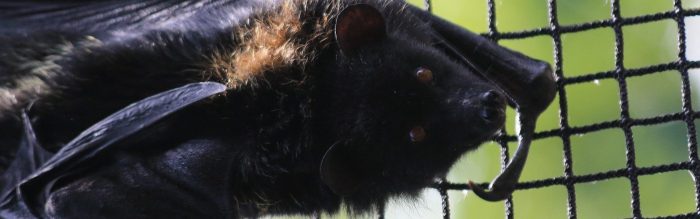
Because the Livingstone's flying fox's small population is restricted to such a limited range, the species is susceptible to single threatening processes, like cyclones, that could rapidly affect its entire range.

Because of their thermal sensitivity, Livingstone's flying foxes roost near rivers and other humid environments, but the loss of forests has resulted in the drying of nearly all rivers on Anjouan and many on Mohéli.

After mating, male Livingstone's flying foxes will leave the female to raise and care for the young, weaning them for 4-6 months.

Over the past 20 years, the Livingstone's flying fox's habitat, the Comoros, has lost 75% of its remaining forests, the fastest rate of any country in the world.
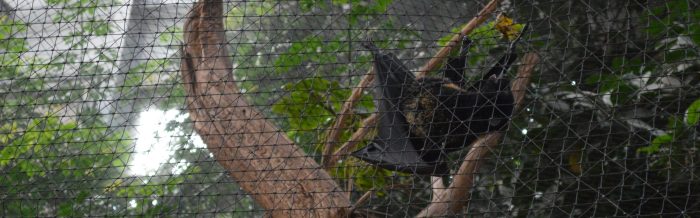
The Livingstone's flying fox can be long-lived in captivity, but its longevity isn't well-documented and is estimated to be 15-30 years based on other Pteropus species.
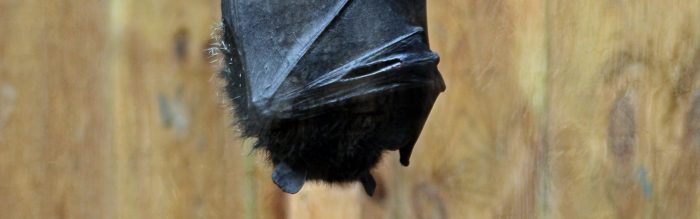
Although preyed on by arboreal snakes and raptors, the Livingstone's flying fox's primary predators are humans, both for food and as a secondary result of forest destruction.
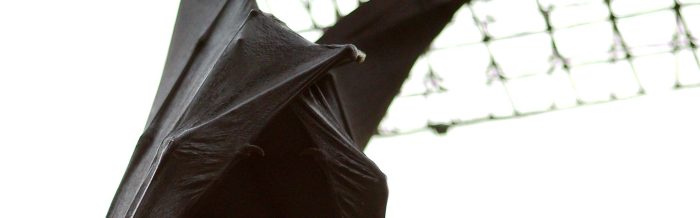
Although the Livingstone's flying fox does not occur in any protected areas, critical roosting habitat at 7 vital roost sites has been identified as a key goal in a conservation action plan.

The Livingstone's flying fox has not been recorded in low elevations in the past 5 years and has retreated to higher elevations as nearly all of its native lower-elevation forests have been lost to habitat change.
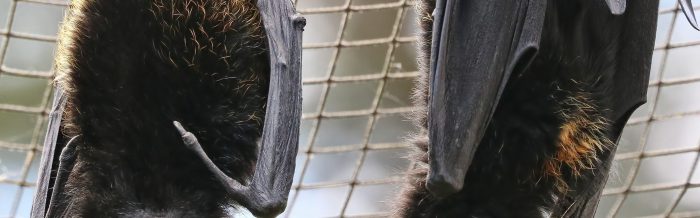
Livingstone's flying foxes breed from January-June and give birth to a single young in July-October after a gestation of 4-6 months.

Global climate change could negatively affect the availability of suitable roosting habitat for the Livingstone's flying fox.

There is no information on the Livingstone's flying fox's home range, but it's known to be non-migratory.