Livingstone's flying foxes prefer to roost and forage in emergent trees, primarily on steep-sided valleys with southeast facing slopes, near ridge tops and in areas generally associated with dense natural vegetation.
Join a creative community focusing on a unique animal each month.
FaunaFocus releases a new FaunaFact every single day! These bite-sized bits of information are interesting facts paired with a unique image of that animal.
Livingstone's flying foxes prefer to roost and forage in emergent trees, primarily on steep-sided valleys with southeast facing slopes, near ridge tops and in areas generally associated with dense natural vegetation.

Like other pteropodids, Livingstone's flying foxes are nocturnal, active in the evening and at night when foraging for fruit.

There is an active captive-breeding program for the Livingstone's flying fox that has increased the captive population from 17 to 59 individuals across four different institutions.
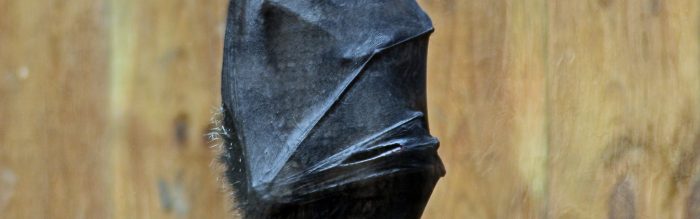
Unlike other bats in the Comoros, the Livingstone's flying fox is not normally hunted for food, possibly due to cultural taboos or the bat's inaccessible roosting areas.
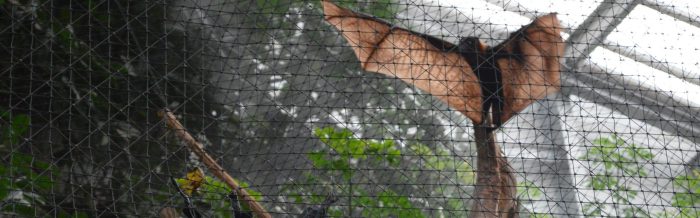
Unlike other nocturnal bats, Livingstone's flying foxes are capable of soaring on air thermals and glide, rather than fly directly.
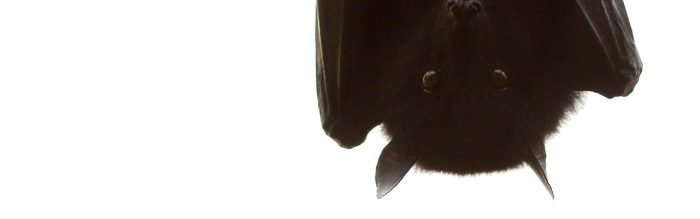
The Livingstone's flying fox is "Critically Endangered" due to serious population decline and an 80% habitat loss over the past 3 generations, caused by deforestation, construction, and agriculture.

Livingstone's flying foxes are polygynous, but females will mate with more than one male throughout their lifetimes.

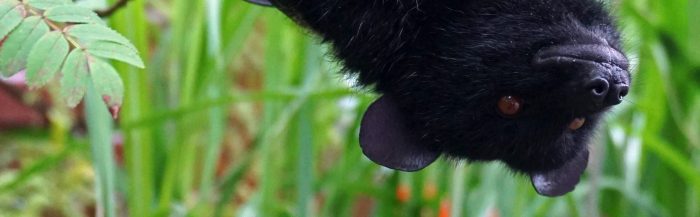
The Livingstone's flying fox's black and tawny fur, rounded ears, and red-orange eyes distinguishes it from other pteropodids.
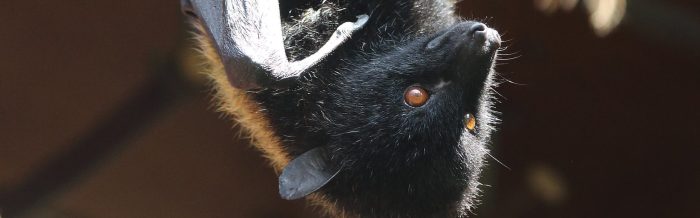
Despite what some may think, the Livingstone's flying fox is not blind and actually has good vision.
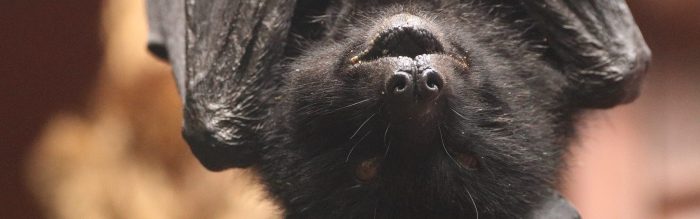
Livingstone's flying foxes are one of the most endangered bat species, with 400-1,300 remaining individuals, and may become extinct within 10 years.

Like most mammals, Livingstone's flying foxes often use vocalizations and chemoreception to communicate.

Livingstone's flying foxes are important members of their native ecosystems, helping to disperse fruiting tree species, pollinate plants, and ultimately regenerate forests.
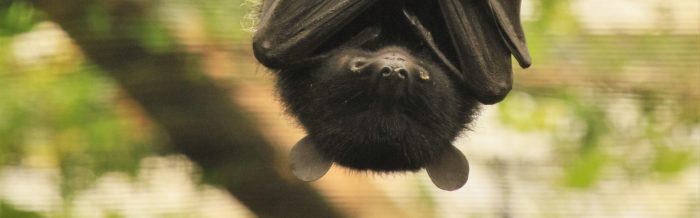
The Livingstone's flying fox is endemic to the islands of Anjouan and Mohéli of the Union of the Comoros island chain, just off the coast of Africa.
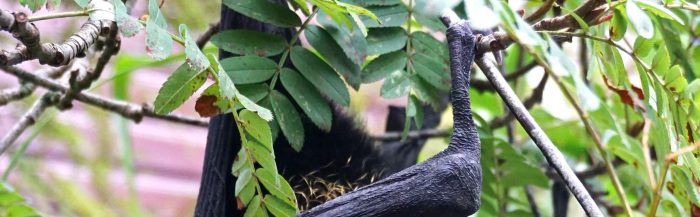
During the rainy season when more food is available, Livingstone's flying foxes feed on a variety of fruits, but during the dry season, they eat selectively and mostly rely on the giant-leaved fig tree.
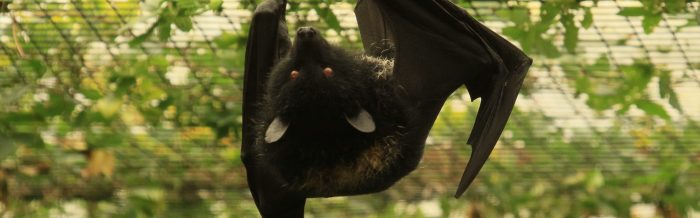
Livingstone's flying foxes are frugivorous herbivores and feed on a large variety of fruits, as well as nectar and leaves.

Livingstone's flying foxes are social and form groups of 15-250, called harems or colonies, in which they roost and forage.
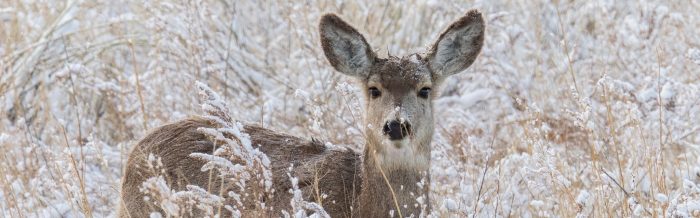
Because of their acute hearing and excellent binocular vision, mule deer specialize in detecting danger long-range and can quickly detect and visually track another animal from as far as 600 meters away.
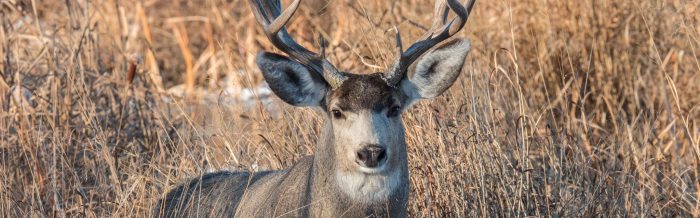
To counter agricultural development, rangeland conversion, mining, road and highway construction, and the development of housing tracts, many government agencies have purchased critical areas to maintain for mule deer.
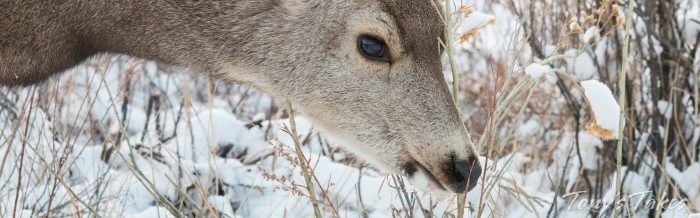
The mule deer's most urgent threat is Chronic Wasting Disease (CWD), a transmissible spongiform encephalopathy (TSE), but they are also threatened by high predator populations, competition with livestock grazing, and human-related habitat alterations.
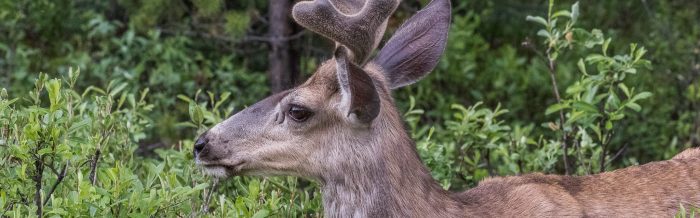
Both male and female mule deer experience parallel growth during their first year until males exceed females in body weight; chest girth; neck circumference; body, head, hindfoot, and hoof length; cranial breadth; and shoulder height.
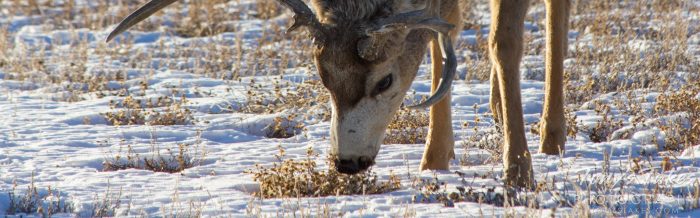
The mule deer is a target for various viral, bacterial, and parasitic diseases such as gastrointestinal nematodes, parasitic meningeal worms, neurologic disease, and foot-and-mouth disease.
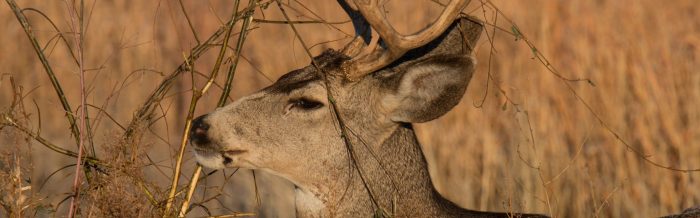
Mule deer communication is facilitated by five integumentary glands which produce specific pheromones that elicit specific reactions.

Mule deer weigh 2-5kg at birth, affected by litter size and sex as males are heavier than females.
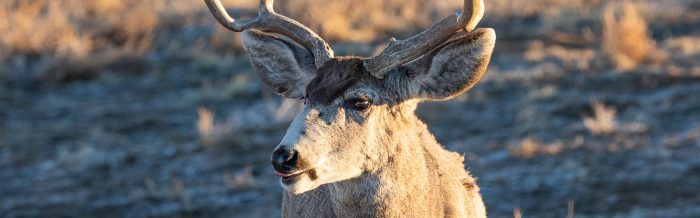
Although mule deer are "Least Concern" and not in need of conservation action, the Cedros Island subspecies is "Vulnerable" and in danger of becoming extinct because its densities are low and poaching and predation by feral dogs are high.
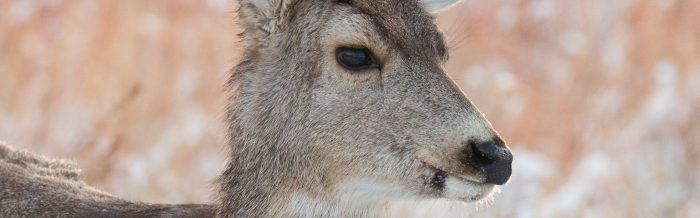
Mule deer can give birth to 1 or 2 young, but 1st or 2nd time mothers most often have a single fawn.
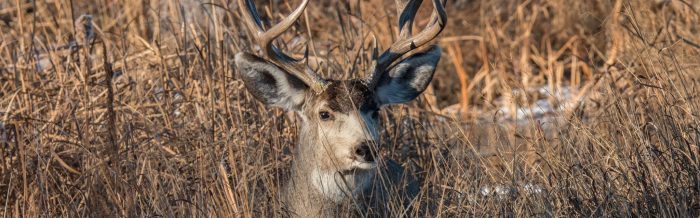
Mule deer have several distinct strategies for avoiding predators and may choose to hide or move into cover and cautiously outmaneuver the predator.
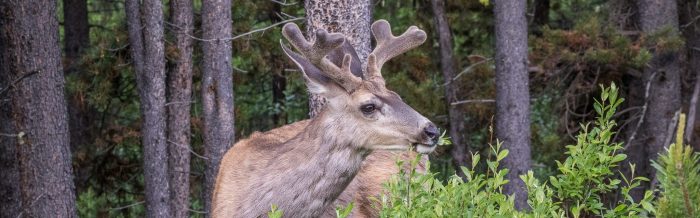
Douglas fir and Ponderosa pine are of major economic importance for commercial timber, however, these trees are browsed heavily by mule deer during both the dormant and growing seasons.
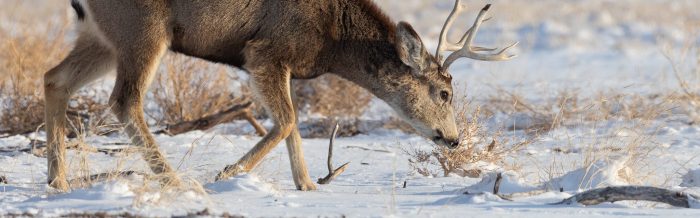
Mule deer migrate from higher elevations in the summer to lower ranges in the winter due to decreasing temperatures, severe snowstorms, and snow depths that reduce mobility and food supply.
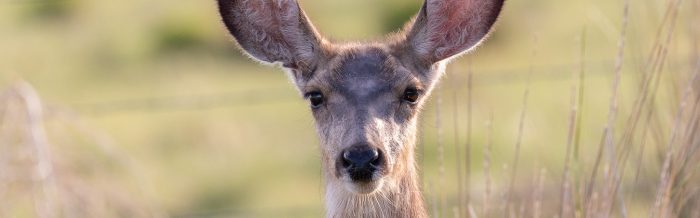
Most female mule deer conceive during their second year and give birth in June or July, though the time of birth will vary according to the environment.
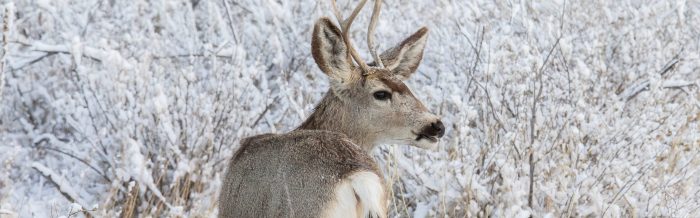
The mule deer is classified as "Least Concern" because it is adaptable to a wide range of habitats, has large, stable populations, and occurs in numerous protected areas.

The annual cycle of antler growth in male mule deer is initiated and controlled by changes in day length acting on cell types that secrete growth-stimulating hormones.
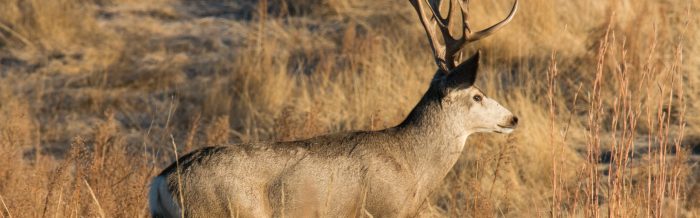
Common predators of mule deer include pumas, coyotes, bobcats, golden eagles, feral dogs, and black bears.
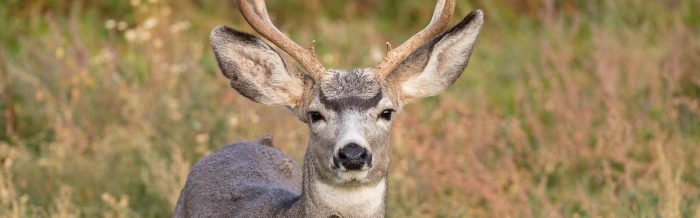
Mule deer possess an iconic dark V-shaped marking between the eyes that is more conspicuous in males.