Bilbies are protected under Australian law and a number of breeding and reintroduction projects have begun with some success, as well as projects to control populations of harmful invasive species.
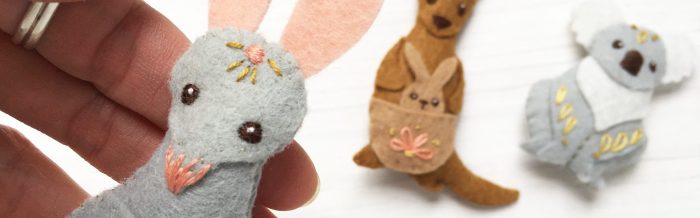
Join a creative community focusing on a unique animal each month.
FaunaFocus releases a new FaunaFact every single day! These bite-sized bits of information are interesting facts paired with a unique image of that animal.
Bilbies are protected under Australian law and a number of breeding and reintroduction projects have begun with some success, as well as projects to control populations of harmful invasive species.
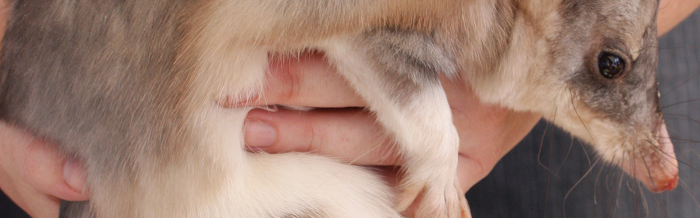
Little has been recorded about bilby mating in the wild due to their decreasing numbers and semi-fossorial, nocturnal lifestyle, so much observation is done on captive bilbies.
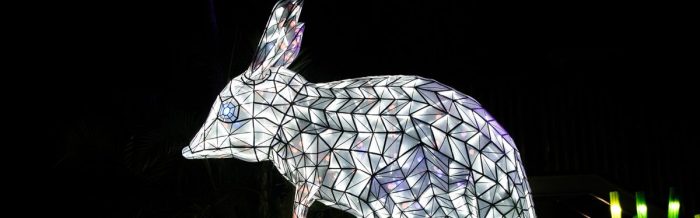
Bilbies have their own Australian holiday, National Bilby Day, annually held on the second Sunday of September in hopes of raising funds and educating the public on bilby conservation.
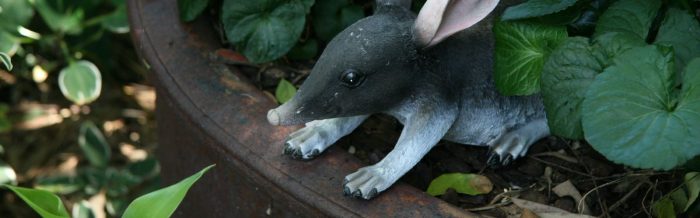
Bilbies have one of the shortest gestation periods of all mammals, only 14 days, and will give birth to up to 4 litters a year, each consisting of 1-4 offspring.
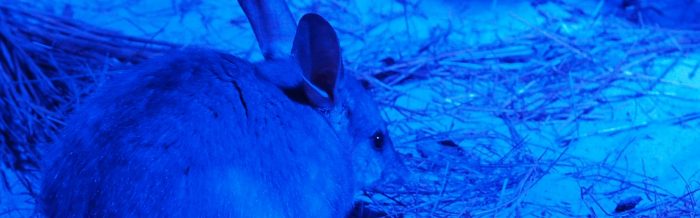
Male bilbies keep much larger home ranges than females at 1.5-3.16 km² compared to 0.18-1.5 km².
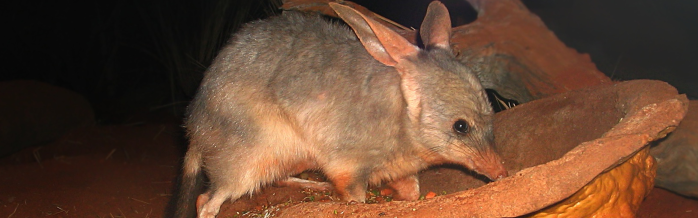
Female bilbies are the only caregivers of young and have a pouch that opens rearward to avoid filling with soil and nipples inside and outside of the pouch.
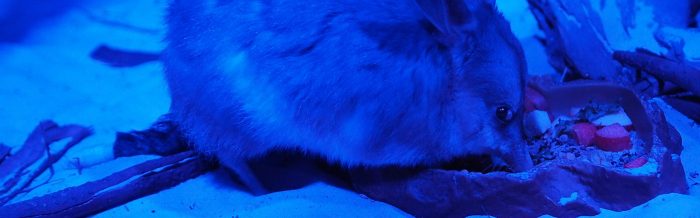
Bilbies do not drink water, but instead obtain water from their food.
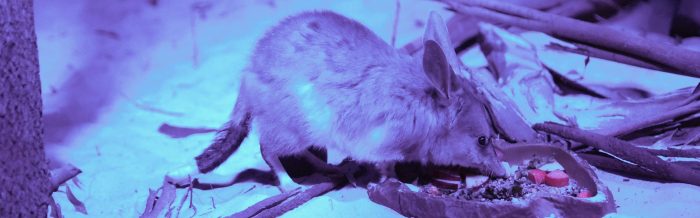
Bilbies display sexual dimorphism as males have enlarged foreheads, longer canines, and a body mass that is twice that of females.
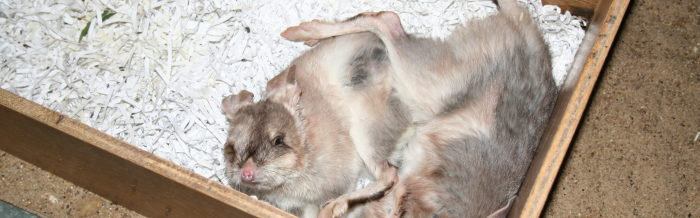
After gestation, premature bilby offspring climb into their mother's pouch for 75 days before being cared for in a burrow for another 14 days until independence.
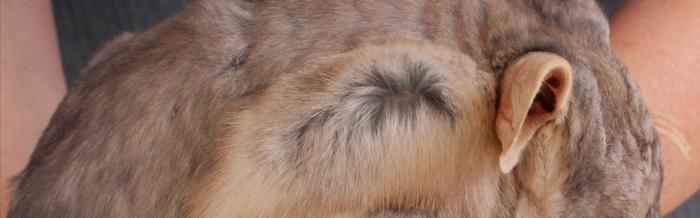
Since bilbies have soft, silky, blue-grey fur that does not protect their bodies well from termite bites, they dig tunnels leading to termite chambers and lap them up.
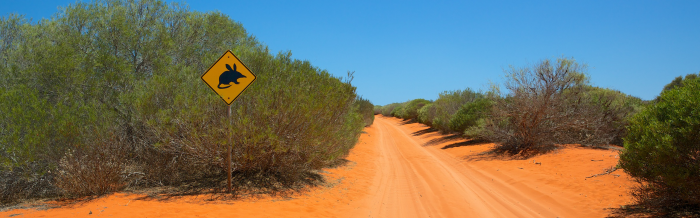
The bilby population has significantly decreased over the past 200 years due to habitat loss, disease, vehicular collision, and invasive species that prey on the bilbies and overgraze their habitat's vegetation.
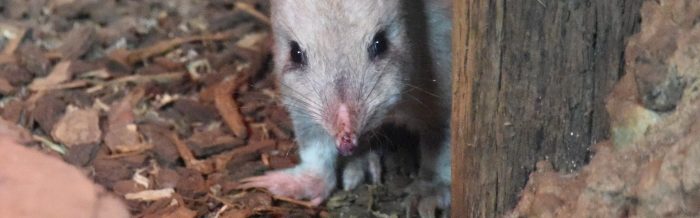
Bilbies have a polygynous mating system in which the most dominant male will mate with any females while lower males will mate with females equal or below them in the social hierarchy.
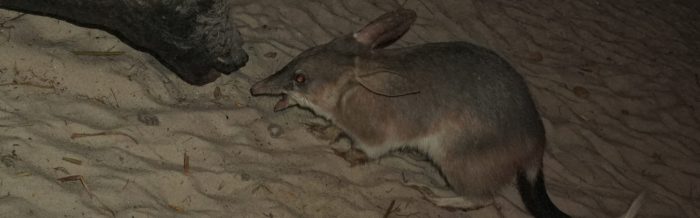
Male bilbies possess a linear social hierarchy that is communicated through scent markings, rather than aggression.
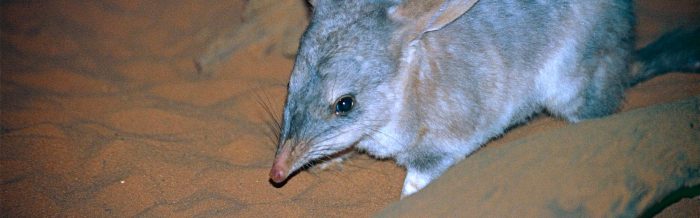
Bilbies are vital ecosystem engineers that dig pits while foraging that become fertile patches where native Australian fauna seeds are provided extra fertilization to germinate in a difficult environment.
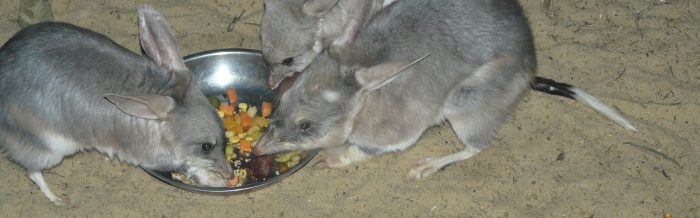
Bilbies tend to live solitary lives, though some may live together in pairs, usually two females.
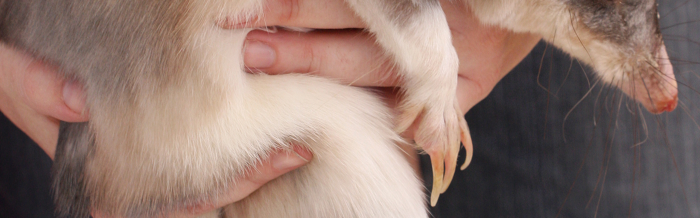
Bilbies have strong, clawed forelimbs and slender hindlimbs, similar to those of kangaroos, but gallop, rather than hop.
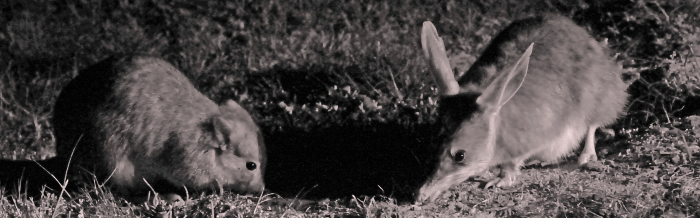
Bilbies have the ability to breed throughout the year, depending on environmental conditions and will delay mating until conditions are appropriate to support the nutritional demands of lactation.
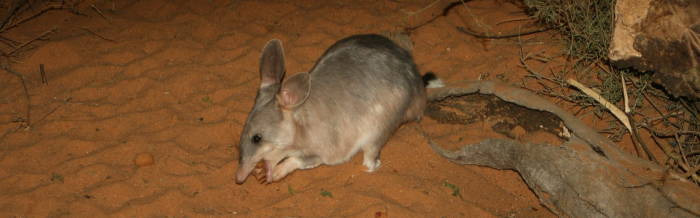
Bilby tongues are long, sticky, and slender, making it easy to catch and lap up termites, but unfortunately, this method of feeding leads to a consumption of soil and sand.
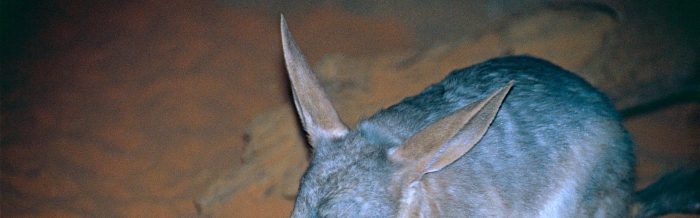
Bilbies have poor eyesight, but use their large, relatively hairless, rabbit-like ears to hear insects burrowing underground and their hairless pink noses give them a keen sense of smell.
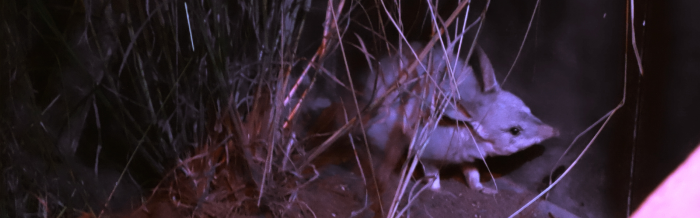
Bilbies are nocturnal and leave their burrows as the sun sets to forage and search for mating opportunities.
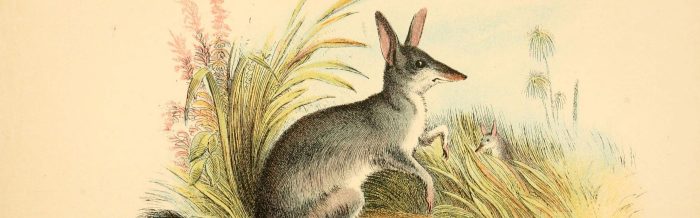
Bilbies are the only extant member of Thylacomyidae in the order Peramelemorphia, though their taxonomy has changed over the years.
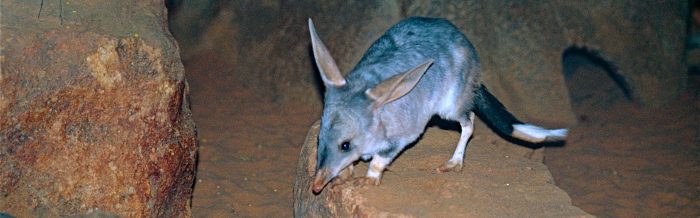
Bilbies inhabit dry savanna and subtropical/tropical dry grassland habitats with tussock grassland, mulga woodland and shrubland, or hummlock grassland vegetation.
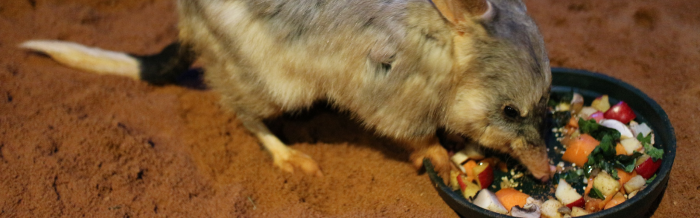
Bilbies have an opportunistic, omnivorous diet consisting of vegetation, insects, spiders, fungi, lizards, eggs, snails, and small mammals, and the proportion of insect to plant material of a bilby's diet depends on the habitat and the season.
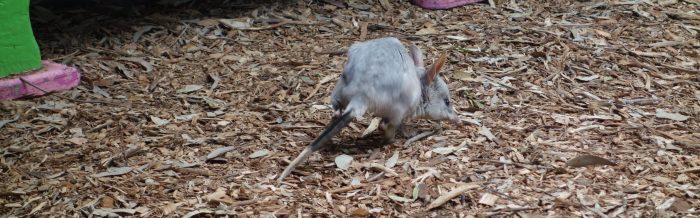
Bilbies were historically found over 70% of continental Australia, but are now limited to 20-30% of their original territory in northwest Australia and the southwest tip of Queensland.
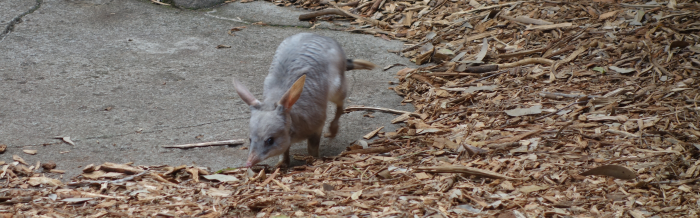
The bilby is evaluated as "Vulnerable" on the IUCN Red List because it is patchily distributed with a small area of occupancy, has a population size less than 10,000, and is suffering ongoing declining population trends.
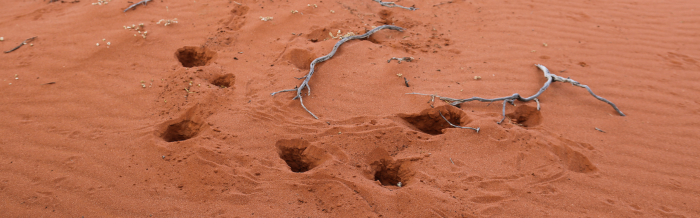
Bilbies are terrestrial and semi-fossorial and dig slightly spiraling burrows with multiple exits that serve as protection from predators, sun, and other environmental conditions.
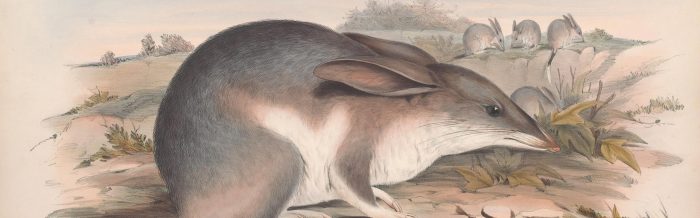
The bilby was once known as the "greater bilby", but is often referred to simply as the "bilby" since its closest relative, the yallara, or lesser bilby became extinct in the 1930's and 1960's.

An attempt to introduce the European mink to the southern Kurile Islands failed to establish a population, but a small breeding population of 100 was established on an island in Estonia.

Predators of the European mink include the western polecat, American mink, golden eagle, red fox, and large owls.

During the mating season, the sexual organs of female European mink enlarge greatly and become pinkish-lilac, as opposed to the American Mink, whose organs don't change.

Due to the higher quality of farmed American mink, European mink are not trapped for commercial purposes as much as they once were.

Young European mink open their eyes after 1 month and begin tracking and capturing prey at 2 months before dispersing at 2.5-4 months.

The decline of noble crayfish may be a factor in declining European mink numbers, as minks are notably absent in the eastern side of the Urals, where crayfish are also absent.