Because they're migratory and found internationally, hawksbill turtles lack demographic data and are instead evaluated using population trends and nesting activity.

Join a creative community focusing on a unique animal each month.
FaunaFocus releases a new FaunaFact every single day! These bite-sized bits of information are interesting facts paired with a unique image of that animal.
Because they're migratory and found internationally, hawksbill turtles lack demographic data and are instead evaluated using population trends and nesting activity.
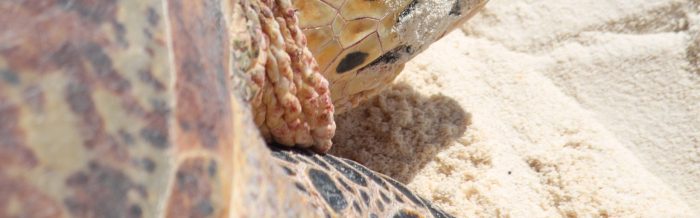
The average female hawksbill turtle lays 3-5 egg clutches of 100-140 eggs during a single nesting season, but newly recruited females lay fewer clutches.
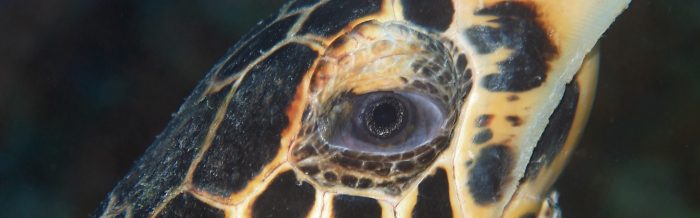
Hawksbill turtle populations continue to decline, especially in southeast Asia, and have decreased more than 80% overall throughout the last 3 generations.
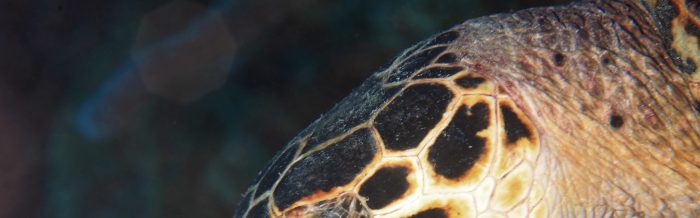
The hawksbill turtle's scientific name, "Eretmochelys imbricata" describes the imbricate, overlapping scutes on its carapace that set it apart from other sea turtles.
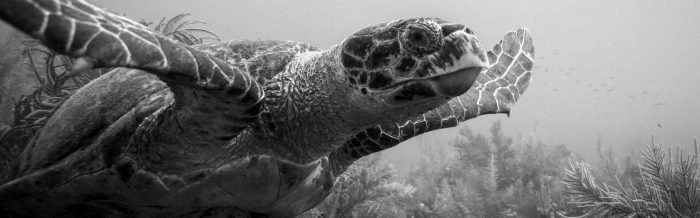
The hawksbill turtle is listed as "Critically Endangered" on the IUCN Red List and is banned from international trade as an Appendix 1 species of CITES.
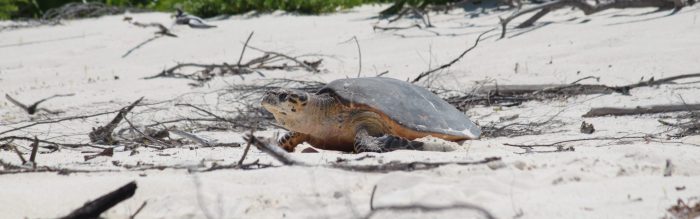
Female hawksbill turtles return to their natal rookeries to breed, even though they reside at habitats located hundreds or thousands of kilometers away.
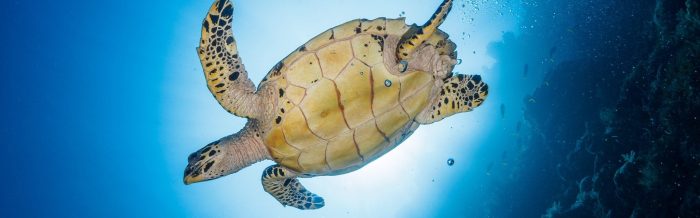
Typically diurnal, except during mating season, solitary hawksbill turtles search for food during the daylight hours.
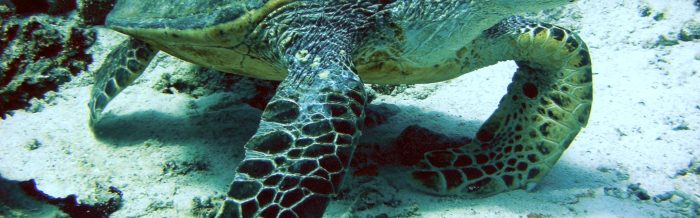
Hawksbill turtles have a flattened body shape, flipper-like limbs, and a protective carapace that can change colors based on water temperature.
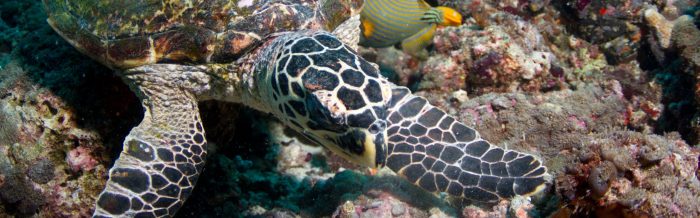
Hawksbill turtles can be distinguished from other sea turtles by their extra prefrontal scales, extra forelimb claws, overlapping scutes, and elongated, sharp beaks.
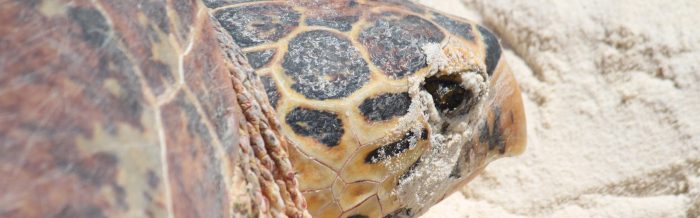
Hawksbill turtles are long-lived and mature slowly, taking 20-40 years to fully develop and averaging a 20-50 year lifespan.
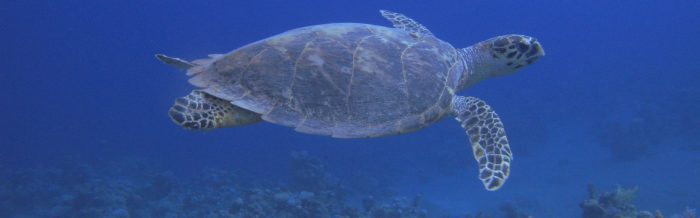
In general, hawksbill turtles are found in water no deeper than 18.3 m., or 60 ft., but larger turtles may inhabit deeper sites.
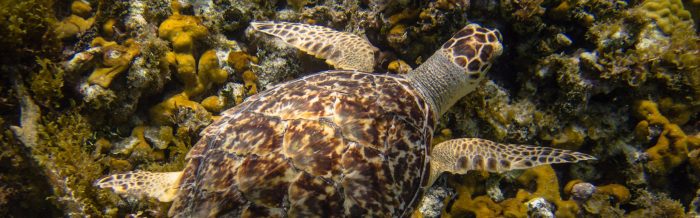
Hawksbill turtles are omnivorous and feed primarily on sponges, preferring certain species of sponges found in shallow shoals abundant with brown algae.
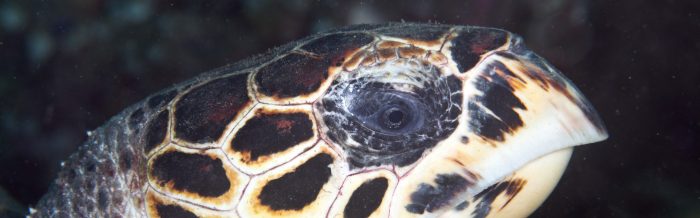
The hawksbill turtle gets its name from the elongated, tapered, sharp point at the end of its beak that gives the appearance of a bird's beak.

Hawksbill turtles are relatively small sea turtles averaging 65-89 cm. long and 40-75 kg., however nesting females tend to be larger and heavier.
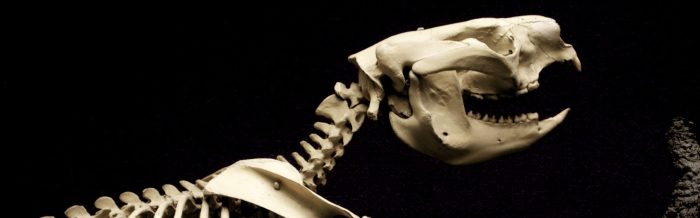
Virginia opossum are hunted because their meat, fat, and bones are believed to help with inflammation, colitis, gastritis, skin infections, heart attacks, epilepsy, allergies, dermatitis, and coughing.
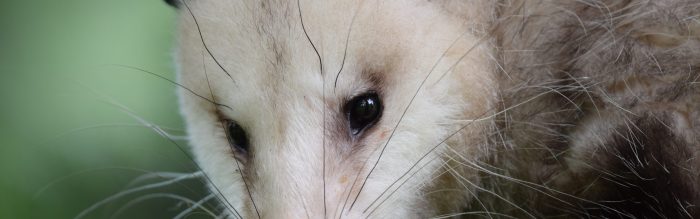
Virginia opossums invest little in parental care; males provide no parental care, while females offer moderate care being protective of their pouches, but not of their young, specifically.
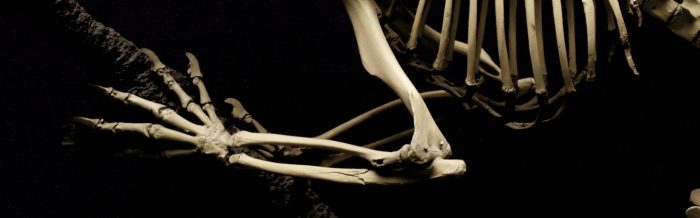
Virginia opossums have short lifespans with females living longer than males and captive ones living longer than wild individuals at 3-4 years compared to 1.5-2 years, but records top 10 years.
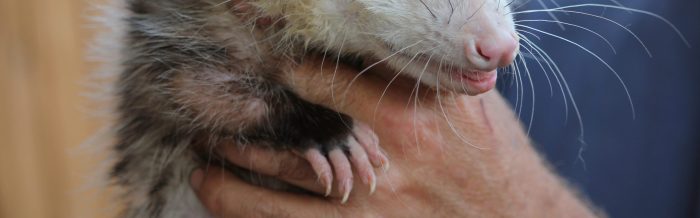
Although it is usually illegal, Virginia opossums are kept as pets, in which they adopt a more diurnal lifestyle, can be litter-trained, and often develop obesity.
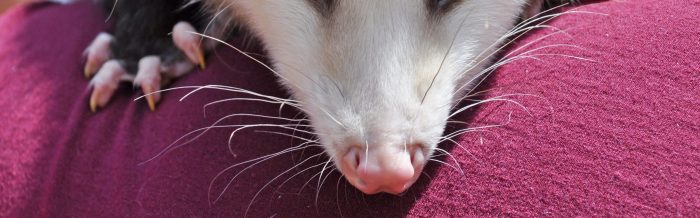
Virginia opossum are born tiny and under-developed with muscular front legs to allow them to climb to their mother's pouch, however; only about 1 in 3 will survive the trip.
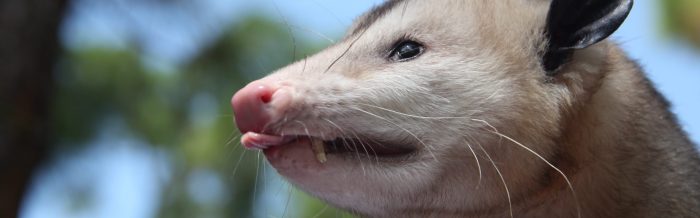
Virginia opossums are solitary and will show aggression towards each other by "dancing" and lashing their tails while secreting from their dual anal glands.
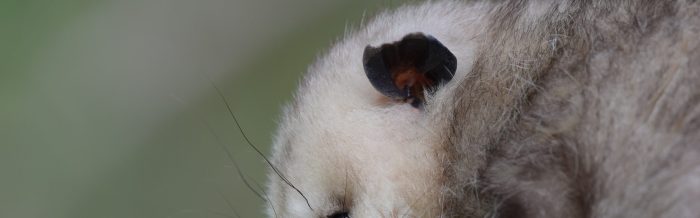
After leaving their mother's pouch, young Virginia opossums stay in the den or ride on her back until weaned around 100 days old, at which time they become independent.
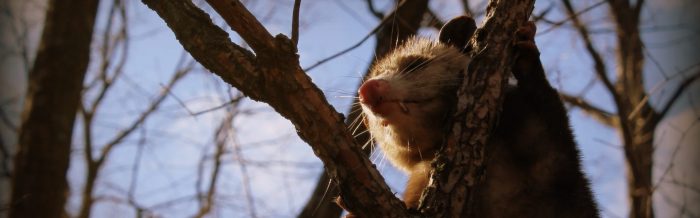
Although Virginia opossums are important seed dispersers and can carry a variety of internal and external parasites, it is unusual for this species to be a carrier of rabies.
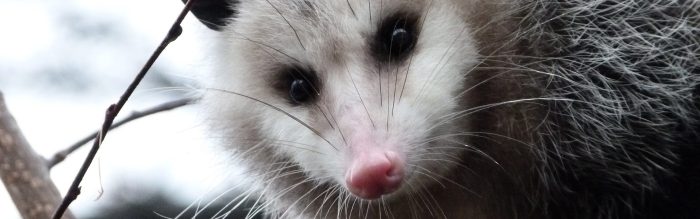
Early in life, young opossums have a very high mortality rate with about 68% not surviving the trip to the mother's pouch and 60% perishing once weaned and independent.
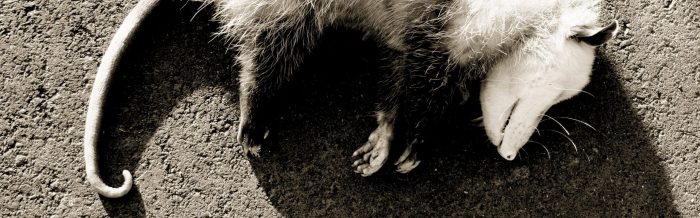
Virginia opossums utilize a defensive catatonic death feigning state, known as “going opossum,” in which the animal becomes motionless for minutes to hours.
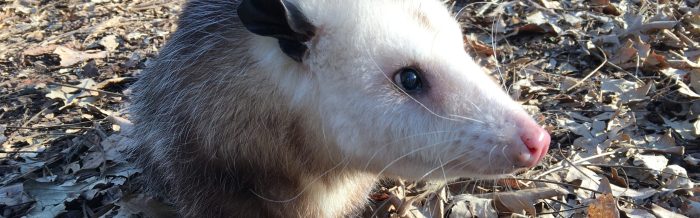
Even though a female Virginia opossum gives birth to 4-25 young after a 12-13-day gestation, she generally only has 13 mammae, some of which may be nonfunctional.
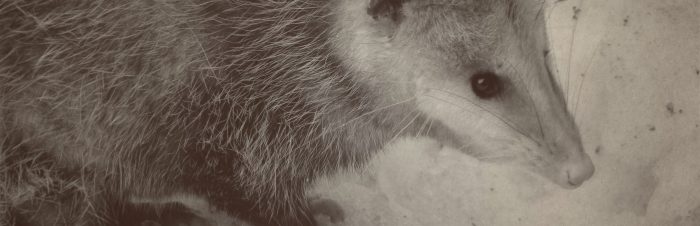
Virginia opossums are generally slow and clumsy, but will show directional turns and run up to 7.4 kph when pursued to avoid being captured.
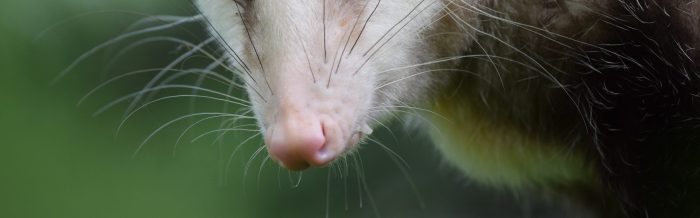
Because female Virginia opossums lick at the offspring in their pouches, it was once mistaken that they breed with their noses and afterward, the young crawl from the nostrils into the pouch.
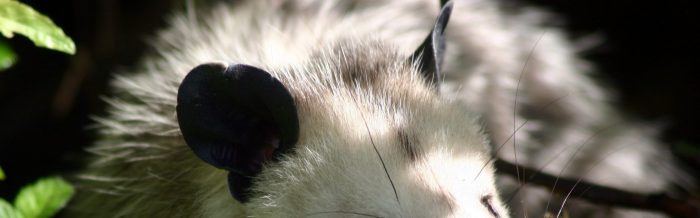
The Virginia opossum's long breeding season varies based on location and the number of litters varies based on climate with 1 litter per year in the north and 3 in warmer zones.
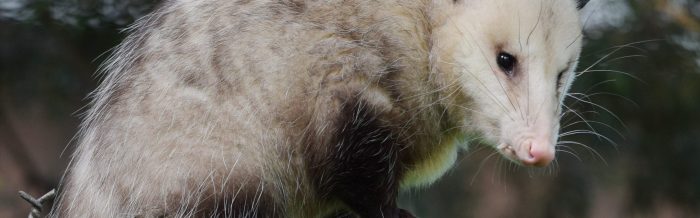
The Virginia opossum is the only living marsupial found in the United States.
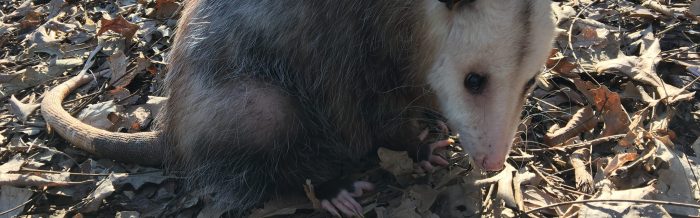
Virginia opossums nest in brush piles, hollow trees, buildings, drainage areas, and abandoned burrows covered with woody cover and filled with dry leaves or paper.
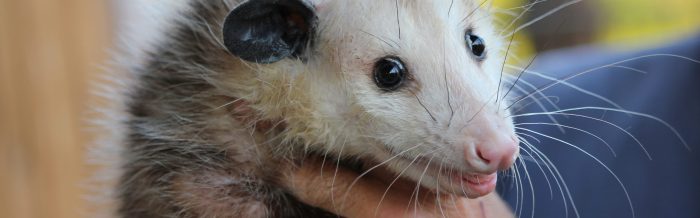
Because of its ability to adapt to human-altered habitats and its widespread range, the Virginia opossum is listed as "Least Concern" on the IUCN Red List of Threatened Species.
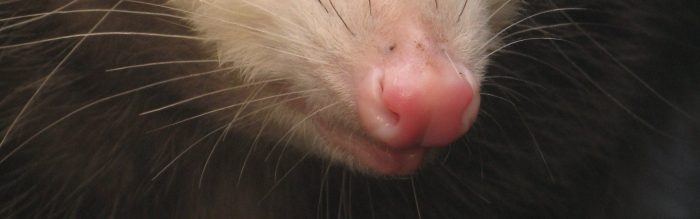
Virginia opossums engage in a polygynous mating system in which males vie for females with metallic clicks and chest scent glands which emit a musky odor and stain the fur.
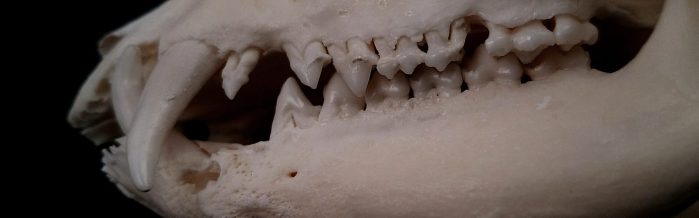
The Virginia opossum has a relatively small brain case, and the corpus callosum is absent in this species.