Although illegal hunting only impacted 0.2% of white rhinos in 2005, poaching has increased over 3,000% and is beginning to threaten the sustainability of the species.

Join a creative community focusing on a unique animal each month.
FaunaFocus releases a new FaunaFact every single day! These bite-sized bits of information are interesting facts paired with a unique image of that animal.
Although illegal hunting only impacted 0.2% of white rhinos in 2005, poaching has increased over 3,000% and is beginning to threaten the sustainability of the species.

Numbers of white rhino under private ownership continue to increase, numbering at least 5,500 by the end of 2010.

White rhino mothers are the sole caregivers of the young for 2-3 years, while males have no parental investment on calves beyond the mating process.

Due to poaching and civil wars, the northern white rhino subspecies is considered extinct in the wild.

Female white rhinos are slightly smaller than males and have longer and thinner horns.

98.8% of white rhino occur in just four countries: South Africa, Namibia, Zimbabwe and Kenya.
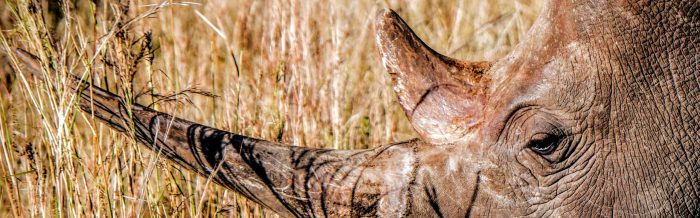
White rhino horn is highly prized for making ornately carved handles for jambiyas, ceremonial daggers worn in some Middle East countries.
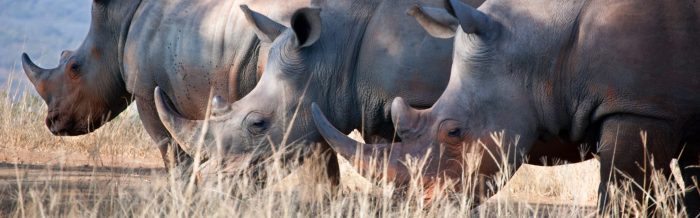
There are 10,000 white rhinos in the wild and 750 in captivity worldwide.
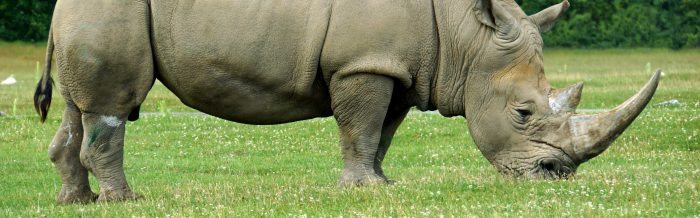
There are more white rhinos on private land in South Africa than there are rhino in the whole of the rest of Africa.

The southern white rhino is the most numerous of the rhino taxa.
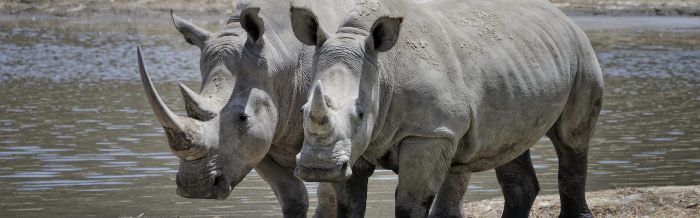
Two subspecies of the white rhino are recognized: the southern white rhino, (SWR) C. s. simum, and the northern white rhino, (NWR) C. s. cottoni.

With only two individuals left, the northern white rhino has little chance of surviving extinction unless inter-crossing with the southern white rhino.

There is debate whether the northern white rhino should be considered a separate species, rather than a subspecies, of the white rhinoceros.
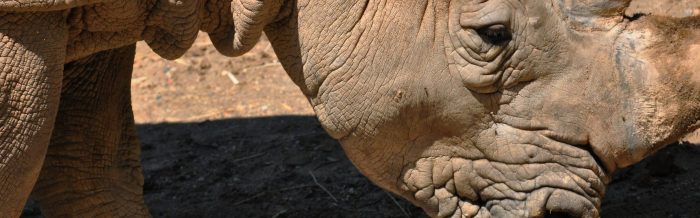
White rhinos are "Near Threatened" due to illegal poaching as a result of organized criminal syndicates, increased black market prices, and nontraditional medicinal uses of rhino horn.
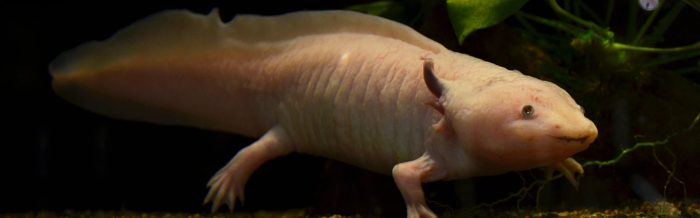
Generally the top predator, axolotls will eat anything they can catch, including molluscs, fishes, and arthropods.
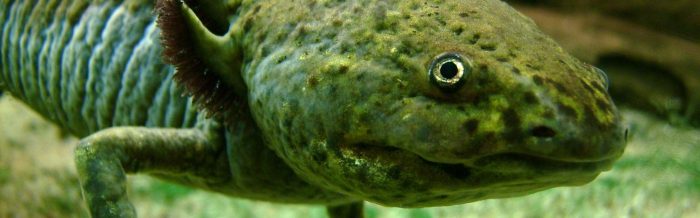
Invasive species, such as tilapia and carp, negatively impact wild axolotls through competition, predation, and the spread of disease.

Axolotls are an important research animal and are used in studies of the regulation of gene expression, embryology, neurobiology, and regeneration.

The traditional consumption of the axolotl by local people, is threatening the survival of the species.

Although there are many captive axolotl, the re-introduction of captive-bred axolotls is not recommended until threats, disease, and genetic risks can be mitigated.

Male and female axolotls can be distinguished by the cloaca and the plumpness of the body.
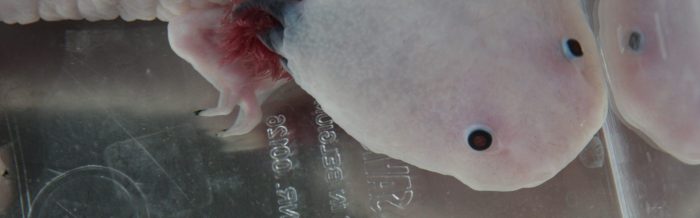
Despite its status in the wild, the axolotl is one of the most widely used and studied animals in laboratories and aquaria around the globe.
Female axolotl lay up to 1,000 eggs every 3-6 months in freshwater plants, like many other amphibians.

Nearly all modern laboratory axolotls can be traced back to 33 animals shipped from Xochimilco to Paris in 1864.

The closest relative of the axolotl is the tiger salamander; viable offspring can even be produced between the two species.

Axolotls can regenerate new limbs, tails, and even heart and brain cells, making them a research opportunity for long-term human health.

Because known populations are few and far between, little is known about the ecology and natural history of axolotls.

Axolotls are excellent lab specimens as they are easy to raise and inexpensive to feed, yet yield amazing research opportunities.

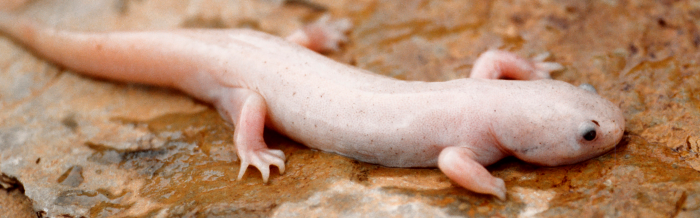
Because they are neotenic, adult axolotls retain the feathery external gills and finned tails from their juvenile stages.

Axolotls are one of 5 paedomorphic, neotenic aquatic salamanders, meaning they do not undergo metamorphosis and retain larval characteristics while living permanently in water.

Even though there is a supply of captive-bred axolotls, wild ones are still being caught and sold illegally for human consumption, medicinal uses, and pets.

The axolotl is critically endangered due to a small area of occupancy, fragmented distribution, and a continuing decline in habitat and number of mature individuals.

While axolotl are usually black in color, other color phases, including white, have been produced in the laboratory.

There is debate as to whether the axolotl should be classified as its own species or as a subspecies of the tiger salamander.