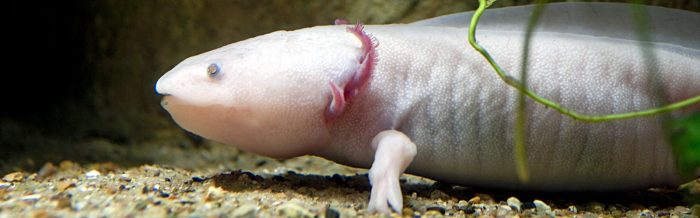
The axolotl is endemic to an area in central Mexico less than 10km² on the southern edge of Mexico City.
Join a creative community focusing on a unique animal each month.
FaunaFocus releases a new FaunaFact every single day! These bite-sized bits of information are interesting facts paired with a unique image of that animal.
The axolotl is endemic to an area in central Mexico less than 10km² on the southern edge of Mexico City.

The nahuatl word "axolotl" describes an animal transformed from the Aztec god, Xolotl, brother to Quetzacoatl.

Axolotls can live as long as 10-15 years, but expected laboratory longevity is only 5-6 years.

It's estimated that fewer than 100 axolotls remain in the wild, making the salamander one of Latin America’s most threatened amphibians.
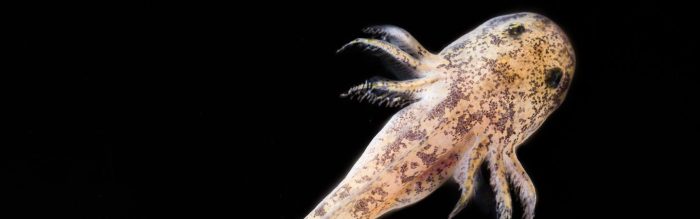
Axolotls generally breed between March and June and seem to "waltz" and "hula dance" during courtship.
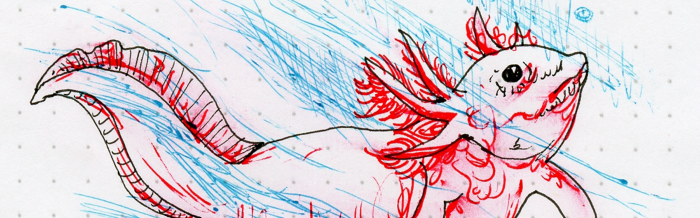
Desiccation, pollution, bacterial contamination, and disease, resulting from urbanization, pose serious threats to the axolotl.

A species action plan focusing on conservation education, habitat restoration, and bioremediation has been drafted to help conservation actions for the axolotl.
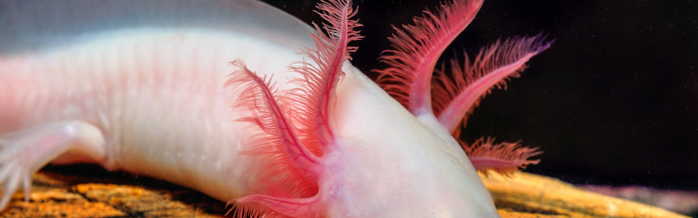
Axolotls can detect electrical fields.

"Axolotl" is a specific species of aquatic salamander, although the name is mistakenly and erroneously used to refer to other species.

Metamorphosis can be artificially induced in axolotls via thyroid hormone injections.
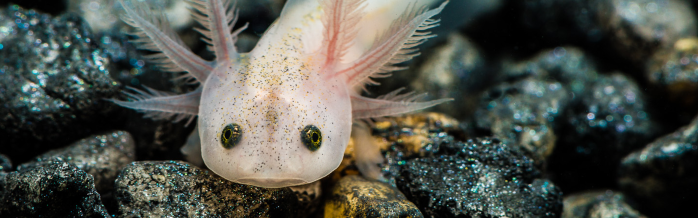
No popular experimental animal is more misunderstood or more diversely treated taxonomically than the axolotl.
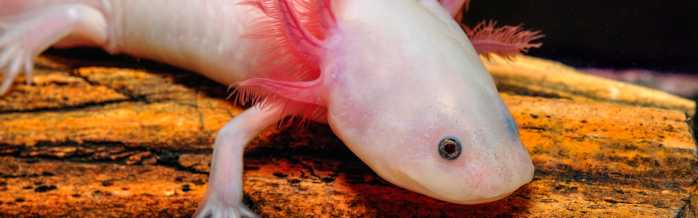
Axolotl are preyed on by large fish, such as Asian carp and African tilapia.

There are no negative effects of axolotls on humans.
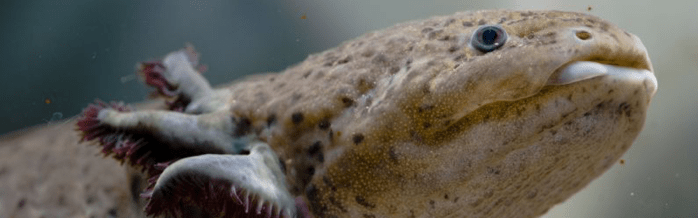
Axolotls are solitary and may be active at any time of the day.
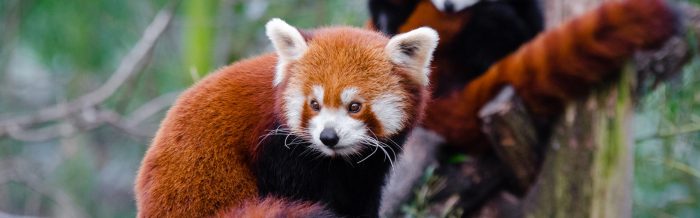
There is no sexual dimorphism in the size or color of red pandas.
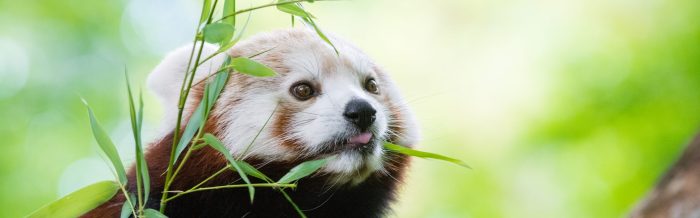
Native names applied to the red panda include lesser panda, fire fox, bear cat, wah, ye, nigalya ponya, thokya, woker, sankam, and wokdonka.
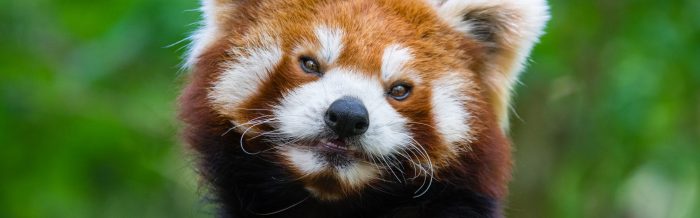
Young red pandas attain adult size at 12 months and are sexually mature by 18 months.
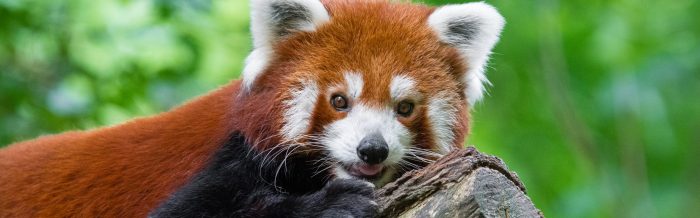
Red pandas have semi-retractile claws used effectively in climbing.
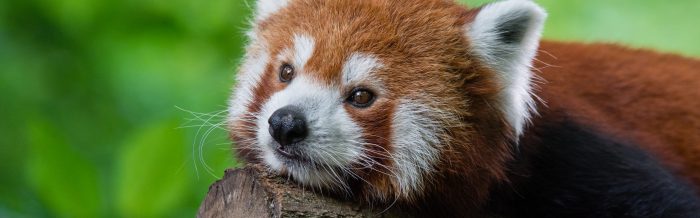
In captivity, male red pandas can be left with females year-round, but females left together in the same enclosure may steal or kill each other's young.
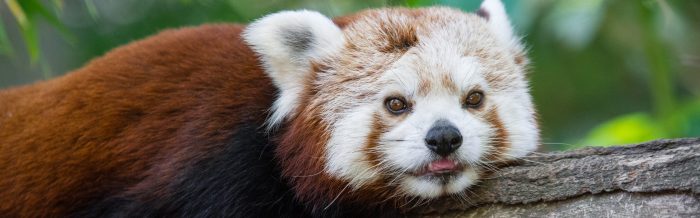
At birth, red pandas are born with closed ears and eyes and have a gray-buff coat lacking adult coloration and markings.
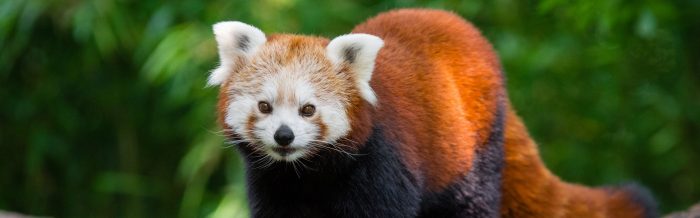
In captivity, red pandas live well in mixed-sex groups, but in the wild, they remain solitary.
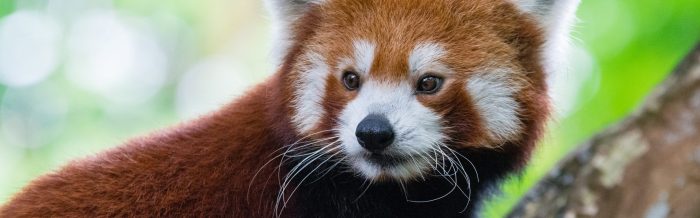
Since its discovery in the early 1800's, the taxonomic classification of the red panda has been a subject of almost as much debate as the placement of the giant panda.
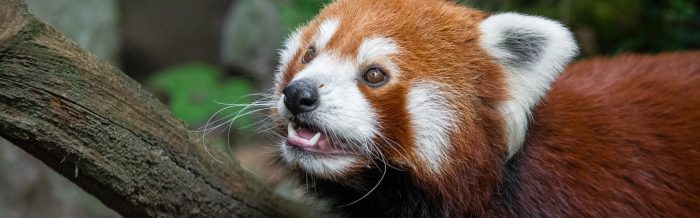
The reddish-orange and white pelage of the red panda provides it camouflage in the reddish-brown moss and white lichens of fir trees.
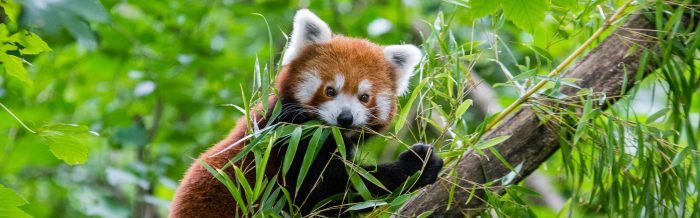
The red panda's diet is 98% bamboo, but the panda also consumes small mammals, birds, eggs, blossoms, leaves, bark, fruit, and berries.
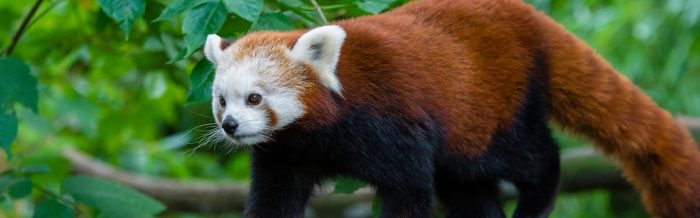
The red panda's tail is not prehensile and makes up 40% of its total length.
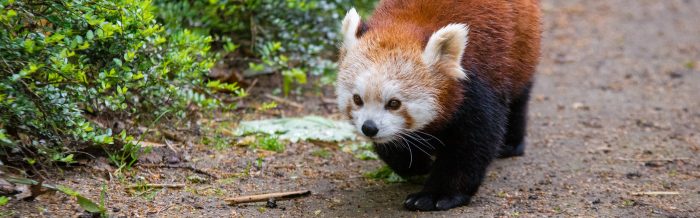
Red pandas are scansorial, but forage primarily on the ground.
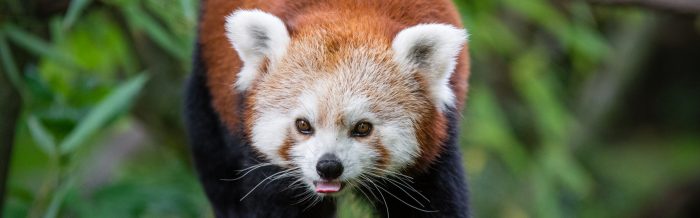
The functional purpose of the red panda having a left lung divided into two lobes, unlike the four in the right lung, is unknown.
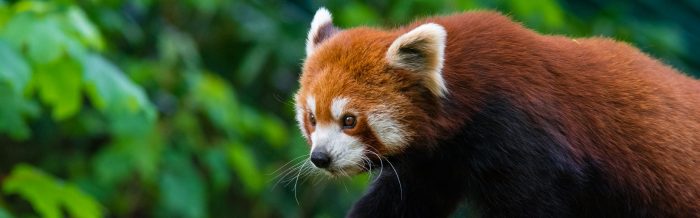
Male red pandas rarely interact with their young, but have been observed sleeping or playing with them in captivity.
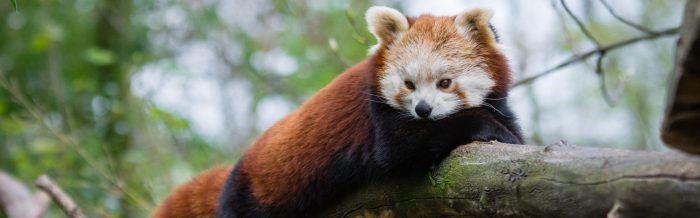
Red pandas are arboreal and prefer residing in conifer or fir trees.
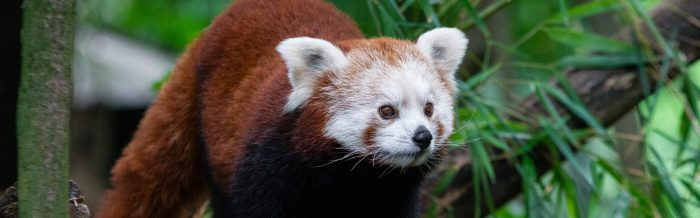
Because of its scarcity, an intensive international breeding program was established for the red panda in more than 30 zoos.
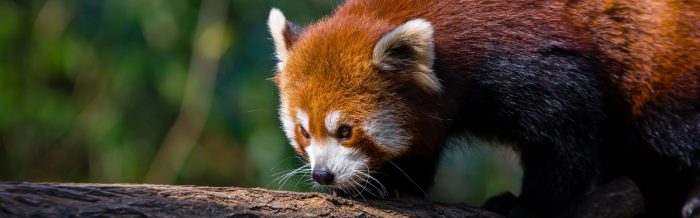
Red pandas are nocturnal and crepuscular, being most active at dawn, dusk, and night, and are polyphasic, sleeping at multiple times throughout the day.
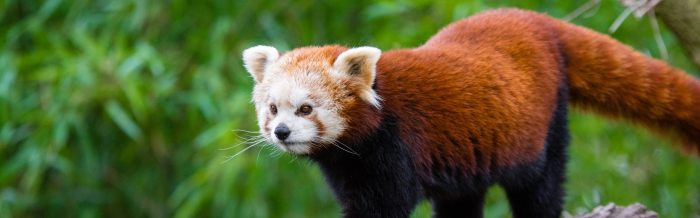
Generally, mortality in red pandas is similar to that of other mammals, but is higher in males.
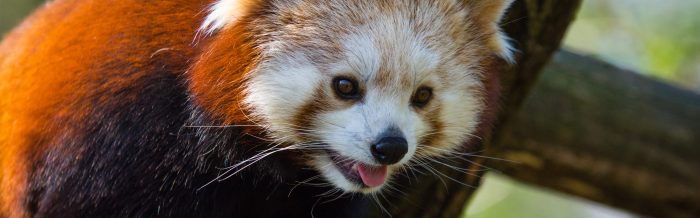
Structural homologies and functional similarities exist between some vocalizations of the red panda and those of the giant panda, Ailuropoda, and Procyonidae.