In the wild, red pandas use hollow trees, evergreens, or rock crevices as nest sites, but in captivity, they adopt nest boxes, hollow logs, or other artificial dens.
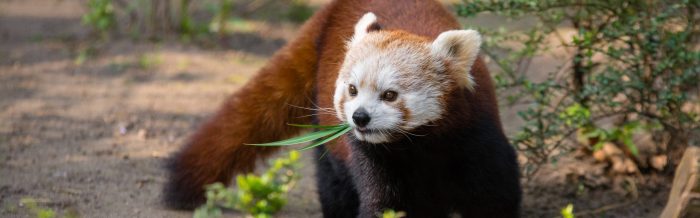
Join a creative community focusing on a unique animal each month.
FaunaFocus releases a new FaunaFact every single day! These bite-sized bits of information are interesting facts paired with a unique image of that animal.
In the wild, red pandas use hollow trees, evergreens, or rock crevices as nest sites, but in captivity, they adopt nest boxes, hollow logs, or other artificial dens.

Temperature influences the red panda's sleeping posture as it maintains a tight curl during cold weather but stretches along branches with legs dangling during hot weather.
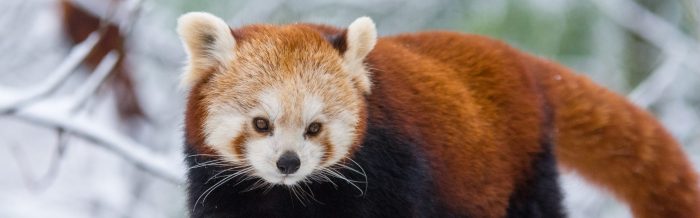
As a result of human encroachment and the unusual biology of bamboos, red pandas may be near extinction in the western sector of their range, especially in Nepal.
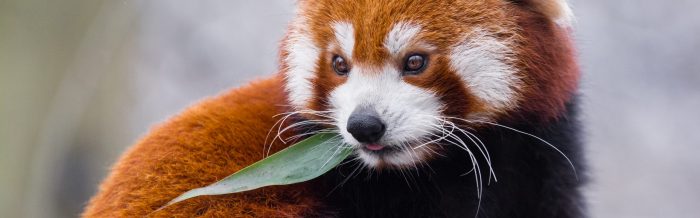
The red panda has little commercial value in live animal and fur trades, but still faces threats by humans.
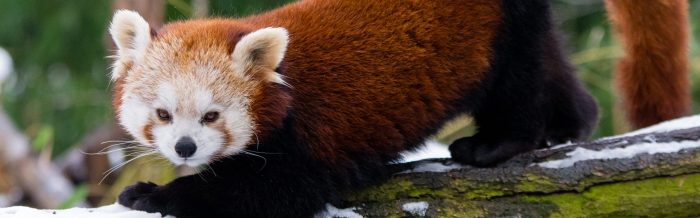
Eastern red pandas may be somewhat larger and darker in color than those from western areas.

The average gestation period of a red panda is 134 days, implying delayed implantation.

Red panda mating coincides with the winter solstice and occurs in early winter, usually within January and March.
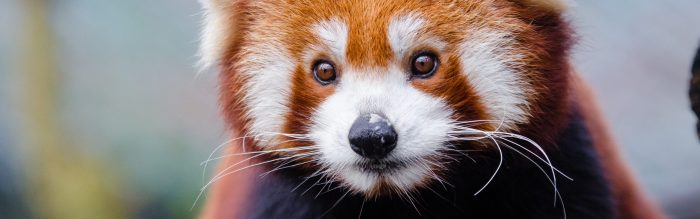
Red pandas live an average lifespan of 8-10 years in captivity, with a maximum of 14 years.

The red panda's skull is larger than similar carnivores in order to improve bite pressure.
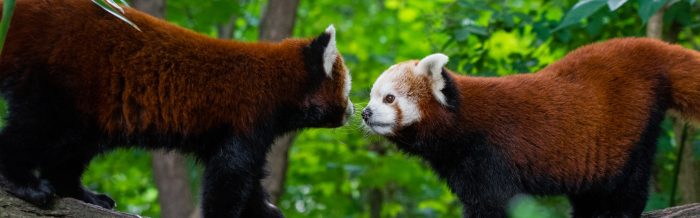
There is debate whether the two extant subspecies of red panda should be considered separate species.

When discovered in 1821, the red panda was the first species to be named "panda," yet the origin of the name is unknown.
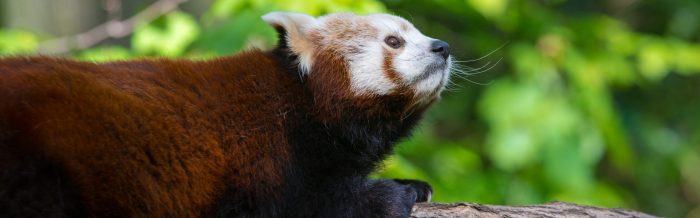
The red panda is the only extant species within the Ailuridae family.

Red pandas possess extremely robust dentition in contrast with that of similar procyonids.
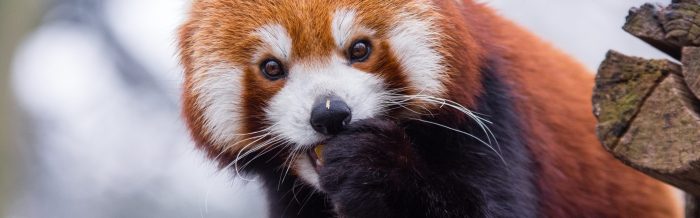
The red panda is the only Asian carnivore in which the plantar surface of the foot is completely covered with hair.

Humans are the tiger's only serious predator, and poaching for illegal trade in high-value tiger products including skins, bones, teeth, claws, meat, and tonics is the tiger's greatest threat.

The pattern of stripes is unique to each tiger and can be used to identify individuals, much in the same way as fingerprints are used to identify people.

An analysis of sexual dimorphism suggests that male tigers take larger prey than females.
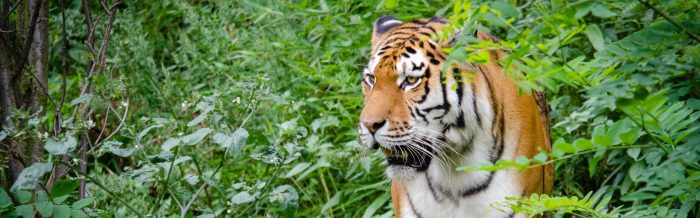
Most tigers live in forests or grasslands, for which their camouflage is ideally suited, and where it is easy to hunt prey that is faster or more agile.

While some hunting occurs in the daytime, tigers are mostly nocturnal, exhibiting activity that coincides with their prey.
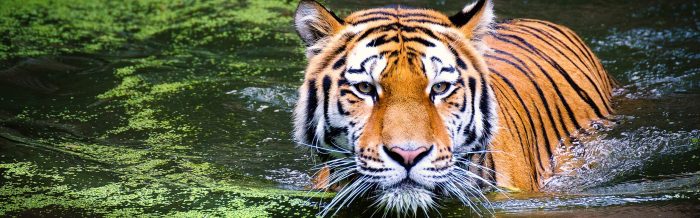
Tigers are one of the only cats that are strong swimmers and enjoy lounging in shaded waters to deal with high temperatures.
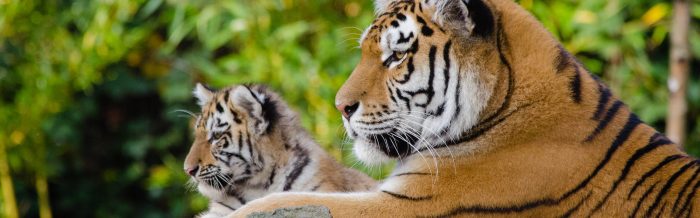
Tigers breed well in captivity, and the captive population in the United States may rival the wild population of the world.
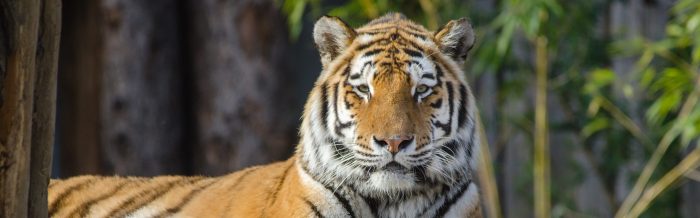
Tigers are not runners and rarely pursue prey more than 150 meters, but rather, they rely on explosive acceleration.
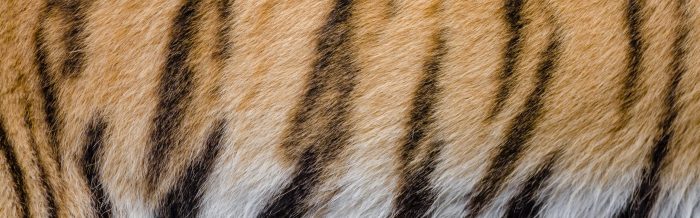
The stripe pattern is found on a tiger's skin, as well as on the fur.
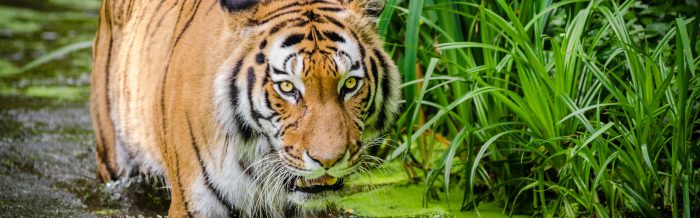
The Indian subcontinent is home to more than 80% of the wild tigers in the world.
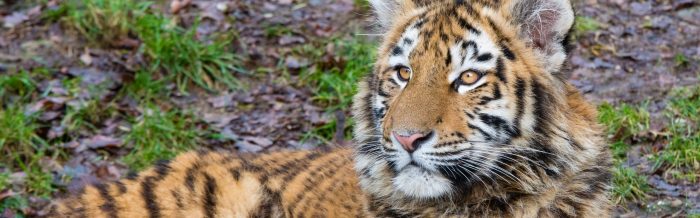
Nine subspecies of the tiger are recognized.

Tiger cubs are born blind, deaf, and helpless.

Only Bengal tigers have been found with a white coat, which has far fewer apparent stripes than an orange coat.
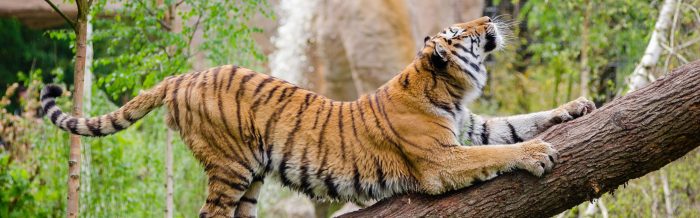
The tiger is the largest and most powerful of all living cat species.
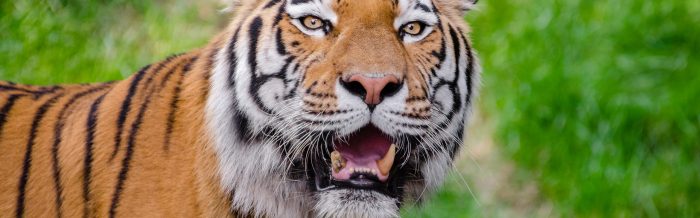
Tigers have the longest and biggest canine teeth of all the wild cats.
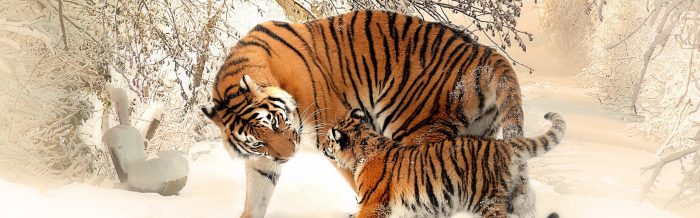
Tigers are tolerant of an unbelievably wide range of habitat conditions from dry forests to steamy jungles and even freezing temperatures.
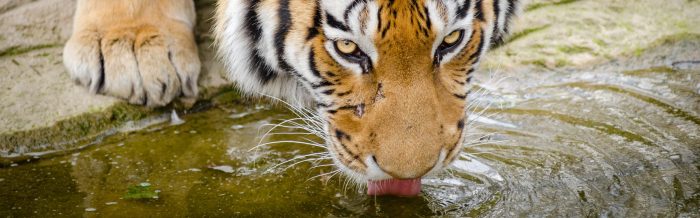
Tigers are digitigrade and walk on their toes to distribute their weight and walk fluidly and silently.

Poaching of tigers for the use of their bones in traditional Asian medicine may drive the tiger to extinction.

Tiger cubs are raised solely by their mothers until they embark for their own territories at around 2-2.5 years of age.