Koalas are polygynous and breed seasonally, but males don't usually mate until they reach 4 years old because competition for females requires a larger size.
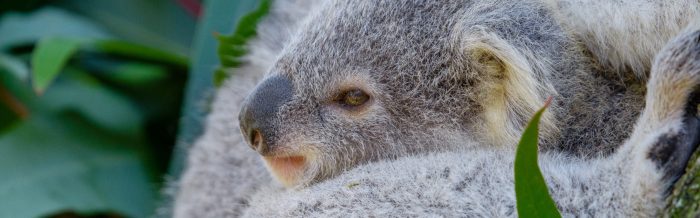
Join a creative community focusing on a unique animal each month.
FaunaFocus releases a new FaunaFact every single day! These bite-sized bits of information are interesting facts paired with a unique image of that animal.
Koalas are polygynous and breed seasonally, but males don't usually mate until they reach 4 years old because competition for females requires a larger size.
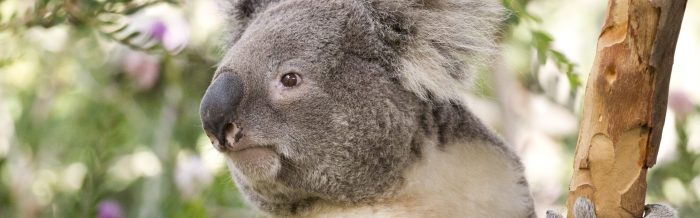
Koalas copulate in trees for less than two minutes at a time with the male grasping the back of the female's neck with his teeth.
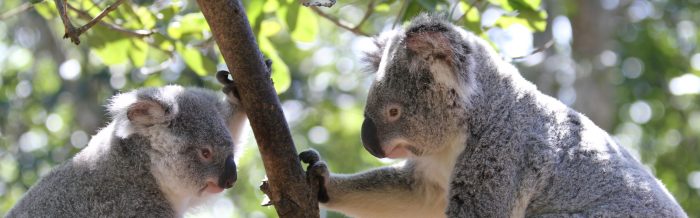
Koalas are sexually dimorphic as males are larger and 50% heavier than females and have broader faces, smaller ears, and a large chest gland rather than a pouch.
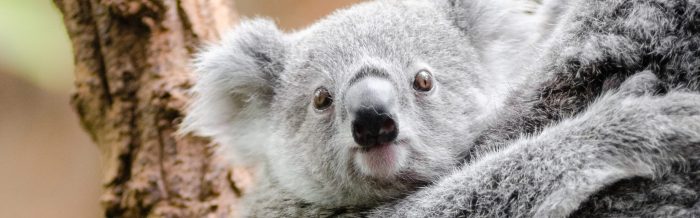
Because the koala has no sweat glands, it cools itself by licking its arms and stretching out as it rests in the trees.
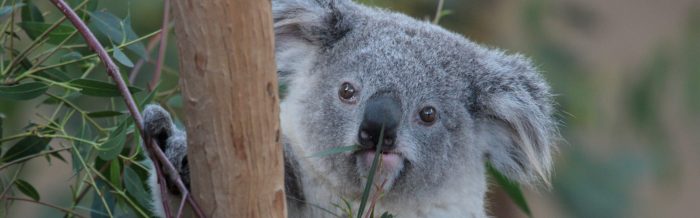
The koala has adapted to its high-fiber, low-protein diet with reduced cheek teeth, highly cusped molars, cheek pouches, and a caecum that's 4 times its body size and can eat 500 grams daily.

Koalas are mainly nocturnal and feed at night with adult males very active at night, moving constantly through their range, both ejecting male rivals and mating with any receptive females.
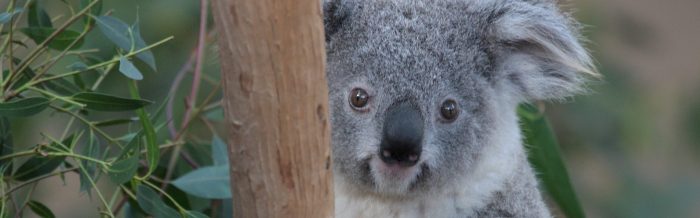
Individual adult koalas occupy fixed home ranges that have extensive overlap with males occupying larger ranges that overlap those of females, sub-adults, and non-breeding males.
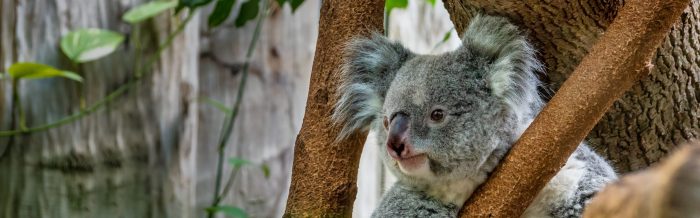
Koalas inhabit temperate and subtropical/tropical dry forests and dry savanna habitats typically dominated by eucalyptus species.
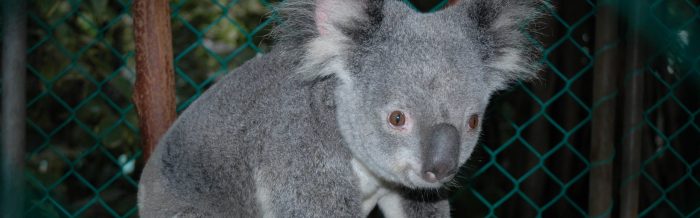
Koalas may live past 10 years in the wild, and there have been reports of lifespans over 20 years in captivity.
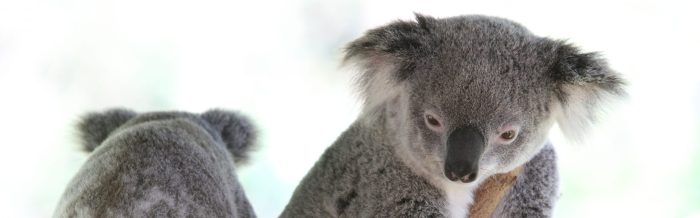
Koalas from the southern end of the range are generally larger in size than their northern counterparts and have coats that are generally longer and darker.
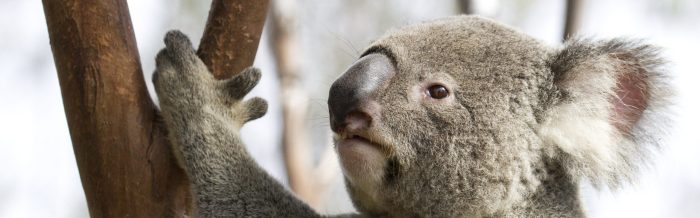
The koala's paws are large, and both fore and hind feet have five strongly clawed digits that enable the koala to grip branches as it climbs.

Koalas are primarily solitary animals and live in loose-knit groups with only one individual per tree.

Because koalas don't drink often due to the high water content of eucalyptus, their common name derives from the Dharug "gula", meaning "no water".
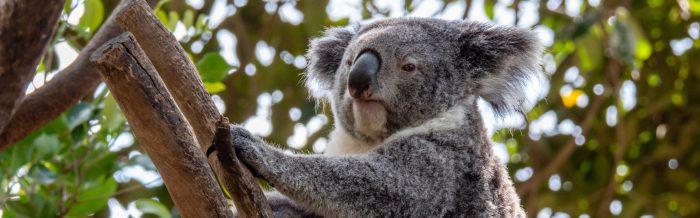
Koalas are completely arboreal, only coming to the ground to move to another tree or to lick up soil or gravel which aids in digestion.
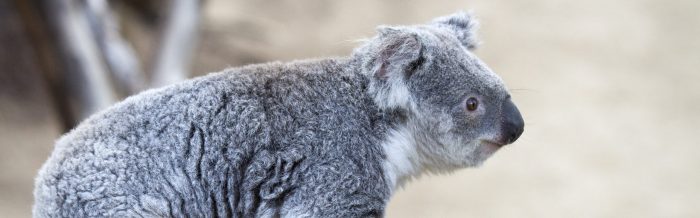
Koalas have dense, wooly fur that varies with geographic location and ears fringed with long, white hairs.
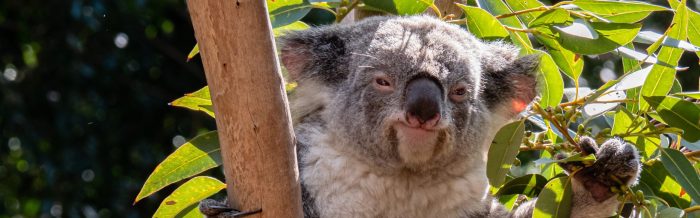
The leaves that koalas feast on are highly toxic, but koalas have a flora of bacteria in their stomachs that metabolize the toxins of the leaves.
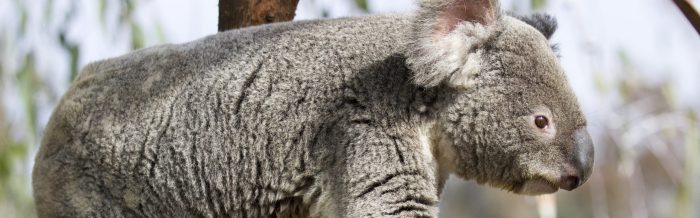
Koalas have a vestigial tail.
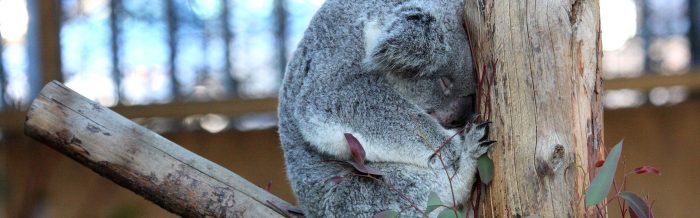
Because of their low-quality diet, koalas conserve energy by their relatively sedentary behavior, moving slowly and sleeping up to 18 hours a day.
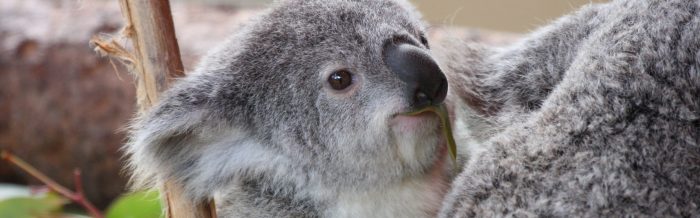
Although koalas are commonly called "koala bears," they are not bears, but instead marsupials in the Diprotodontia order.
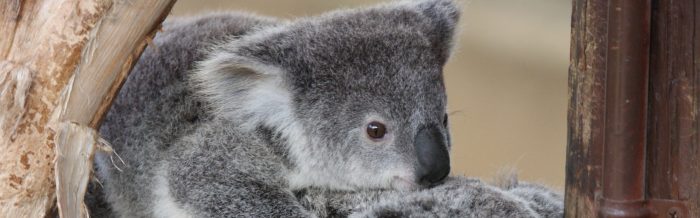
The koala is endemic to Australia and lives in the eastern range from northern Queensland to southwestern Victoria.
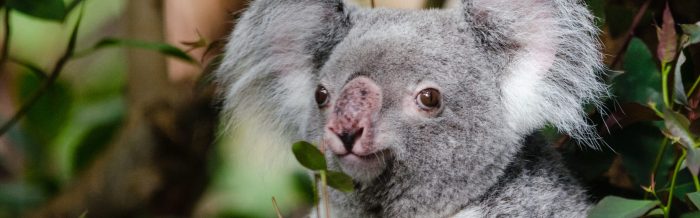
Koalas have a highly specialized, herbivorous diet and only eat 20 of the 350 eucalyptus species, preferring only 5 depending on their geographic location.

As with many rodents, southern grasshopper mice are extremely fertile and difficult to wipe out, even by humans.
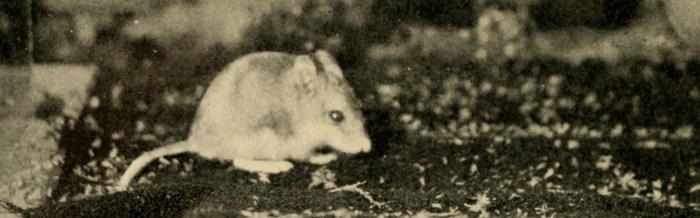
The southern grasshopper mouse is fairly common throughout its range, but generally has low population densities due to its short reproductive life and unique testicular pauses.

Predators of the southern grasshopper mouse include raptors, snakes, and predatory mammals.

There are no conservation measures specific to the southern grasshopper mouse, but there are several protected areas within its range.

Young southern grasshopper mice immediately begin nursing from their mother, open their eyes at 2 weeks, and are weaned at 3 weeks.

The southern grasshopper mouse is an extremely aggressive predator and seizes its prey with a rush, killing with a bite to the head.

The southern grasshopper mouse has no specialized physiological adaptations to arid conditions and obtains moisture from food under natural conditions.

Southern grasshopper mice produce a loud, piercing wolf-like howl when faced with an adversary, while standing on their hind legs with their noses pointed upwards.

Female southern grasshopper mice become receptive at 6 weeks and are able to produce up to 6 litters in a year, but their reproductive life is short, few breeding in their second year.

The southern grasshopper mouse is notable for its resistance to venom as it routinely kills and eats Arizona bark scorpions, a species with a highly venomous sting.

The southern grasshopper mouse is not migratory and does not have seasonal movements.

As with all predators, southern grasshopper mice require large territories and guard them fiercely against all intruders.