The Javan rhinoceros is one of 5 extant rhino species within the Rhinocerotidae family and has 3 recognized subspecies, though 2 are now extinct.
Join a creative community focusing on a unique animal each month.
FaunaFocus releases a new FaunaFact every single day! These bite-sized bits of information are interesting facts paired with a unique image of that animal.
The Javan rhinoceros is one of 5 extant rhino species within the Rhinocerotidae family and has 3 recognized subspecies, though 2 are now extinct.

Although the Javan rhinoceros used to roam across a vast portion of Asia, it can now only be found in west Java, Indonesia.

The Javan rhinoceros is smaller than most other rhinos as average adults stand 5-6 ft at the shoulder and span 11-12 ft in lenth.

As in other ungulates, the Javan rhinoceros' teeth are lophodont, having transverse ridges on the grinding surfaces.

The Javan rhinoceros is an odd-toed terrestrial ungulate as each of its feet ends in three hooved toes.

The Javan rhinoceros' single horn is the smallest of all rhinos, growing to a length of 25cm (10in).

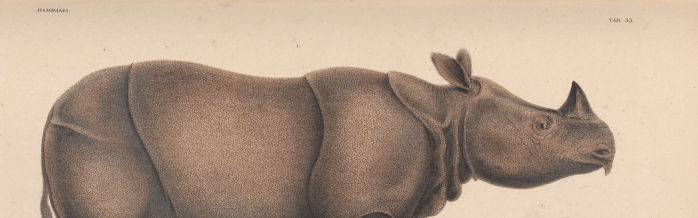
The Javan rhinoceros' hairless skin is a dusky, hazy grey and contains tough folds that create an armor-like plating.

The Javan rhinoceros subspecies, Rhinoceros sondaicus annamiticus, used to reside in Cat Tien National Park in Vietnam, but became extinct in 2011 due to poaching.
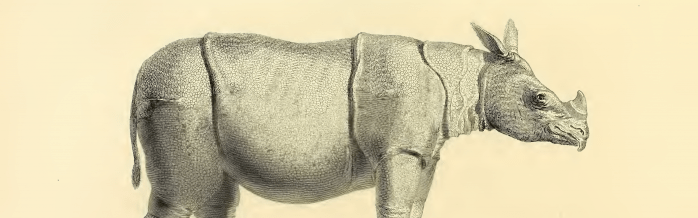
The Javan rhinoceros looks similar to the Indian rhinoceros, but is slightly smaller with a much smaller head and looser, less apparent skin folds.

Indonesia’s remote Ujung Kulon National Park on the island of Java holds the only viable population of the Javan rhinoceros, guarded from poaching by IRF Rhino Protection Units.

The Javan rhinoceros is a lowland species that resides in incredibly dense, low-lying tropical rainforests and prefers areas with abundant water and mud wallows.

The Javan rhinoceros' range extends between 3-20 sq m, with various groups having overlapping ranges and males wandering over larger areas than females.

The longevity of the Javan rhinoceros is unknown, but it's estimated to live an average lifespan of 30-40 years.

The Javan rhinoceros is the most endangered of all rhinos, listed as "Critically Endangered" on the IUCN Red List, and is the rarest large mammal in the world.

Several skull attributes, such as an elongated braincase and well-developed cheekteeth, aid the pine marten in capture, restraint, and processing of prey and allow them to be remarkable predators.

Although pine marten male-female bonds are temporary, males may guard a mated female through territory defense if his range encompasses hers.

The pine marten is considered to be a habitat specialist because of its habitat criterion of having a closed treetop as cover from predation.

At high densities, intrasexual pine marten ranges can overlap, but density levels are usually between 0.3-0.8 sq. km.
Although female pine martens only have four functional mammae, they can produce a litter of up to 2-5 with an average of 3.

In Scotland and Minorca, pine martens may fill 30% of their diet with abundant autumnal fruits and berries, but in other regions, such as Poland, fruits may never be eaten.

The pine marten is listed as "Least Concern" on the IUCN Red List in view of its wide distribution; large, stable to increasing population; occurrence in a number of protected areas; and tolerance of habitat modification.
The pine marten is distributed through most portions of continental Eurasia from western Europe in the west to western Siberia in the east, from the northern edge of coniferous forest in the north to Asia Minor in the south.

Pine martens use abdominal and anal scent glands to scent-mark their home ranges and communicate with other martens.
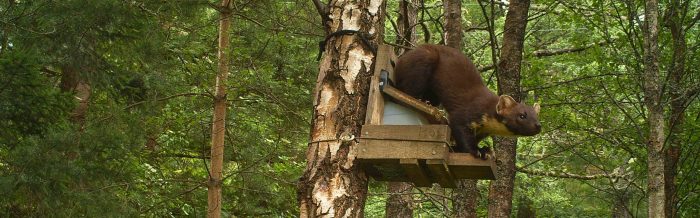
Pine marten copulation is prolonged, lasting 30-50 minutes, and may occur on the ground or in trees.

The pine marten is omnivorous, eating small mammals, birds, insects, carrion, frogs, reptiles, snails, crabs, echinoderms, barnacles, fruits, and berries, but relies on small mammals for most of the year.

Pine martens prefer nesting underground during the cold winter, but hollow trees, squirrel nests, abandoned bird nests, and rock crevices are also used as hideaways.

Pine martens forage extensively in treetops and on the forest floor throughout the summer and autumn in order to store their food and compensate for low winter resources.

Pine martens experience a "false heat" in late winter in which increased aggressive social behavior forces the dispersal of remaining young before the new litter is born.

On the island of Minorca, pine martens are habitat generalists and live in shrubland, rather than forests, possibly because of the absence of predators.

Pine martens are born blind, deaf, and toothless with thick, short fur and don't begin emerging from the den until 7-8 weeks later.
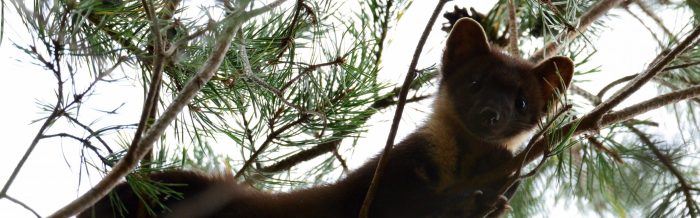
The pine marten's home range may have high individual and geographical size variation as estimates vary widely between studies.
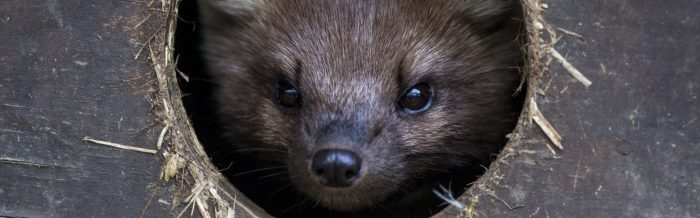
The average lifespan of a pine marten in the wild is 10 years, but in captivity, they can live up to 17 years, averaging 15.

The pine marten inhabits forest habitats, including deciduous, mixed, and coniferous forest and prefers old-growth forest over young forest.