The Virginia opossum's perception channels are specialized for its nocturnal behavior, being most active from dusk until dawn and not hibernating during the colder seasons.
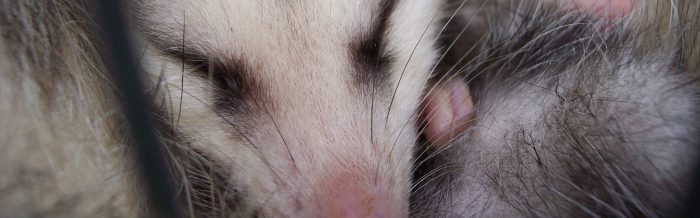
Join a creative community focusing on a unique animal each month.
FaunaFocus releases a new FaunaFact every single day! These bite-sized bits of information are interesting facts paired with a unique image of that animal.
The Virginia opossum's perception channels are specialized for its nocturnal behavior, being most active from dusk until dawn and not hibernating during the colder seasons.
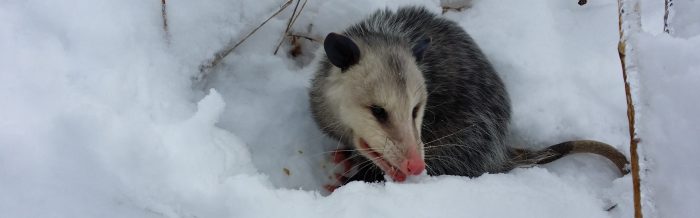
The Virginia opossum's diet changes based on season, habit, and range as they consume more vertebrates in colder seasons and more invertebrates, plants, fruits, and seeds in warmer months.
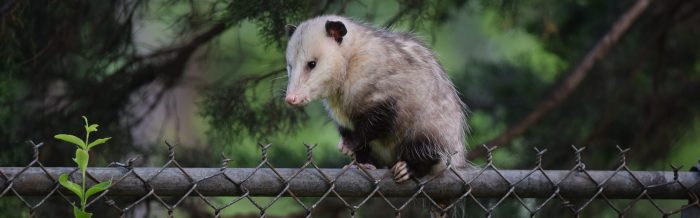
Due to their small size, nocturnal habits, and high reproductive output, Viriginia opossums thrive in woodlands, thickets, forests, shrublands, and even urban areas, but prefer areas near water.
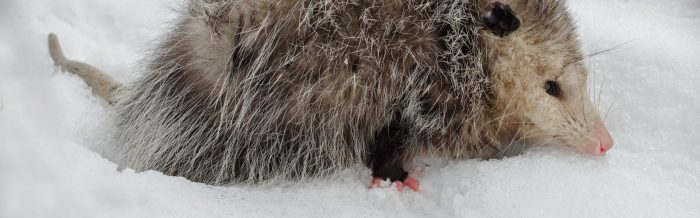
The Virginia opossum's coloration is typically gray but may be tinted red, brown, or black, and varies based on location, being light gray in the north and dark gray in the south.
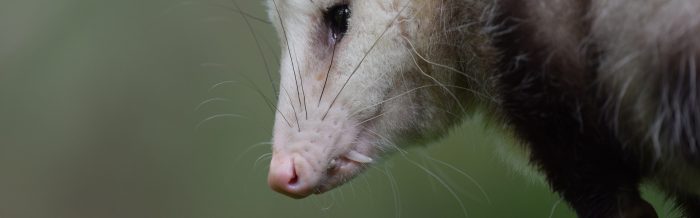
Virginia opossums may be predated upon by owls, dogs, coyotes, foxes, raccoons, bobcats, snakes, and humans, but are immune to the venom of a variety of snakes from the family, Viperidae.
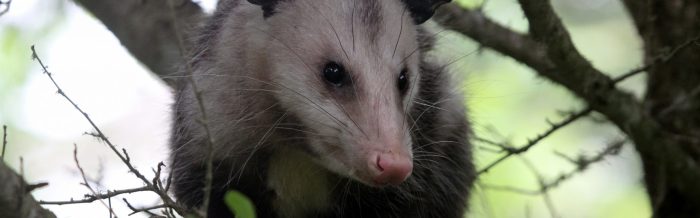
Although the Virginia opossum is mostly arboreal and terrestrial, it is also a strong swimmer with no fear of water and can seal its pouch and nostrils, hold its breath, float, swim, and dive with ease.
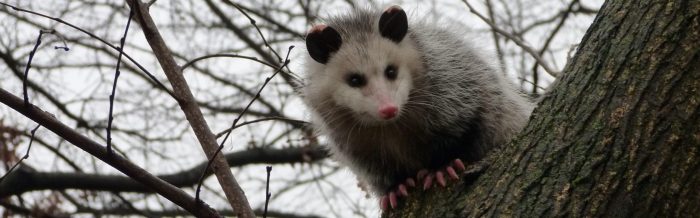
Virginia opossums were once considered nomadic, but are now known to keep oval-shaped home ranges, with males keeping larger ranges than females.
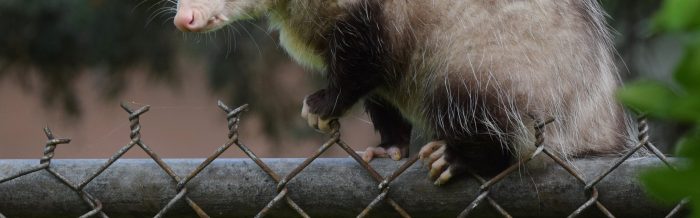
Virginia opossums are terrestrial; however, they are also adept climbers with prehensile tails and specialized feet with opposable halluxes for climbing and denning in trees.
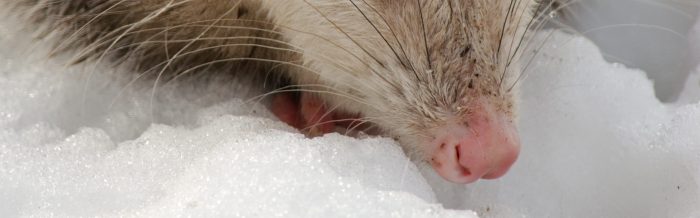
The Virginia opossum is a homeotherm that has a much lower amount of expanded energy due to thermoregulation than any other placental mammal.
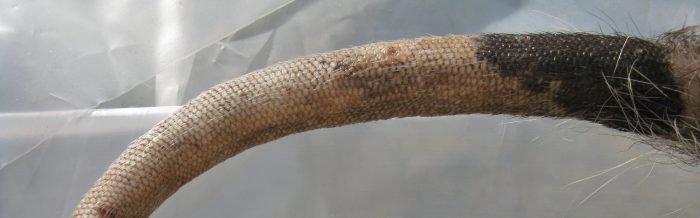
The Virginia opossum's hairless, scale-like, prehensile tail is relatively large, usually around 90% of its total body length.
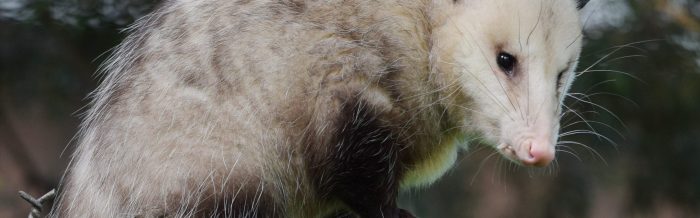
Virginia opossums are hardy, stout, robust individuals with short legs, hairless ears, and thick bodies and males tend to be larger and heavier than females.
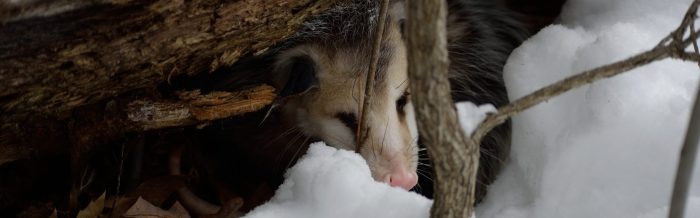
Due to inadequate thermoregulatory abilities and poorly insulated fur, Virginia opossums are ill-equipped for cold temperatures and are, thus, not found in the northern regions of the United States and Canada.
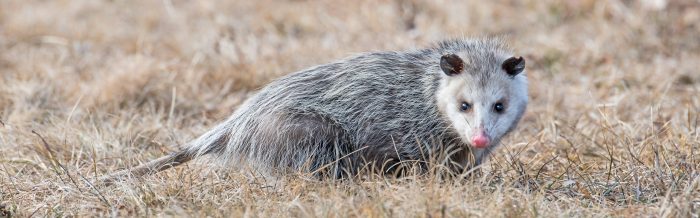
Due to its recent northern and western expansion and its wide range in Central and North America, the Virginia opossum has been noted as one of the most successful mammal species in history.
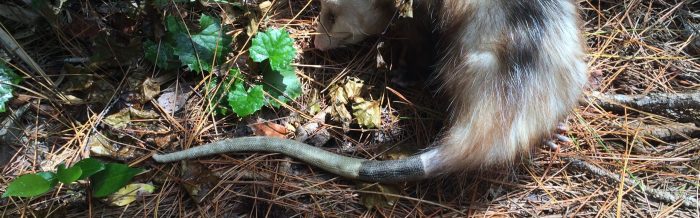
Virginia opossums are opportunistic omnivorous feeders, seen as pests, because they consume vertebrates, invertebrates, plants, fruits, grains, carrion, farm poultry, pet food, and even garbage.
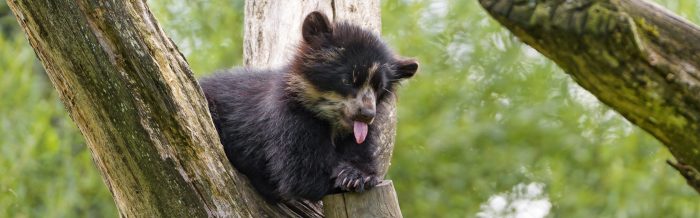
Spectacled bear cubs are born blind and are completely dependent on their mother for their first month but will remain with her for up to a year.

Spectacled bears can be persecuted and shot by local farmers who blame them for killing cattle and destroying maize crops.
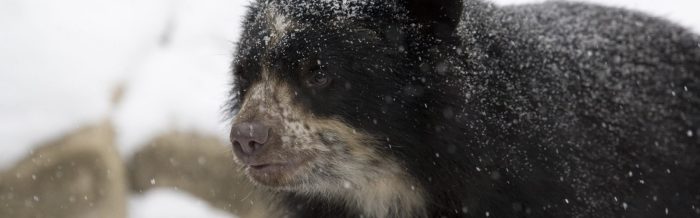
Adult spectacled bears have no predators, but cubs may be preyed on by mountain lions, jaguars, and occasionally by adult male spectacled bears.

The average lifespan of a wild spectacled bear is 20 years, but captive bears can live up to 25 years, the longest living 36 years, 8 months.
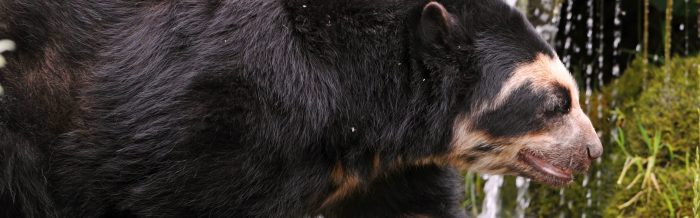
Spectacled bears rival the polar bear for the most sexually dimorphic modern bear as males are up to 50% larger than females and can twice their weight.

There is no known paternal involvement in the rearing of spectacled bear cubs; in fact, males may eat any cubs they come across.
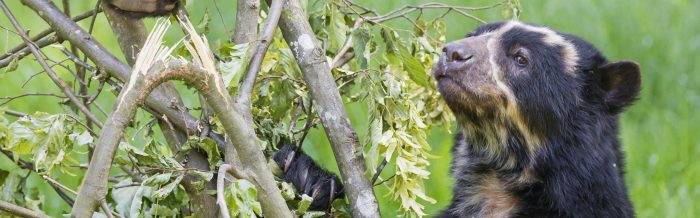
Because spectacled bears are shy, peaceful, and elusive and avoid contact with humans by climbing the tallest of trees, no one knows exactly how many remain in the wild.

The spectacled bear is believed to be mostly diurnal and does not hibernate, but there is disagreement over its activity pattern.
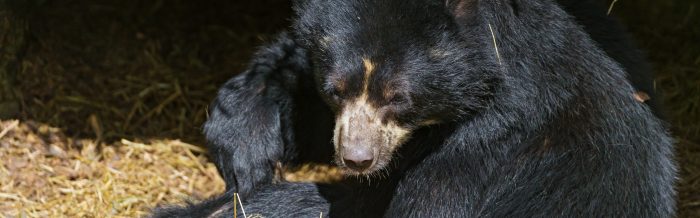
A spectacled bear's litter can range from 1-4 cubs and is positively correlated with the female's weight and the abundance and variety of food sources.
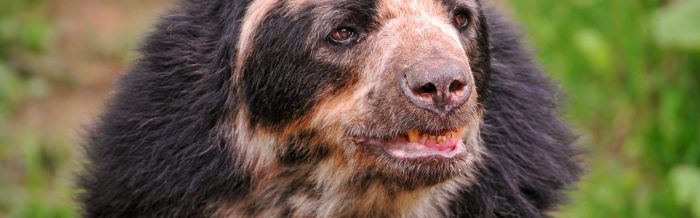
Relative to body size, spectacled bears have the largest zygomaticomandibularis muscle of any bear species, an adaptation for their primarily herbivorous diet.
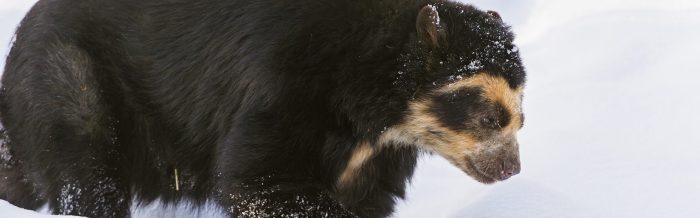
Habitat loss plays a role in the decline of spectacled bears as 30% of their habitat has been lost since 1990 and 3-6% more is lost each year.
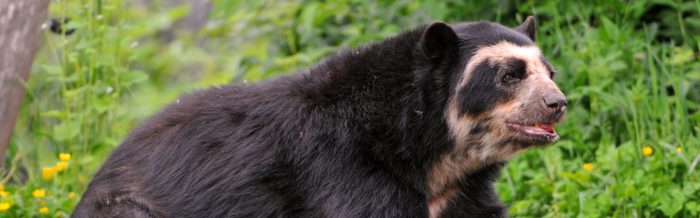
Depending on the season, spectacled bears travel between habitats such as dense cloud forests, paramos, scrub deserts, and high-altitude grasslands, but prefer humid montane forests because of the abundance of food.

Spectacled bears are polygynous and breed at various times throughout the year, potentially capable of delayed implantation with a variation in gestation time from 160-255 days.
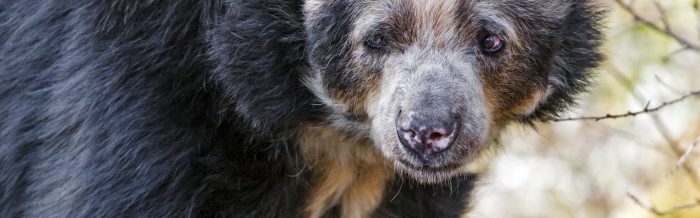
Spectacled bears possess great religious and cultural value to the native people whom share their range.
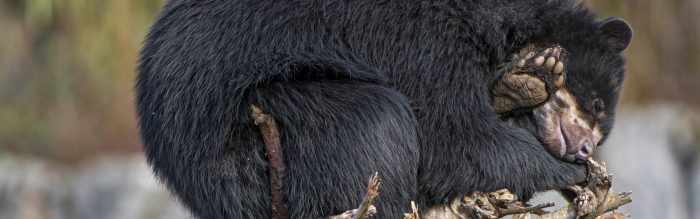
Because of their excellent climbing skills, spectacled bears spend a fair amount of time in trees and create "nests" in the understory for foraging and sleeping.
Spectacled bears are hunted illegally for medicinal or ritual purposes as their meat, skin, fat, claws, and gallbladder are prized locally and internationally.

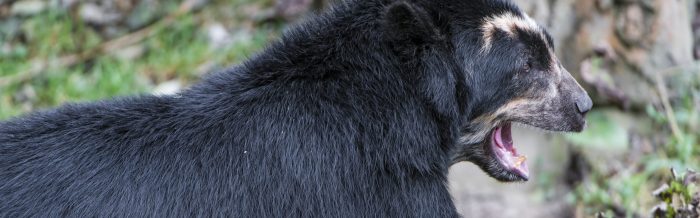
No two spectacled bears have the same light markings on the face, allowing individuals to be easily identified from each other.
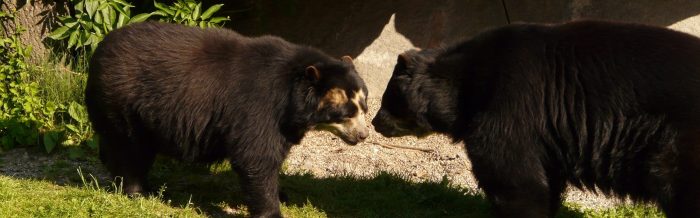
Spectacled bears are stocky, medium-sized bears with small, round ears; a thick, short neck; a stout muzzle; and medium-long black fur, but reddish-brown individuals have been observed.

There are seasonal- and sex-based differences in the home ranges of spectacled bears as their ranges are larger in the wet season and males keep bigger ranges than females.