The European mink hybridizes with western polecat at low levels as only pure polecat males can mate with pure European mink females.

Join a creative community focusing on a unique animal each month.
FaunaFocus releases a new FaunaFact every single day! These bite-sized bits of information are interesting facts paired with a unique image of that animal.
The European mink hybridizes with western polecat at low levels as only pure polecat males can mate with pure European mink females.

There is sexual dimorphism in the European mink as males are longer than females and have longer tails.

The European mink paddles with its short, membraned front and back limbs simultaneously and can stay underwater for 1-2 minutes, but is not as efficient underwater as the American mink.

Currently, seven subspecies of European mink are recognized.
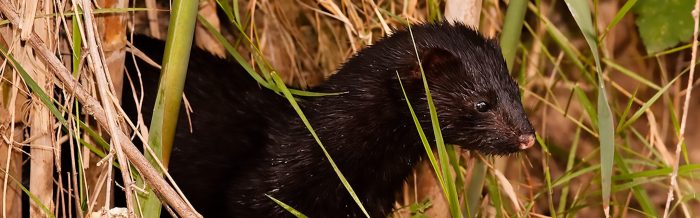
The European mink does not form large territories, possibly due to the abundance of food on the banks of small water bodies.

The European mink primarily hunts for aquatic prey in riparian zones and in the water, and voles are its most important food source.

In the early 20th century, 40,000-60,000 European mink were caught annually in the Soviet Union for the fur trade, an estimate which exceeds the modern global population.
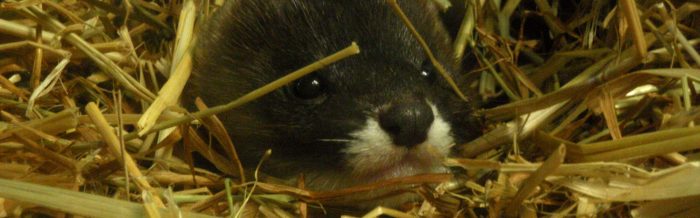
The European mink is more sedentary than the American mink and confines itself for long periods in permanent burrows and temporary shelters near the water's edge lined with straw, moss, mouse wool, and bird feathers.
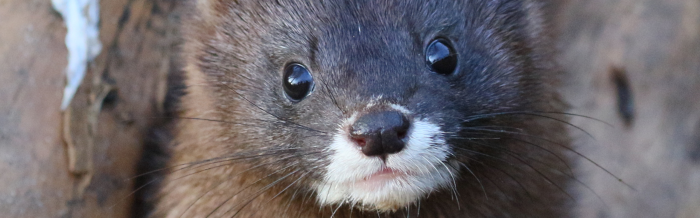
The European mink has an evenly distributed brown or black coat color that is lighter in the summer and, unlike the American mink, its chin and lips are pure white.

European mink show the curious phenomenon of delayed implantation, and after a gestation of 35-72 days, give birth to 2-7 young in April and May.
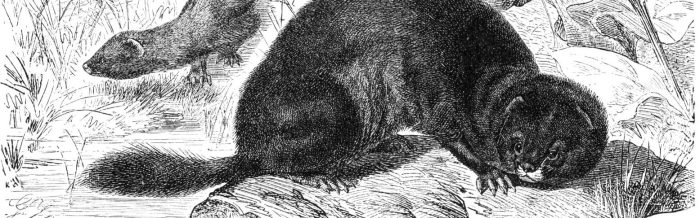
The European mink is a medium-sized, elongated, semiaquatic species of mustelid more closely related to the western polecat and Siberian weasel than to the American mink.
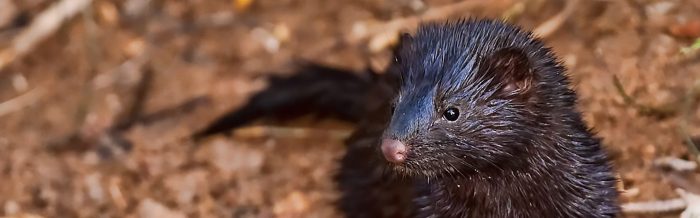
Populations of European mink have decreased more than 50% over the last 10 years for ecological and commercial reasons and are predicted to decline more than 80% over the next 10 years.

The European mink has a large, broad head with short ears that are less specialized for carnivory than that of polecats and the American mink, bearing more infantile features, weaker dentition, and less strongly developed projections.
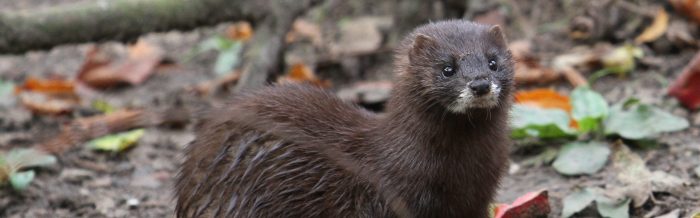
Although the current global population of European mink is unknown, numbers were estimated at 30,000 in 2001.

The European mink has a short tail that makes up about 40% of its total body length.

The European mink is "Critically Endangered" because of a loss of over half the population due to habitat loss, water pollution, hydroelectric constructions, and invasive species, notably American mink.

European mink are crepuscular and are most active around dusk and before day break.

The European mink is carnivorous and has a diverse diet consisting largely of aquatic and riparian fauna, such as mammals, birds, frogs, fish, insects, and crustaceans.

The European mink has a very thick and dense, water-repellent coat that is shorter, less dense, and more loosely fitting than that of the American mink.

The European mink's daily food requirement is 140-180 g. (4.9-6.3 oz.) and it will cache its food in times of abundance.

Over the last 150 years, the European mink has been extirpated from most of its former range from Finland to east of the Ural mountains, to northern Spain and the Caucasian Mountains.

The European mink population recently discovered in the Danube delta is clearly the most viable in the world with 1,000-1,500 individuals.

As a semiaquatic mustelid, the European mink has specialized wetlands habitat requirements and is rarely found more than 100 meters from freshwater.

Western European mink populations have very low genetic variability while the eastern populations have the greatest variability.

The European mink is also known as the Russian mink and Eurasian mink as is native to Europe and Eurasia.

It is unknown exactly how many kea are left in the wild, but estimates range from 2,000-5,000 birds.

Kea have been called "The Clown of New Zealand's Southern Alps" and are important for New Zealand's tourism industry, attracting crowds when they convene on automobiles.

Kea can live 14.4 years in captivity and the oldest recorded wild bird was at least 22 years of age.
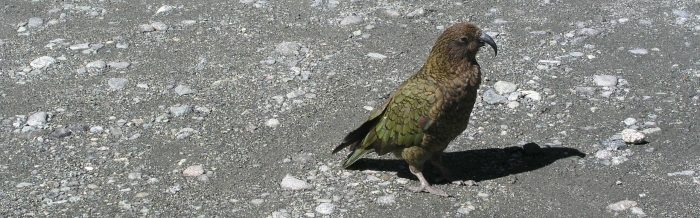
Kea remain alert for air attacks when foraging and band together to chase falcons that threaten their group.

Because kea are fairly heat-intolerant, the timing of their daily activities varies with the weather as they spend more time roosting on hot days.
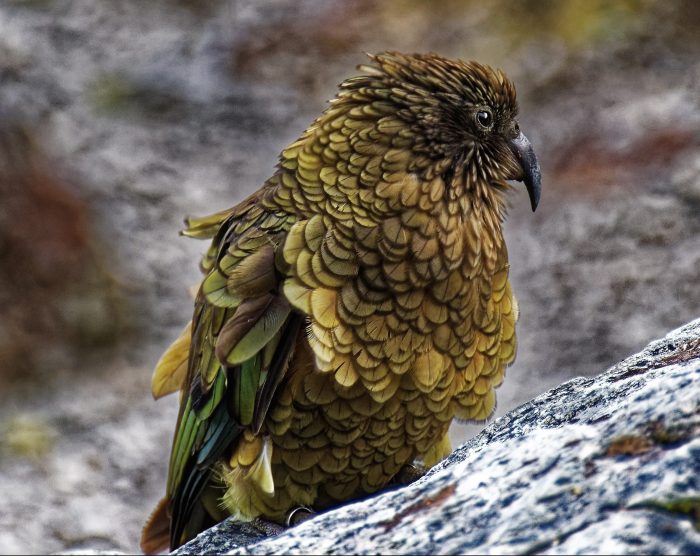
Introduced mammalian predators, such as stoats, cats, and possums, have spread into most of the kea's range and caused episodic, high mortality events, but invasive control toxins cause lead-poisoning in kea.

Kea perceive visual, tactile, auditory, and chemical stimuli and communicate with a wide array of vocalizations and by posturing and fluffing their head feathers into facial expressions.

Kea hatchlings are altricial and fledge after 13 weeks before dispersing from their natal ranges after another 5-6 weeks.