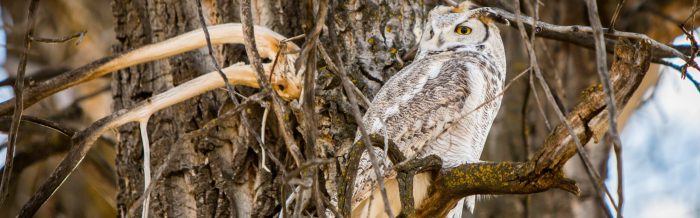
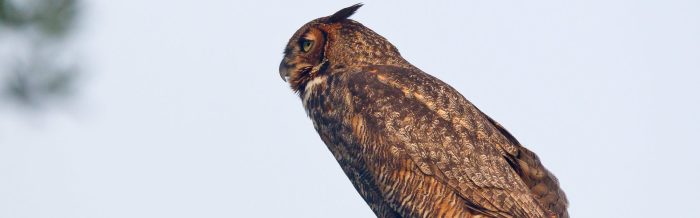
The ability of great horned owls to revolve their heads through 180° is frequently used to advantage.
Join a creative community focusing on a unique animal each month.
FaunaFocus releases a new FaunaFact every single day! These bite-sized bits of information are interesting facts paired with a unique image of that animal.
The ability of great horned owls to revolve their heads through 180° is frequently used to advantage.
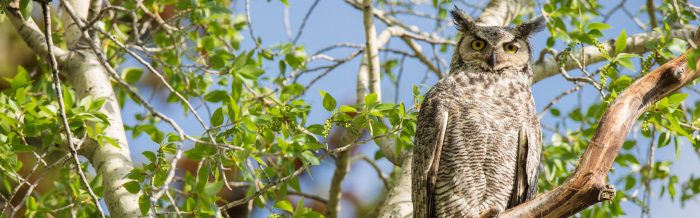
Great horned owls prefer large stick nests in fairly open situations over smaller, enclosed leaf nests.
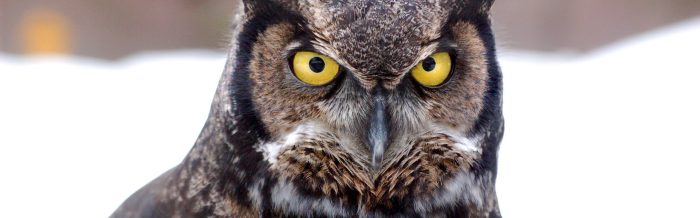
The great horned owl is the most deadly enemy of the crow, taking old and young from their nests at night.
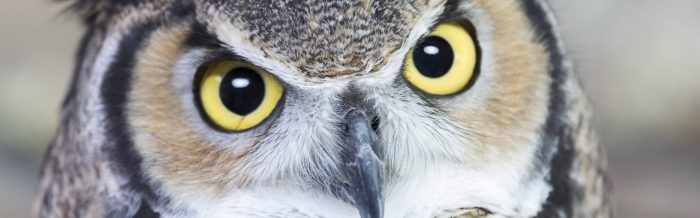
The great horned owl's favorite part of its prey to eat is the brains.
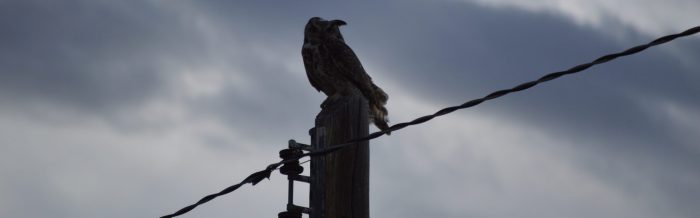
The great horned owl is a nocturnal bird, most active in the dusk of the evening and on moonlit nights.
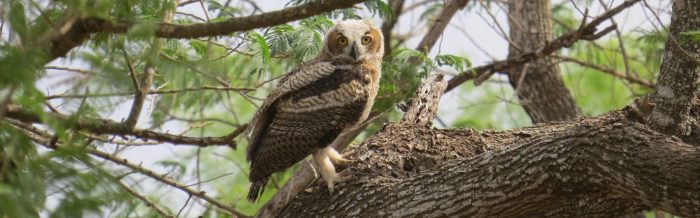
Of the North American species, great horned owls are one of the first to nest in the spring.
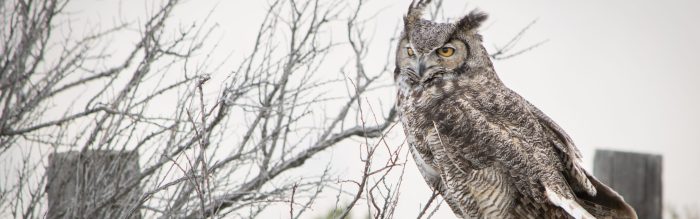
Great horned owls are considered full migrants.
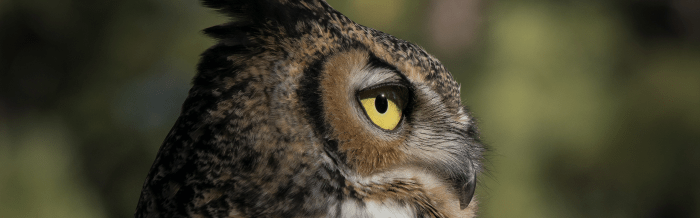
Male great horned owls have a challenging, deep, rich tone of hoot contrasting the higher and huskier notes of the females.
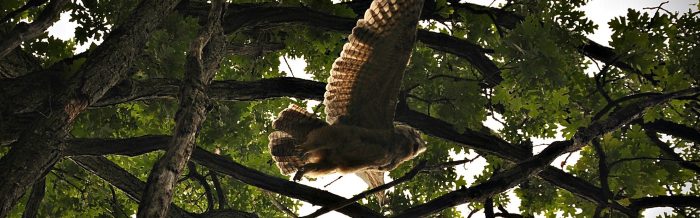
The silent flight of the great horned owl is powerful, swift, skillful, and graceful.
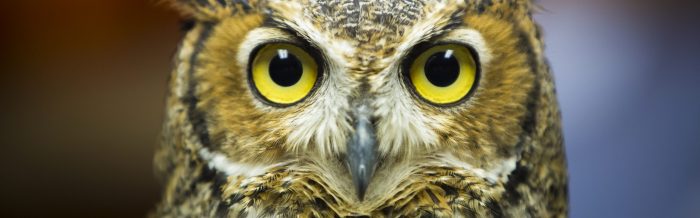
Because the sense of smell is not highly developed in the great horned owl, they kill and eat many skunks.
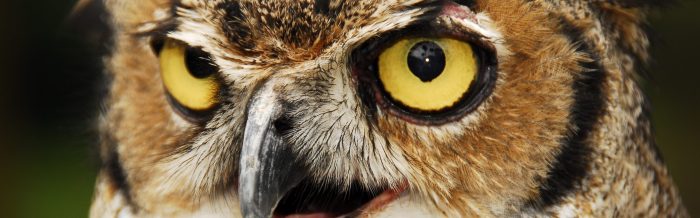
At times the male great horned owl appears to hoot for the mere pleasure of hearing his own voice.
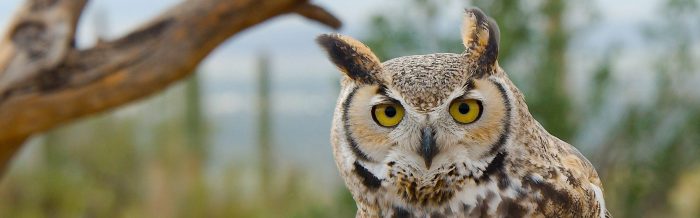
The function of the great horned owls feathered ear tufts is unknown.
Female great horned owls are larger than males and weight about 50% more.
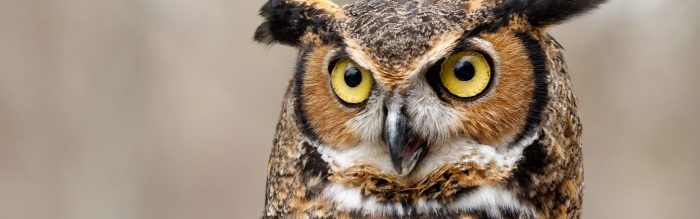
Great horned owl calls are divided into three main categories: hoots, chitters, and squawks.
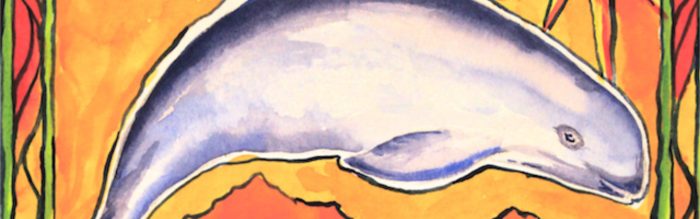
The vaquita can be saved from extinction.

Vaquita conservation management and action has been largely ineffective at controlling vaquita mortality in gillnets.
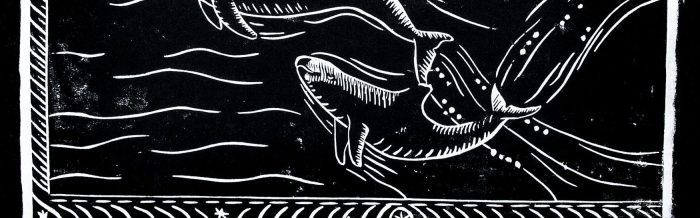
At the current rate of decline, the vaquita could be extinct by 2018.

Vaquitas have probably always been rare.
Highly-trained US Navy bomb-locating bottlenose dolphins are being used to locate vaquitas.
The oldest vaquita was estimated to be 21 years of age.
As well as gillnet entanglement, the vaquita is vulnerable to several other potential threats.
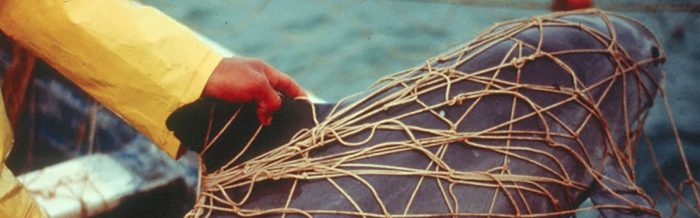
Mortality in gillnets has long been recognized as the most serious and immediate threat to the vaquita's survival.

The vaquita and the totoaba, a large long-lived fish species in the croaker family, have much in common.

The demand for dried totoaba swim bladders is threatening not just the totoaba but also the vaquita.

There are less than 30 vaquita individuals left in the wild.

The vaquita's population is declining rapidly, with a decline of nearly 50% since 2015.
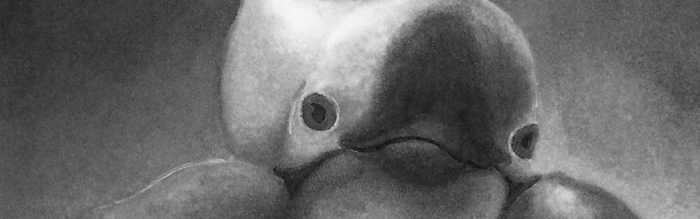
Most biological and ecological information of the vaquita is unkown.

The mating system and social structure of the vaquita have not been studied.

The vaquita is the only cetacean endemic to Mexico.
Vaquitas are generalist feeders, consuming a wide variety of over 21 benthic and demersal (bottom-dwelling) teleost fish, squids, and crustaceans.

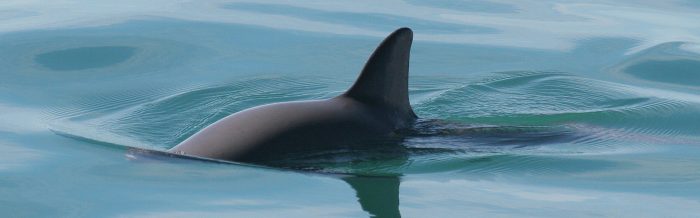
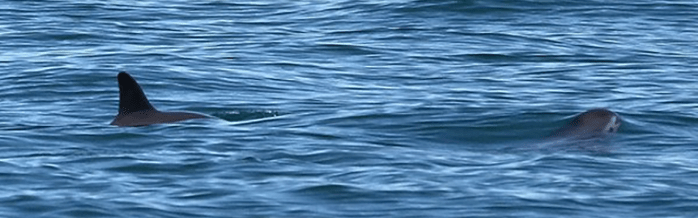
Vaquita are typically inconspicuous at the surface as they avoid boats and rarely splash, jump, or leap.
Unlike most other porpoise species which breed every year, vaquitas give birth every 2 years.

Potential predators of vaquitas are large sharks, killer whales, and man.