Although Southern grasshopper mice protect crops from insects and rodents, they will also feast upon crops if their usual prey becomes scarce.

Join a creative community focusing on a unique animal each month.
FaunaFocus releases a new FaunaFact every single day! These bite-sized bits of information are interesting facts paired with a unique image of that animal.
Although Southern grasshopper mice protect crops from insects and rodents, they will also feast upon crops if their usual prey becomes scarce.

Southern grasshopper mice are capable of breeding year-round, but most reproductive activity occurs during the late spring and the summer.

There is sexual dimorphism displayed in the physiology of the southern grasshopper mouse as females are heavier and longer than males.

The southern grasshopper mouse is usually known to be a monogamous species with both, maternal and paternal, parental investment.

The southern grasshopper mouse is categorized in the order Rodentia and family Cricetidae, but is unique among other North American rodents due to its arthropod-heavy diet.

Southern grasshopper mice are cannibalistic and will kill other members of their species when threatened or in need of food.

The southern grasshopper mouse is listed as "Least Concern" due to its wide distribution, presumed large population, stable population trend, unlikeliness to decline, and no known major threats.

The southern grasshopper mouse nests in small underground burrows that were abandoned or taken by force.
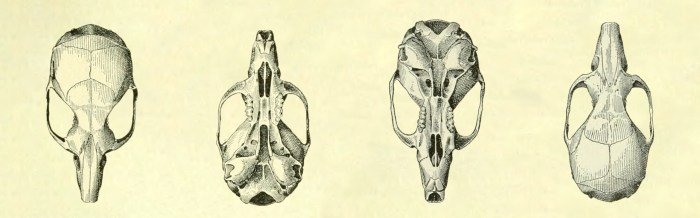
While 10 subspecies of southern grasshopper mouse were recognized in 1975, ITIS currently recognizes 7 subspecies.
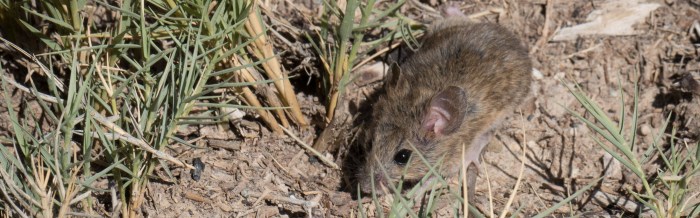
Southern grasshopper mice are omnivorous with 75-90% of their diet consisting of scorpions, grasshoppers, beetles, small vertebrates, and even other rodents.

The southern grasshopper mouse is covered with fine, dense, gray or pink-cinnamon fur with a distinct white underside.

Southern grasshopper mice are largely nocturnal and active year-round.
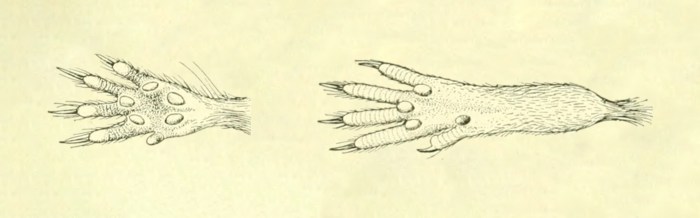
The southern grasshopper mouse is terrestrial and a good climber.

Due to their territorial, cannibalistic nature, southern grasshopper mice are solitary animals.

The southern grasshopper mouse inhabits temperate shrubland and desert habitats and prefers xeric areas at low elevations with low-moderate shrub cover.
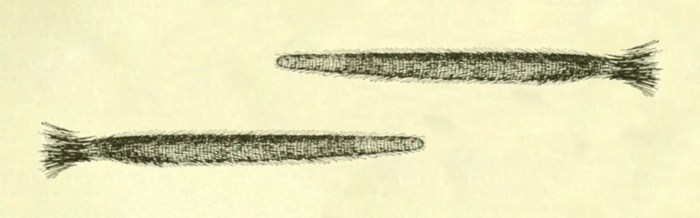
The southern grasshopper mouse is a small, robust species that averages 9-13 cm. in length with a tail that is longer than half the length of its head and body.

The southern grasshopper mouse is found in the western and southwestern United States and in northern Mexico of North America.

Relative brain size in southern grasshopper mice tends to vary with food preferences as it's smallest in folivores and largest in generalists.
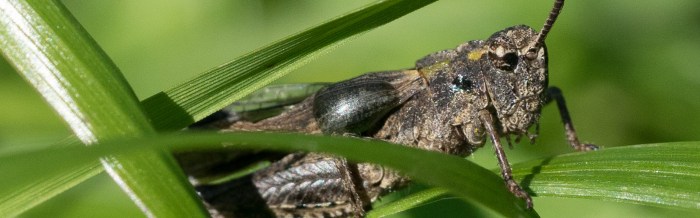
The southern grasshopper mouse is also known as the scorpion mouse due to its diet consisting mostly of arthropods such as grasshoppers and scorpions.
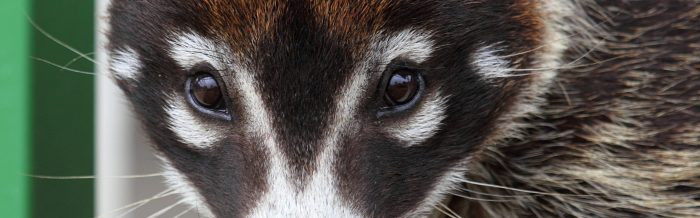
The white-nosed coati population in the United States is suspected to be losing genetic contact with populations further south, potentially leading to extirpation in the United States.
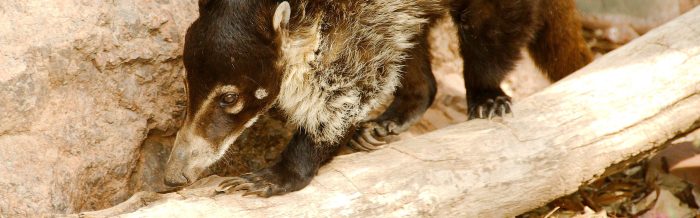
White-nosed coatis defend themselves using their bent forefeet claws and sharp canines.

The white-nosed coati is susceptible to canine distemper and rabies.
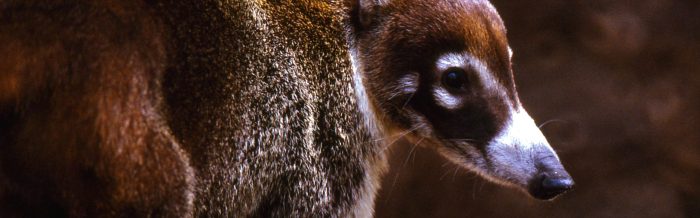
Individual white-nosed coatis may live up to 14 years of age.

White-nosed coatis will only occasionally cause crop damage and rarely take small farm animals.

White-nosed coati adult body size is reached by 15 months and females sexually mature a year faster than males, maturing at 2 years.

The white-nosed coati's current population trend is decreasing due to major population declines in the 1960s for unknown reasons.

White-nosed coatis are sometimes kept as pets.
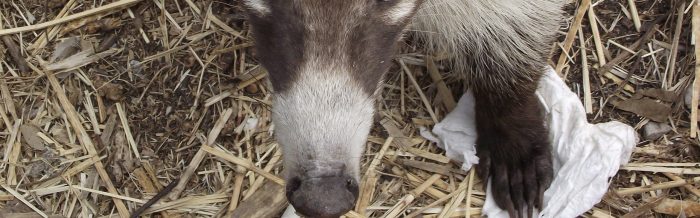
When hunting, white-nosed coatis will force vertebrates to the ground with their paws and kill by a bite to the head.
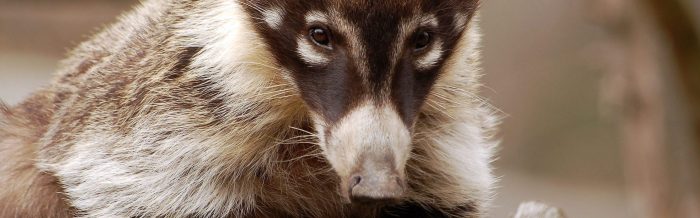
The white-nosed coati's coat color and muzzle markings are the only physical characteristics dissimilar from its relatives the South American and Western mountain coatis.
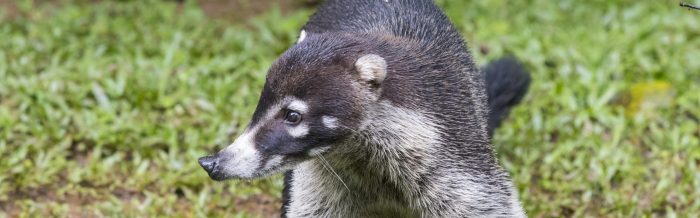
The white-nosed coati is hunted throughout its range for skin and food, but its fur has no value.

After 5 months, mother white-nosed coatis will rejoin their group with their young and allow the male to meet his offspring.

The white-nosed coati is sexually dimorphic in body size as males are much larger than females.

After a gestation period of 77 days, female white-nosed coatis give birth to 2-7 dependent young weighing 100-180 grams.