Two gerenuk subspecies are recognized, the southern gerenuk or Scalter's gazelle, and the larger, northern gerenuk, also known as the Waller's gazelle.
Join a creative community focusing on a unique animal each month.
Two gerenuk subspecies are recognized, the southern gerenuk or Scalter's gazelle, and the larger, northern gerenuk, also known as the Waller's gazelle.

The gerenuk doesn't do well in captivity and has rarely been bred in zoos.

Although rare, gerenuk contribute to nutrient cycling in the ecosystems in which they live through their foraging activities.

Gerenuk have become a regular subject in the expanding world of photo-safaris and parks in Africa and help promote ecotourism.
Gerenuk have evolved several anti-predator adaptations for survival as juveniles and adults, such as remaining motionless, hiding in foliage, and freezing at the approach of danger.

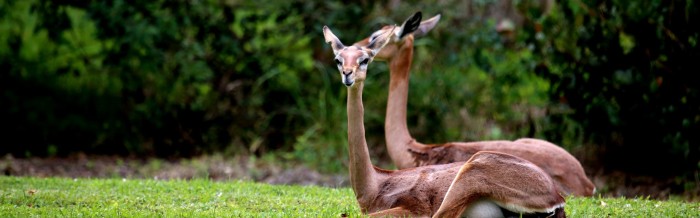
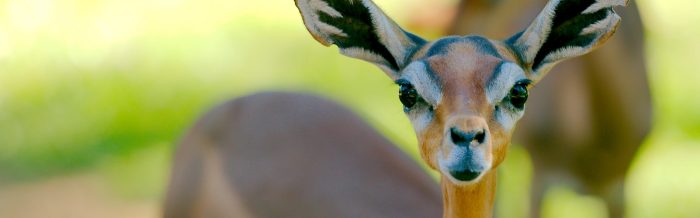
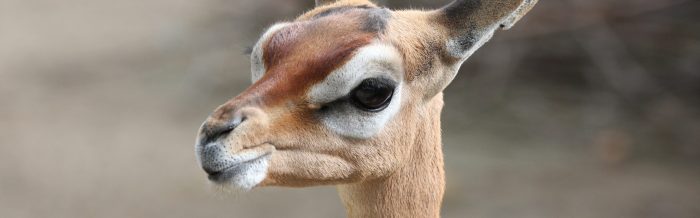
The gerenuk is one of the world's most recognizable antelopes due to its defining features, and is known as the "giraffe gazelle" due to its long neck and long, thin legs.

The gerenuk is diurnal and primarily active during the day.
Gerenuk young are precocial and begin to walk within minutes of birth.

Only male gerenuks have head ornamentation in the form of scimitar shaped horns ranging from 25 to 44 cm. in length.

There are no adverse effects of gerenuk on humans.
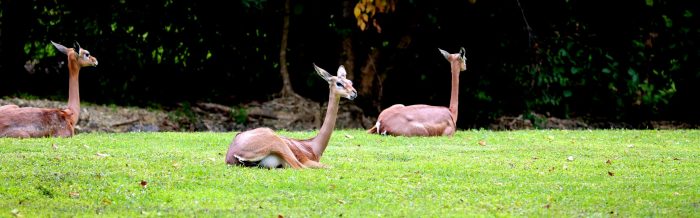
Because they do not form large populations and their food is of limited supply, gerenuk exhibit strange social interactions as males are solitary and territorial and females are social and form small groups.
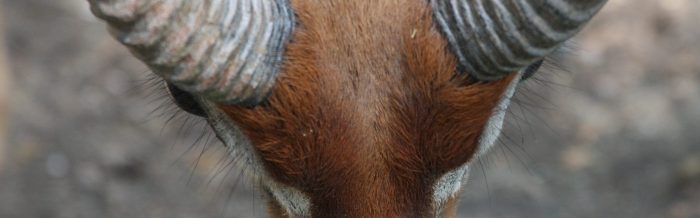
The gerenuk's coat is of a pale tawny brown, short, fine, glossy hair that is evenly distributed over the whole body.
Gerenuk are preyed on by a diverse set of large predators, such as cheetahs, leopards, lions, African wild dogs, hyaenas, servals, honey badgers, caracals, and eagles.

The gerenuk's common name derives from the Somali name for the animal, gáránúug.
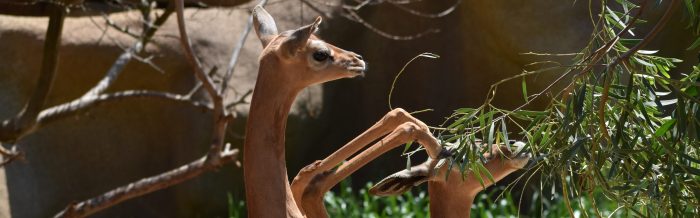
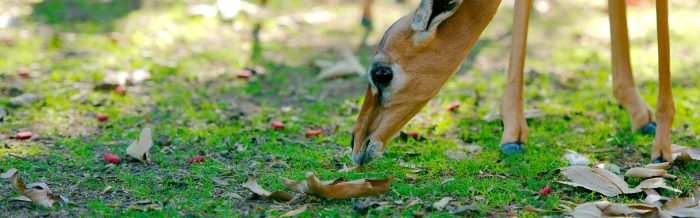
The gerenuk is one of the most exclusive browsers because it has the ability to stand on its lengthy hind legs and use its long neck to obtain tree leaves that are out of reach for most other antelope species.
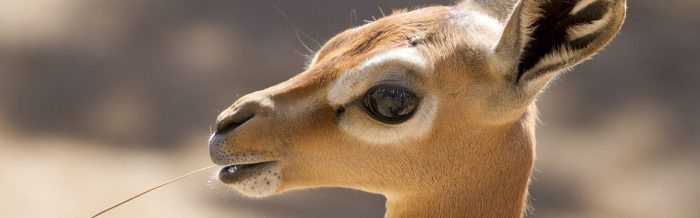
The gerenuk is largely independent of water and does not drink free-standing water, instead relying on water taken in when eating succulent plants.
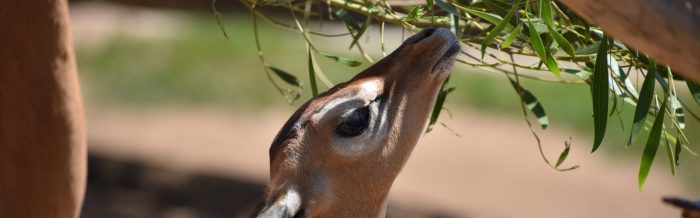
The gerenuk is herbivorous and an efficient browser of more than 80 different species of herbaceous and succulent plants.
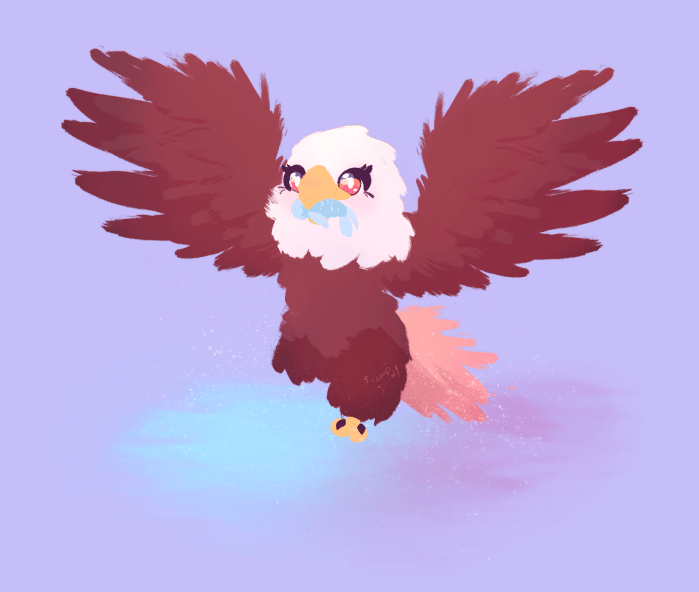
FaunaFocus raised $1,041.82 for the American Eagle Foundation's National American Bald Eagle Day campaign benefitting the bald eagle and other birds of prey.
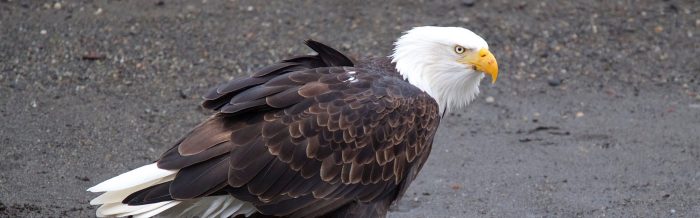
Many bald eagle populations use geographic landmarks for navigation, making the Mississippi River a major migratory corridor.

Contrary to popular belief, bald eagles have relatively weak, high-pitched, thin vocalizations composted of chirps, whistles, and harsh chatters and produce 3 main types of calls.
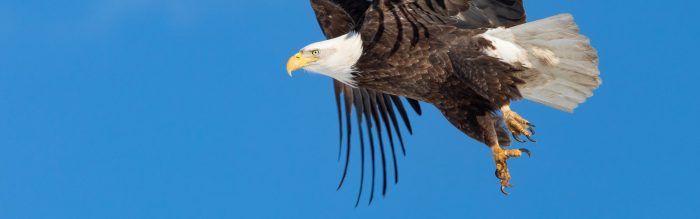
Do you think you know the bald eagle? Test your knowledge of bald eagle FaunaFacts with this trivia quiz!

Sarah redrew one of her first artworks from about four years ago and her artistic improvement is inspiring. This illustration depicted a noble bald eagle amidst a rainbow gradient background with an aura of colors reflecting within its eyes. Keeping with the theme of lustrous colors, this improved piece captures the same theme with a refined attention to detail.

As a top predator, bald eagles impact all members of their community and have been causing a population decline in common murres.

Immature bald eagles are often confused with golden eagles due to their dark coloration, but bald eagles have longer heads, shorter tails, and blotchy white coloration on their underwing coverts, axillaries, and tails.
Due to hunting, habitat destruction, and insecticides, bald eagles were once an endangered species, but thanks to The Bald Eagle Protection Act and other conservation efforts, they're now considered "Least Concern" on the IUCN Red List.
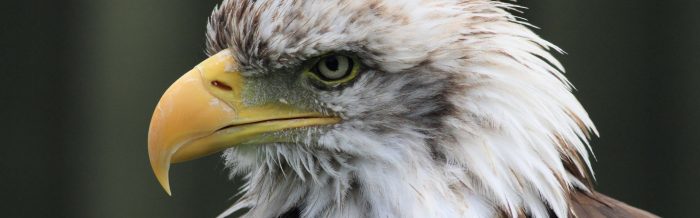
This month, FaunaFocus is celebrating National American Eagle Day by collaborating with the American Eagle Foundation (AEF) and hosting another 24-hour charity host train in order to help conserve birds of prey around the world, including this month's featured species, the bald eagle!
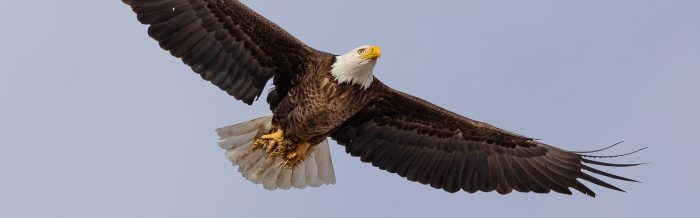
Bald eagle home range sizes may vary as populations in Oregon and Washington have larger ranges that those in Alaska, but they do not oscillate between breeding and non-breeding seasons.
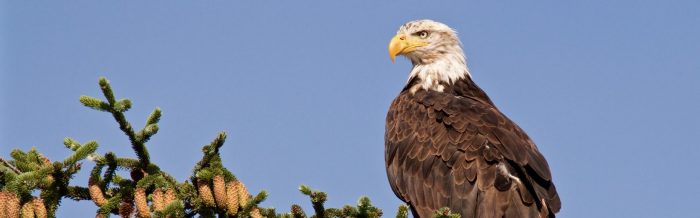
Although both bald eagle parents care for the offspring, the female broods the eggs more frequently and is present 40% more than the male while the male provides most of the food during the first two weeks post-hatching.
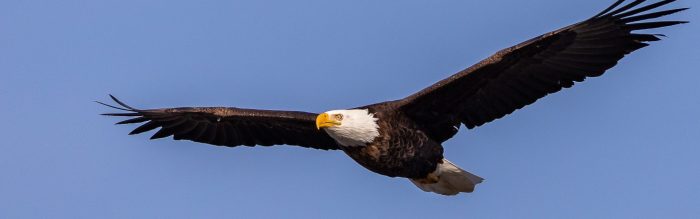
While migrating, bald eagles generally soar and congregate in areas with food abundances, specifically in areas below the freeze line with open water for hunting.
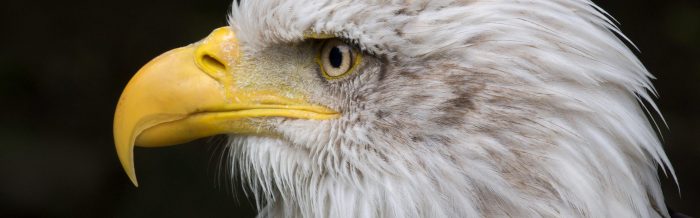
This month, FaunaFocus is celebrating National American Eagle Day by collaborating with the American Eagle Foundation (AEF) and hosting another 24-hour charity host train in order to help conserve birds of prey around the world, including this month's featured species, the bald eagle!

Bald eagle eggs are generally only exposed for less than a minute at a time when the parents change positions or turn the eggs.
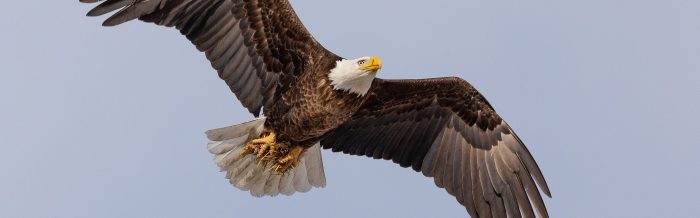
Although bald eagles do not have an adept sense of smell, they do avoid food items that taste spoiled.