Like many other canid species, red foxes scent mark through urine, feces, anal sac secretions, supracaudal glands, and glands around the tail, lips, jaws, and pawpads.

Join a creative community focusing on a unique animal each month.
Like many other canid species, red foxes scent mark through urine, feces, anal sac secretions, supracaudal glands, and glands around the tail, lips, jaws, and pawpads.

The red fox's top speed is about 48 kph and obstacles as high as 2 m. can be lept.

Red fox density is highly variable, ranging from as little as 1 fox/40 km² to as high as 30 foxes/km² in urban areas where food is abundant.

Threats to the red fox are highly localized and include habitat degradation, loss, and fragmentation, exploitation, and direct and indirect persecution.

Female red foxes gestate for 49-56 days before giving birth to 1-13 pups, averaging 5, while the male provides food outside of the maternity den.

Red foxes originated in the Middle East, then radiated out to the Arctic Circle, Europe, North Africa, the Asiatic steppes, India, and Japan.

Red foxes are preyed on by coyotes, wolves, and other predators, but their most significant predators are humans, killing them for their fur and nuisance.

Red foxes in North America are genetically distinct and probably merit recognition as a distinct species (Vulpes fulva).

Two natural color variants occur in the red fox as 25% are cross foxes with black stripes down the back and shoulders, and 10% are silver foxes with a silver and black coat.

Red foxes use 28 different vocalizations to communicate nearby and far away, and individuals have voices that can be distinguished.

Red foxes are often monogamous, but polygyny can occur with one breeding male and several breeding females all sharing a den.

Coloration of red foxes ranges from pale yellowish red to deep reddish brown on the upper parts and white, ash, or slate on the underside.

The red fox has a stable population trend and the pre-breeding British red fox population has been estimated at about 240,000 indidviduals.

Red foxes inhabit forest, shrubland, grassland, wetlands, desert, and artificial terrestrial habitats, flourishing particularly well in urban areas.

The body mass and length of red foxes varies as foxes in Europe and northern latitudes are larger than those in North America and southern latitudes.

Red foxes are territorial, solitary animals that remain in the same home range for life keeping earthen dens abandoned by rabbits and marmots.

Red foxes live an average of 3 years in the wild, but can live 10-12 years in captivity.

The red fox has been evaluated as "Least Concern" because of its wide geographical range, vast introduction in other regions, adaptability, opportunistic diet, and success in urban areas.

Red foxes display sexual dimorphism in body size as males are slightly larger than females.

Red foxes are widely kept in wildlife parks and zoos but are extremely shy in exhibits.

The number of red foxes raised for fur exceeds that of any other species, except possibly American mink (Neovison vison), and the silver variant is the most prized by furriers.

With 2019 coming to an end and 2020 starting, the 3rd annual FaunaFocus Holiday Art Trade has concluded! This year, 18 different artists participated, helping to spread cheer throughout the season. Each artist created artwork that featured an animal species requested by another participant, secret Santa style. With a variety of media and styles, it … Continue reading Holiday Art Trade: 2019

The red fox has the widest geographical range of any member of the order Carnivora, covering nearly 70 million km² across the entire northern hemisphere.

Red foxes are terrestrial and either nocturnal or crepuscular.
Do you think you know the red fox? Test your knowledge of red fox FaunaFacts with this trivia quiz!

Red foxes are omnivorous, eating rodents, rabbits, insect, fruit, and even carrion, up to 1 kg. of food each day, sometimes storing in caches for later.

Red foxes are the largest species of the Vulpes genus, ranging from 455-900 mm. and weighing 3-14 kg.
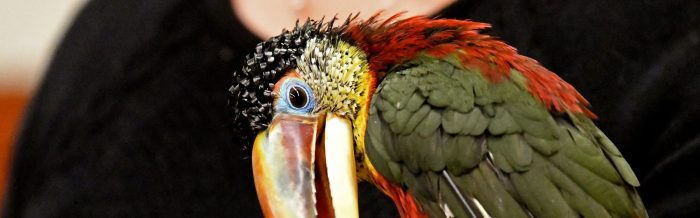
The curl-crested araçari is not a common species kept in captivity in the United States, but their friendly disposition makes them well-suited pets.
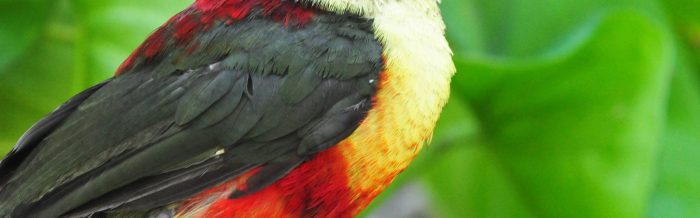
The curl-crested araçari's generation length is 7 years.
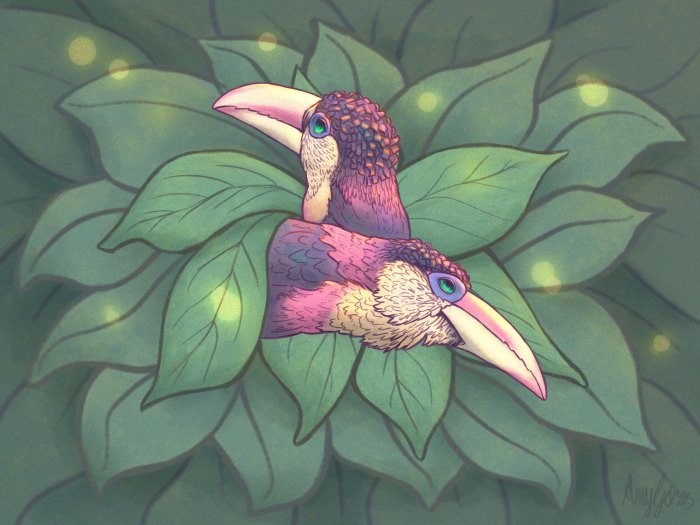
Amy Gorns portrayed a couple of curl-crested araçaris within a soft, pastel-colored bunch of leaves. Surrounded by glowing particle effects, these detailed birds gave a calming vibe and were skillfully drawn with attention to detail.
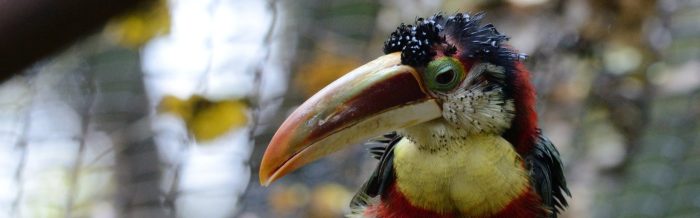
The curl-crested araçari calls frequently but is not as vocal as other araçaris, making loud rising sounds that differ from other araçaris.
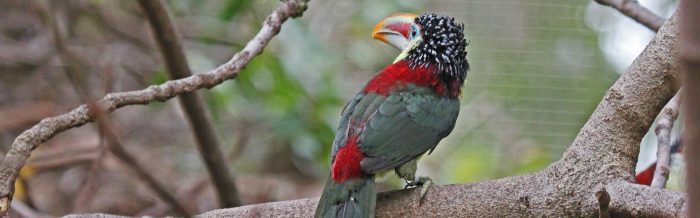
The curl-crested araçari's global population size has not been quantified, but the species is described as "uncommon".