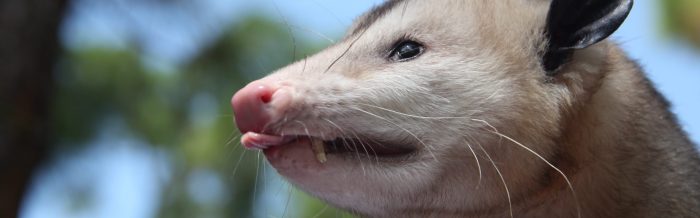
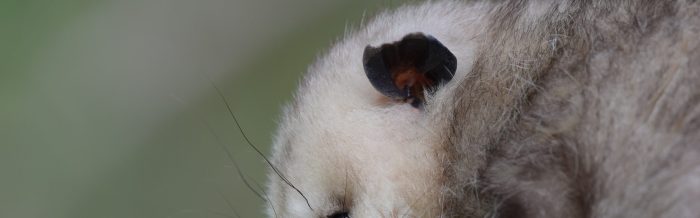
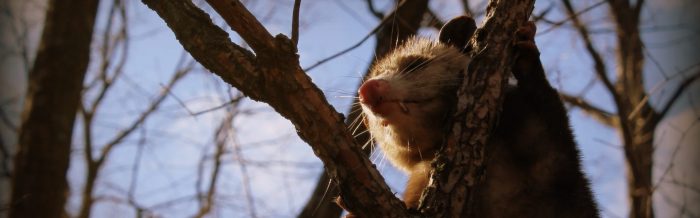
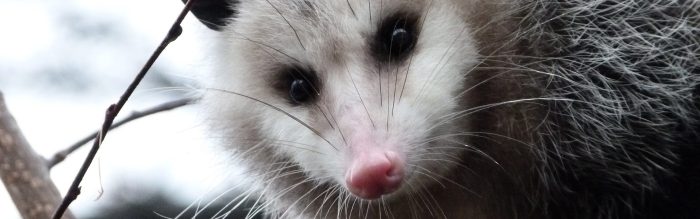
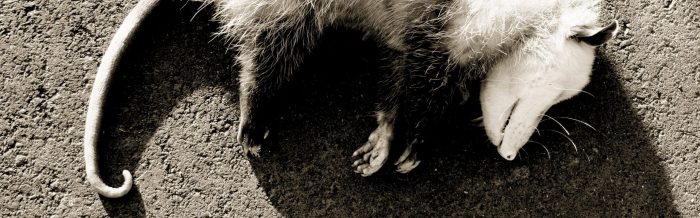
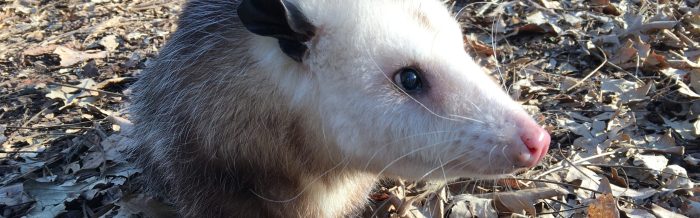
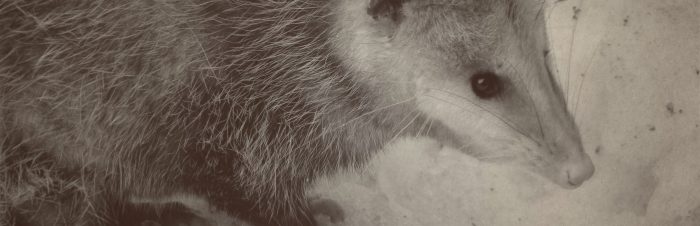
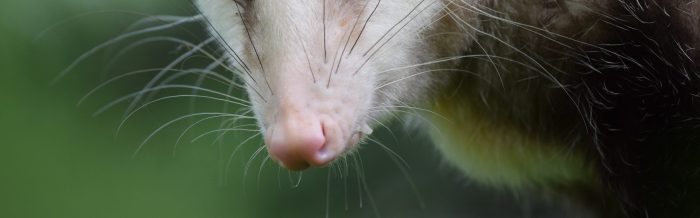
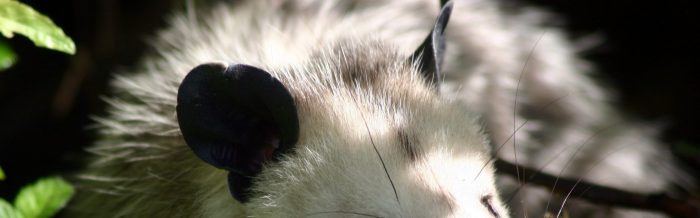
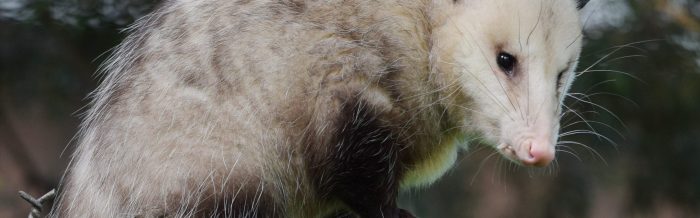
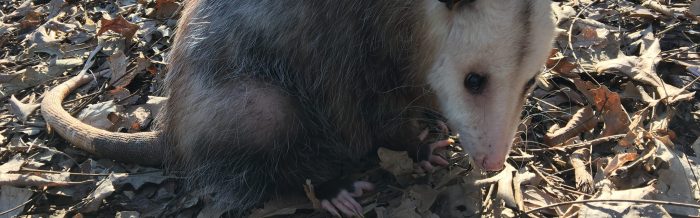
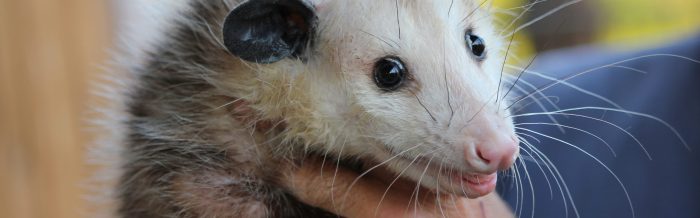
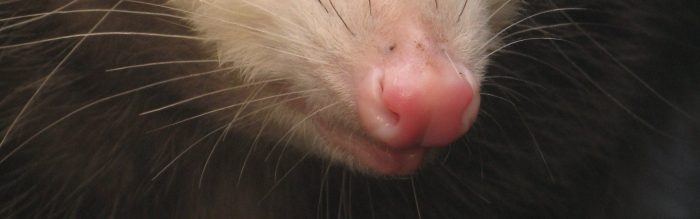
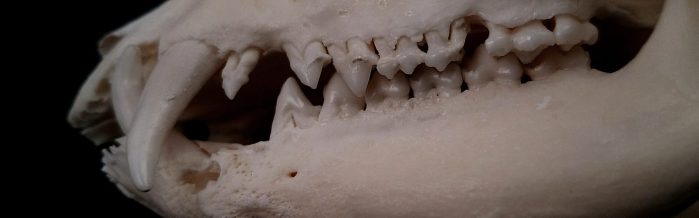
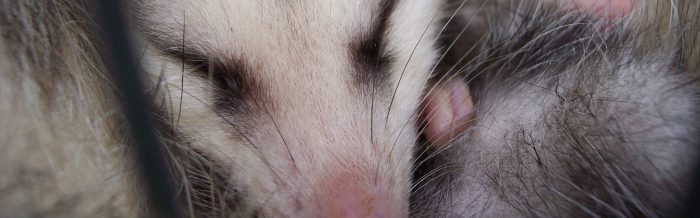
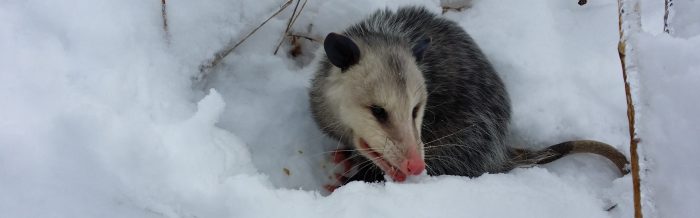
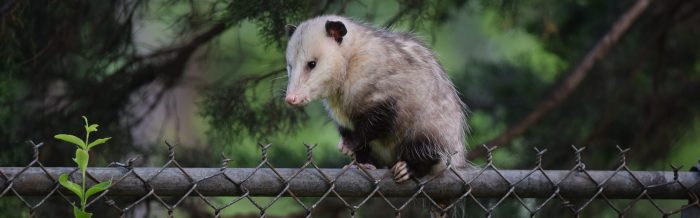
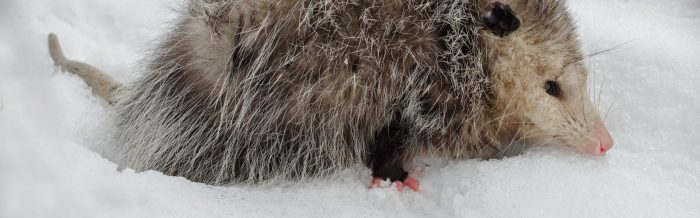
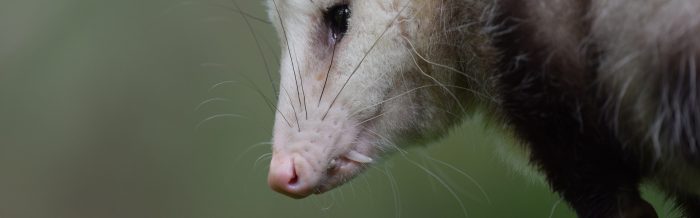
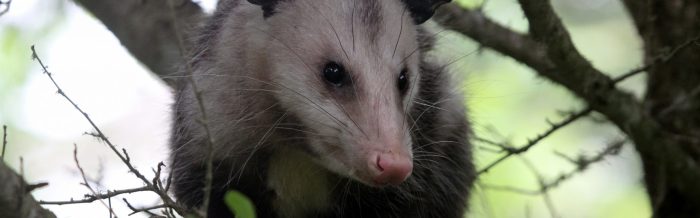
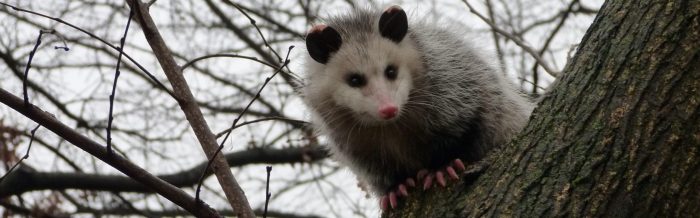
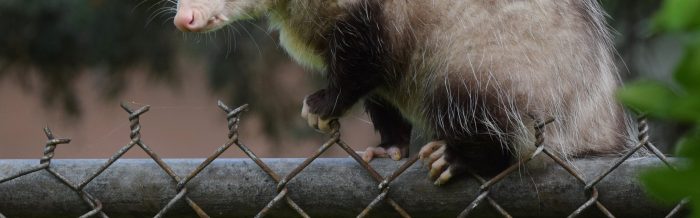
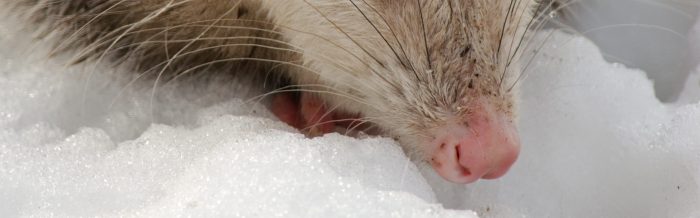
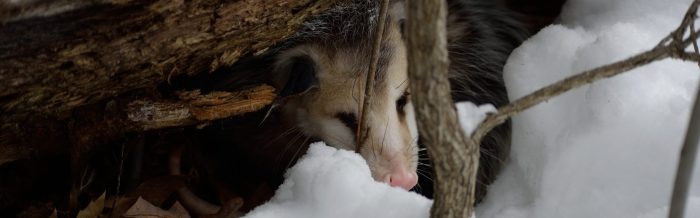
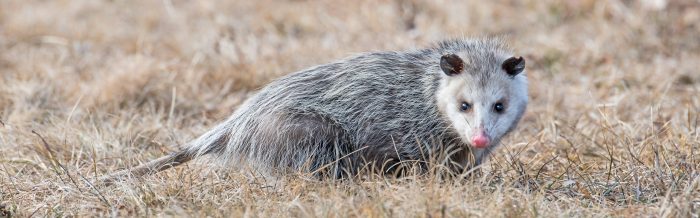
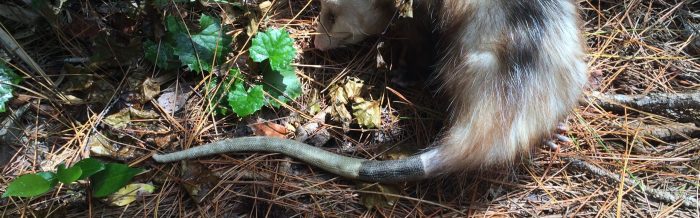
FaunaFocus has had another successful SketchAlong! Several viewers tuned in for the Twitch livestream on September 14th, 2018, and sketched along with Noelle M. Brooks as she led them through the proportions and anatomy of the Virginia opossum. Focusing on several different positions of the opossum, such as its well-known "playing possum" death feinting behavior, … Continue reading SketchAlong: September 2018
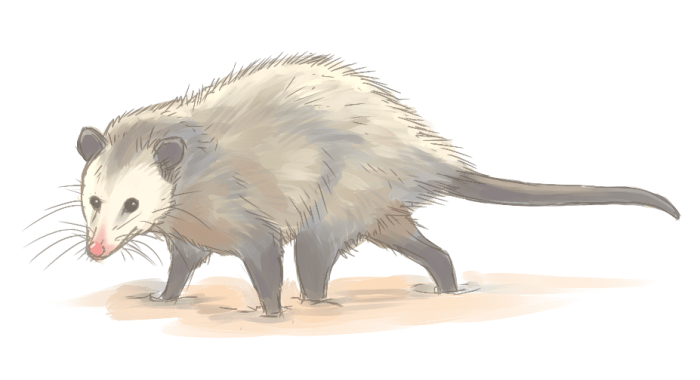
Author: Noelle M. Brooks
Virginia Opossum
Virginia opossums are solitary and will show aggression towards each other by "dancing" and lashing their tails while secreting from their dual anal glands.
Virginia Opossum
After leaving their mother's pouch, young Virginia opossums stay in the den or ride on her back until weaned around 100 days old, at which time they become independent.
Virginia Opossum
Although Virginia opossums are important seed dispersers and can carry a variety of internal and external parasites, it is unusual for this species to be a carrier of rabies.
Virginia Opossum
Early in life, young opossums have a very high mortality rate with about 68% not surviving the trip to the mother's pouch and 60% perishing once weaned and independent.
Virginia Opossum
Virginia opossums utilize a defensive catatonic death feigning state, known as “going opossum,” in which the animal becomes motionless for minutes to hours.
Virginia Opossum
Even though a female Virginia opossum gives birth to 4-25 young after a 12-13-day gestation, she generally only has 13 mammae, some of which may be nonfunctional.
Virginia Opossum
Virginia opossums are generally slow and clumsy, but will show directional turns and run up to 7.4 kph when pursued to avoid being captured.
Virginia Opossum
Because female Virginia opossums lick at the offspring in their pouches, it was once mistaken that they breed with their noses and afterward, the young crawl from the nostrils into the pouch.
Virginia Opossum
The Virginia opossum's long breeding season varies based on location and the number of litters varies based on climate with 1 litter per year in the north and 3 in warmer zones.
Virginia Opossum
The Virginia opossum is the only living marsupial found in the United States.
Virginia Opossum
Virginia opossums nest in brush piles, hollow trees, buildings, drainage areas, and abandoned burrows covered with woody cover and filled with dry leaves or paper.
Virginia Opossum
Because of its ability to adapt to human-altered habitats and its widespread range, the Virginia opossum is listed as "Least Concern" on the IUCN Red List of Threatened Species.
Virginia Opossum
Virginia opossums engage in a polygynous mating system in which males vie for females with metallic clicks and chest scent glands which emit a musky odor and stain the fur.
Virginia Opossum
The Virginia opossum has a relatively small brain case, and the corpus callosum is absent in this species.
Virginia Opossum
The Virginia opossum's perception channels are specialized for its nocturnal behavior, being most active from dusk until dawn and not hibernating during the colder seasons.
Virginia Opossum
The Virginia opossum's diet changes based on season, habit, and range as they consume more vertebrates in colder seasons and more invertebrates, plants, fruits, and seeds in warmer months.
Virginia Opossum
Due to their small size, nocturnal habits, and high reproductive output, Viriginia opossums thrive in woodlands, thickets, forests, shrublands, and even urban areas, but prefer areas near water.
Virginia Opossum
The Virginia opossum's coloration is typically gray but may be tinted red, brown, or black, and varies based on location, being light gray in the north and dark gray in the south.
Virginia Opossum
Virginia opossums may be predated upon by owls, dogs, coyotes, foxes, raccoons, bobcats, snakes, and humans, but are immune to the venom of a variety of snakes from the family, Viperidae.
Virginia Opossum
Although the Virginia opossum is mostly arboreal and terrestrial, it is also a strong swimmer with no fear of water and can seal its pouch and nostrils, hold its breath, float, swim, and dive with ease.
Virginia Opossum
Virginia opossums were once considered nomadic, but are now known to keep oval-shaped home ranges, with males keeping larger ranges than females.
Virginia Opossum
Virginia opossums are terrestrial; however, they are also adept climbers with prehensile tails and specialized feet with opposable halluxes for climbing and denning in trees.
Virginia Opossum
The Virginia opossum is a homeotherm that has a much lower amount of expanded energy due to thermoregulation than any other placental mammal.
Virginia Opossum
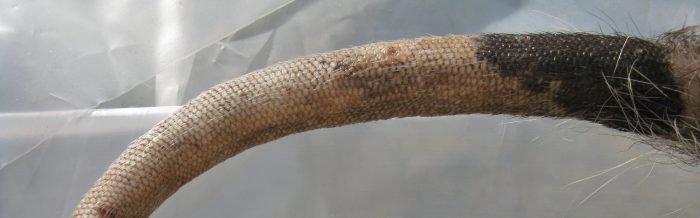
The Virginia opossum's hairless, scale-like, prehensile tail is relatively large, usually around 90% of its total body length.
Virginia Opossum
Virginia opossums are hardy, stout, robust individuals with short legs, hairless ears, and thick bodies and males tend to be larger and heavier than females.
Virginia Opossum
Due to inadequate thermoregulatory abilities and poorly insulated fur, Virginia opossums are ill-equipped for cold temperatures and are, thus, not found in the northern regions of the United States and Canada.
Virginia Opossum
Due to its recent northern and western expansion and its wide range in Central and North America, the Virginia opossum has been noted as one of the most successful mammal species in history.
Virginia Opossum
Virginia opossums are opportunistic omnivorous feeders, seen as pests, because they consume vertebrates, invertebrates, plants, fruits, grains, carrion, farm poultry, pet food, and even garbage.
September 2018: Virginia Opossum
Free-For-All: Spectacled Bear
Kylart decided to depict the spectacled bear literally, wearing spectacles! With a glasses-wearing mother overlooking her scholarly cub, a charming composition was created. Bathed in tones of sepia, this pair radiates with charm and detail. This ink and watercolor piece looks like it came straight out of a whimsical storybook!
Spectacled Bear
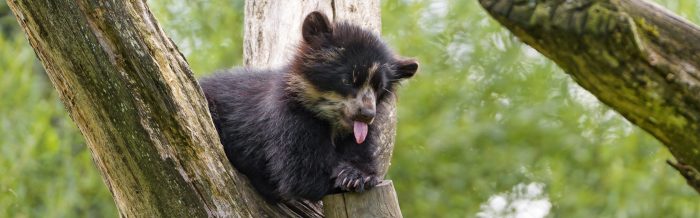
Spectacled bear cubs are born blind and are completely dependent on their mother for their first month but will remain with her for up to a year.
Spectacled Bear
Spectacled bears can be persecuted and shot by local farmers who blame them for killing cattle and destroying maize crops.