Lions, tigers, spotted hyaenas, and African wild dogs compete with leopards for food and are capable of killing leopards.
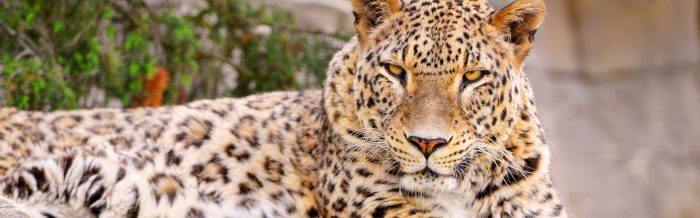
Join a creative community focusing on a unique animal each month.
FaunaFocus releases a new FaunaFact every single day! These bite-sized bits of information are interesting facts paired with a unique image of that animal.
Lions, tigers, spotted hyaenas, and African wild dogs compete with leopards for food and are capable of killing leopards.
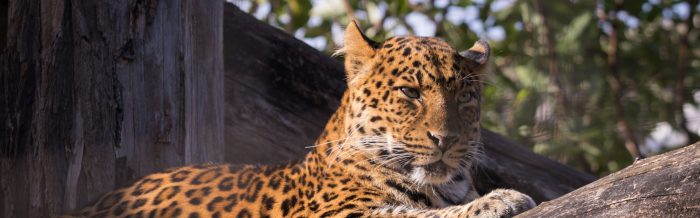
After capturing its prey, a leopard will break its neck causing paralysis and asphyxiation, then carries the carcass to a nearby tree or caches it in leaves and soil.
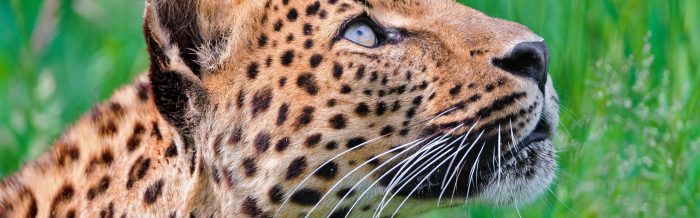
Leopards are comfortable in water and are adequate swimmers.
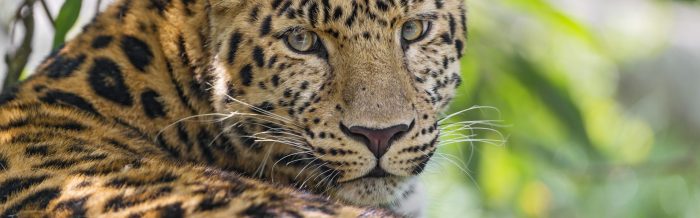
Leopards positively contribute to the ecosystem by helping to control baboon populations and dispersing seeds that stick to their fur.

4,500-7,000 leopards are illegally harvested annually to fuel the demand for leopard skins and trophy hunting.
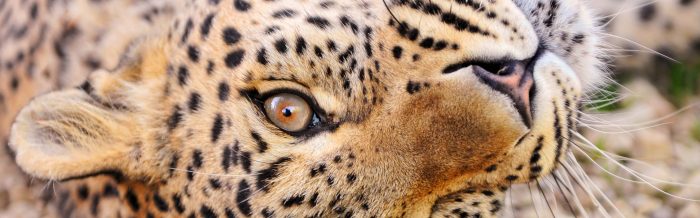
Leopards are polygynandrous and breed year-round, peaking during the rainy season in May.
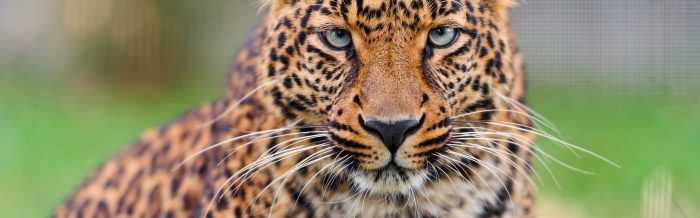
Leopards mark their territory with urine, feces, and claw marks.
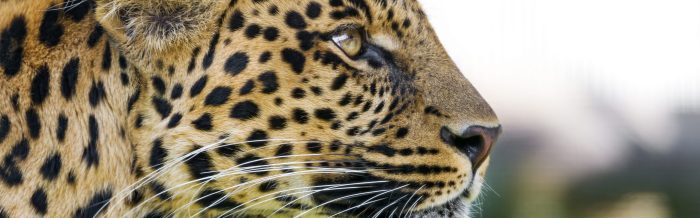
Leopards are protected throughout most of their range in west Asia and show resistance to minor habitat disturbances.
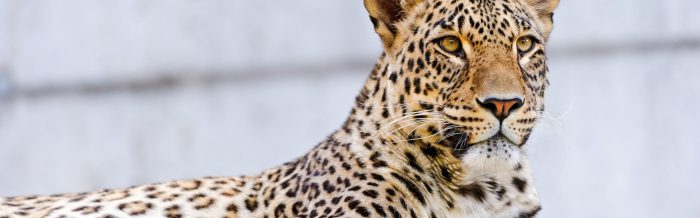
Leopards are sexually dimorphic as males tend to be larger than females.
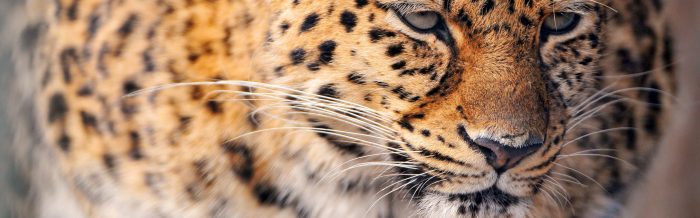
A commercialized bushmeat trade has caused a 59% decline in leopard prey populations across 78 protected areas between 1970 and 2005.
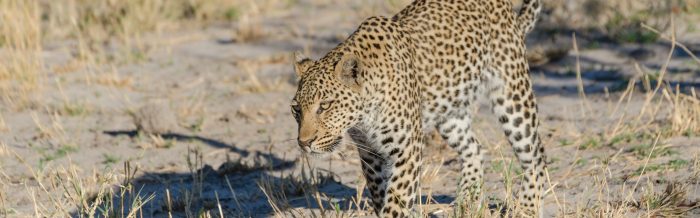
Although leopards can run up to 60 km/hr and can jump more than 6m horizontally and 3m vertically, they're not likely to chase prey.
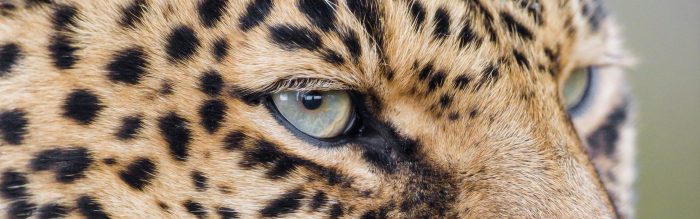
Each individual leopard has a unique coat which can be used for identification.
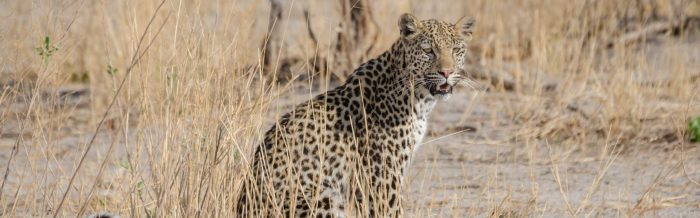
Southern Africa has the healthiest leopard populations of the cat's entire African and Asian range.
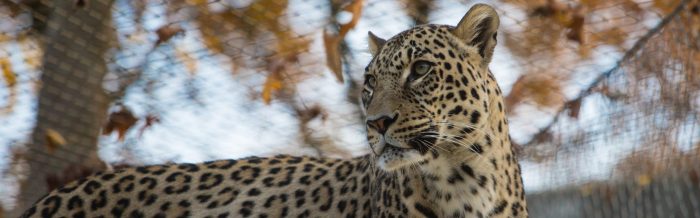
Humans are the primary predators of leopards, capturing them for the pet trade and hunting them for trophies, fur, skin, traditional medicine, and retaliation.
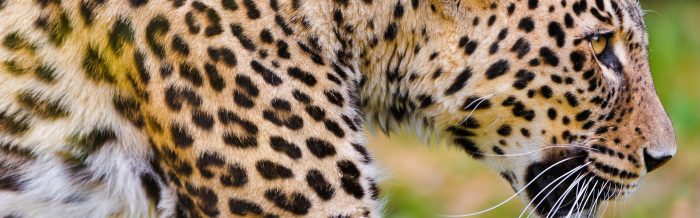
The body size and color patterns of leopards vary geographically among subspecies and reflect adaptations to particular habitats.
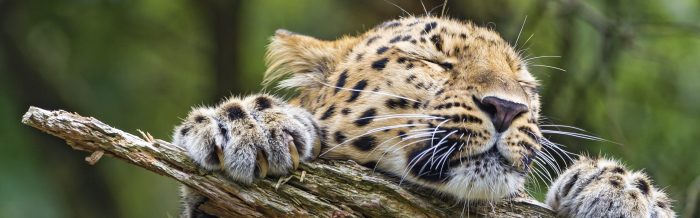
Leopard cubs are born with smoky gray coats with indistinct rosettes and are moved from den to den by their mothers until independence at 20 months.

Leopards are ambush predators and sneak up to 3-10 meters close to its prey before pouncing, able to tackle prey up to 10 times its own weight.
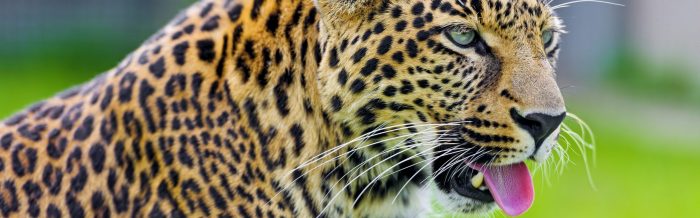
Although leopards are silent most of the time, they communicate by growling, roaring, spitting, and even purring.
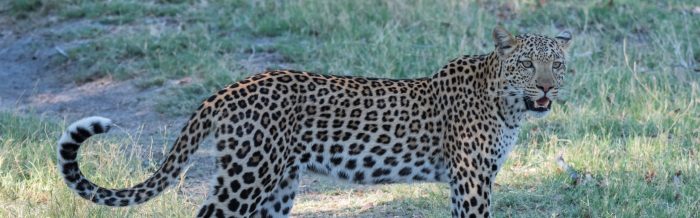
Leopards have long bodies with short legs, broad heads, powerful jaws, and specialized scapulas for climbing.
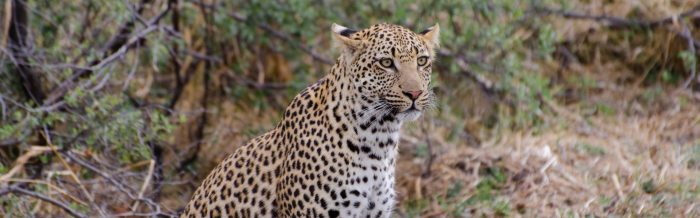
Leopards are widely distributed across Africa and Asia, but populations have become reduced and isolated, and they are now extirpated from large portions of their historic range.

Leopards are solitary, nocturnal carnivores and are even less diurnal in areas close to humans.
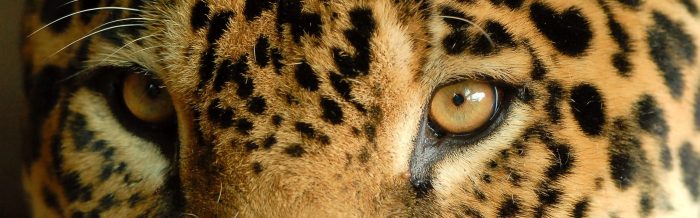
Leopards inhabit a variety of terrain including forest, savanna, shrubland, grassland, rocky areas, and deserts and are most comfortable in lower forest canopy.

Black panthers, which are most populous in humid forests, are leopards with recessive melanistic genes.
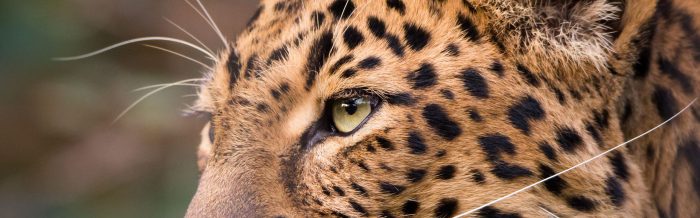
There are conflicting results on the leopard's taxonomy, but as of 2017, the IUCN SSC Cat Classifaction Task Force of the Cat Specialist Group recognizes 8 subspecies.

Leopards are classified as Vulnerable on the IUCN Red List because of habitat loss and fragmentation, prey declines, persecution, and exploitation.
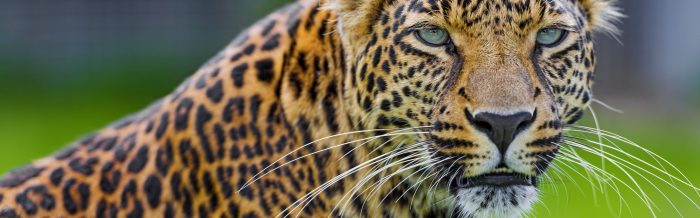
Leopards are opportunistic carnivores and generally prey on mid-sized ungulates, but will also eat birds, reptiles, rodents, arthropods, and carrion.

Although long periods may elapse between drinking, spotted hyaenas are dependent on water and will disperse after the only water source has dried up.

Legal classification of the spotted hyaena varies from "vermin" in parts of Ethiopia to fully-protected in conservation areas.

Alpha female spotted hyaenas breed at younger ages, have shorter interbirth intervals, and increased survival of their offspring due to increased access to food.

Wire snares set to catch wild herbivores are an important cause of adult spotted hyaena mortality and kill around 400 hyaenas each year, making them responsible for more than half of all adult mortality.

The spotted hyaena is the most numerous large predator in the Serengeti and have an estimated global population of 27,000-47,000.

Spotted hyaena clans go on hunting trips, averaging 80 km., to the nearest concentrations of prey, about 40-50 times a year.
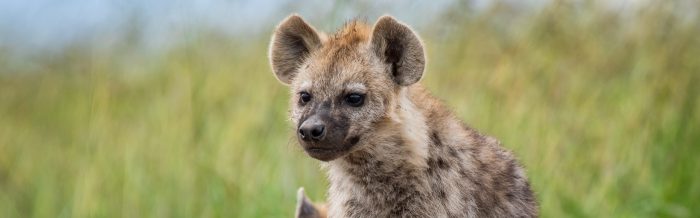
Newborn spotted hyaenas are born entirely black and one will often kill the other in order to receive more food and mature faster.