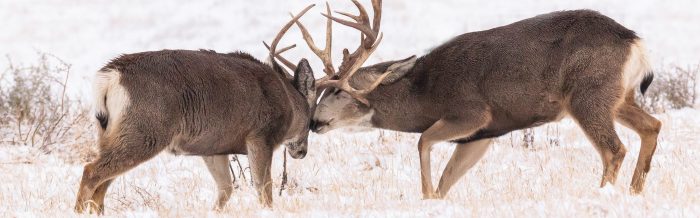
Mule deer dominance is largely a function of size, with the largest males, which possess the largest antlers, performing most of the copulations.
Join a creative community focusing on a unique animal each month.
FaunaFocus releases a new FaunaFact every single day! These bite-sized bits of information are interesting facts paired with a unique image of that animal.
Mule deer dominance is largely a function of size, with the largest males, which possess the largest antlers, performing most of the copulations.
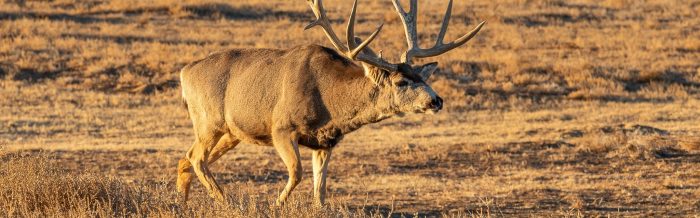
Most mule deer confine their daily movements to discrete home ranges which they use throughout the seasons in consecutive years.
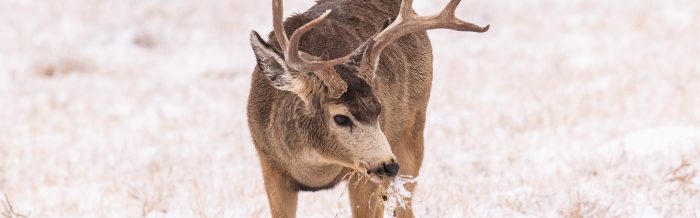
Because nutritious forage is in poor supply for much of the year, the mule deer has an annual cycle of metabolic rates, capitalizing on abundant, high-quality forage in the summer and surviving on a lower intake of poor-quality forage during the winter.
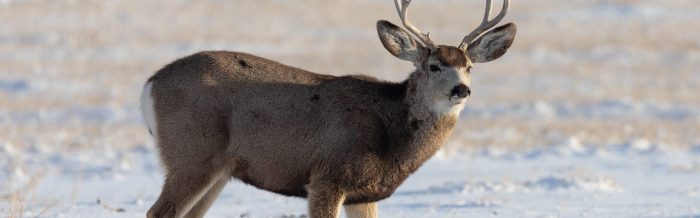
All mule deer markings vary considerably among the species, but remain constant throughout the life of an individual.
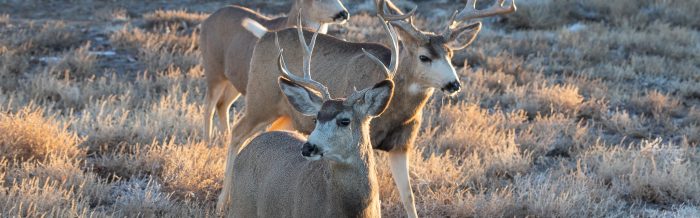
Female mule deer, related by maternal descent, form clans while males disperse as individuals or aggregate in groups of unrelated individuals, all maintained with dominance hierarchies.
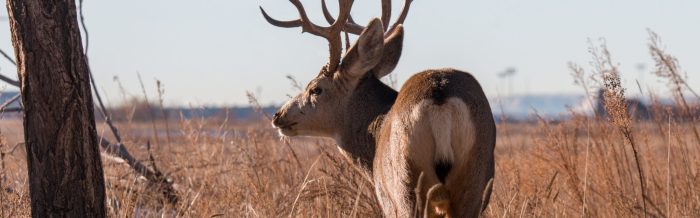
Ten subspecies of mule deer have been identified including two black-tailed deer subspecies and a hybrid subspecies of the mule deer and the white-tailed deer (Odocoileus virginianus).
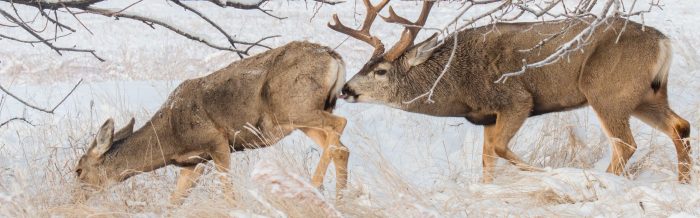
Mule deer are polygynous, having a tending-bond type breeding system, and mating within groups from late November through mid-December.
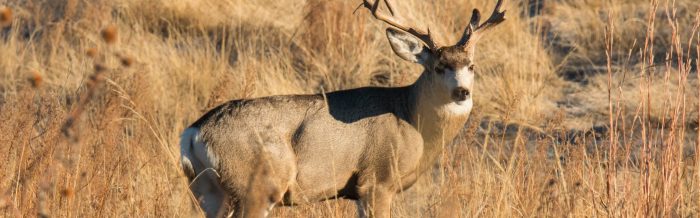
Mule deer hunting in autumn offers countless recreational opportunities for the public and generates revenue for the economy.
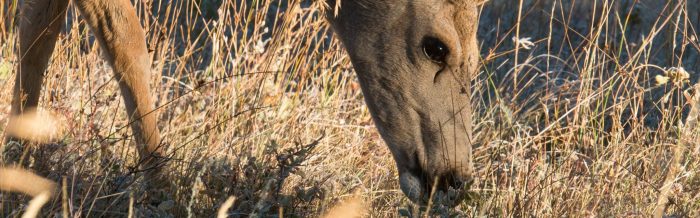
The mule deer is a small, intermediate, ruminant feeder with limited ability to digest highly fibrous roughage and feeds on leaves, twigs, acorns, legume seeds, fleshy fruits, berries, and drupes.
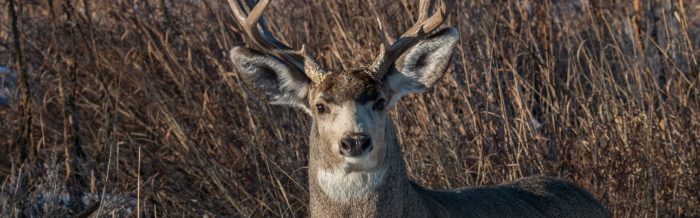
Mule deer have excellent binocular vision and are extraordinarily sensitive to moving objects, but are unable to detect motionless objects.

The mule deer is remarkably adaptable and can be found in forests, savannas, shrublands, grasslands, wetlands, deserts, intertidal shorelines, artificial terrestrial and aquatic habitats, and even habitats with introduced vegetation.
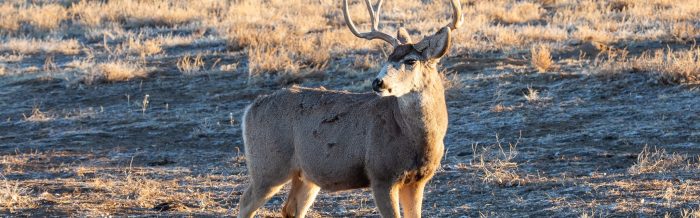
The mule deer is endemic to North America and occurs in all of the continent's western biomes north of central Mexico, except the Arctic tundra.
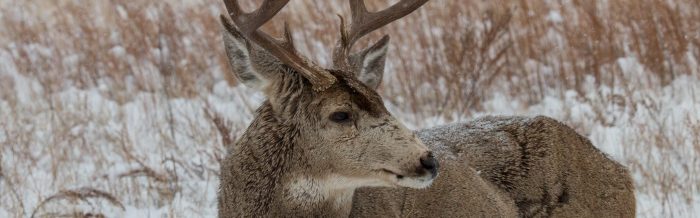
The manipulation of livestock grazing, cultivative communities, and vegetative communities can help manage habitats for mule deer, but these missions are often not compatible with bureaucracies.
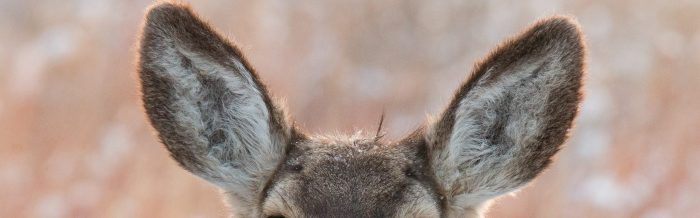
The mule deer is named for its ears, which are large like those of the mule and allow the deer's sense of hearing to be extremely acute.
With such a small population of Javan rhinoceros left, the species' survival is threatened by low genetic diversity, the likelihood of inbreeding, and the potential of natural disasters.
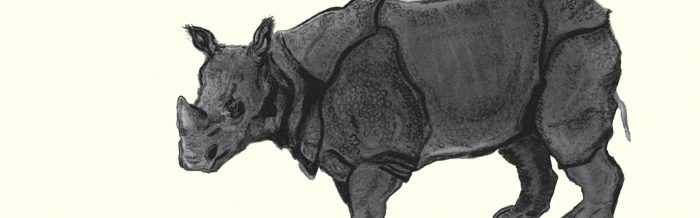
There are still major gaps in our knowledge about Javan rhinoceroses because they are extremely difficult to study and there's a remote possibility that remnant, undiscovered populations exist.

The Javan rhinoceros is generally solitary, except for mating pairs and mothers with their young.
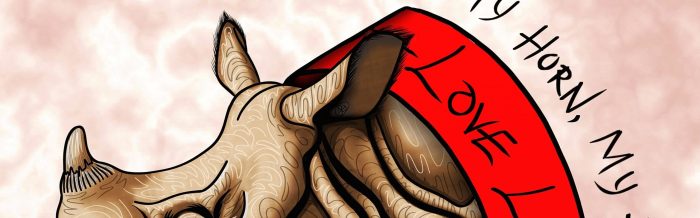
There is little sexual dimorphism in the Javan rhinoceros, however females have shorter, less prominent horns or may lack a horn, entirely.

The Javan rhinoceros' gestation and inter-birth intervals are unknown, but are presumed to be similar to other rhinos, with a single calf being born after a gestation of 15-16 months every 2-3 years.

60% of Eastern Asian doctors stock rhino horn, with Asian horns, like that of the Javan rhinoceros, preferred over those of African species.
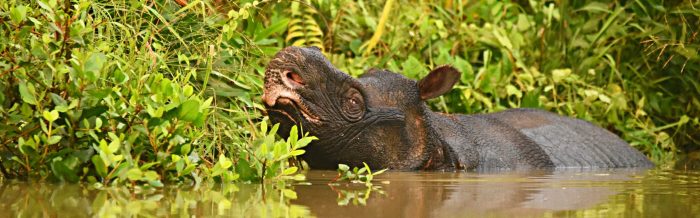
The Javan rhinoceros has a unique, prehensile, pointed, upper lip that functions as an aid for feasting and grasping onto leaves.
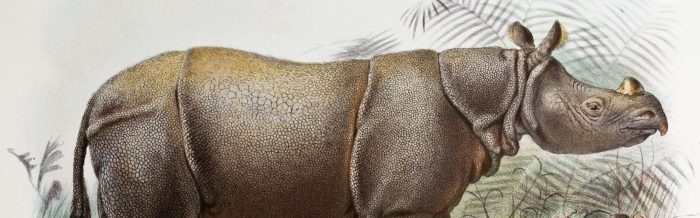
Although the Javan rhinoceros' habitat was once protected in Vietnam, it has now lost most of its forest habitat due to habitat loss, degredation, agricultural purposes, and other human activities.
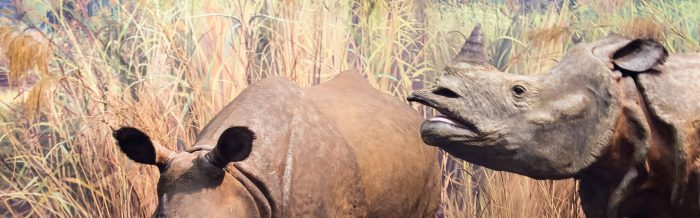
The Javan rhinoceros has poor eyesight, but keen senses of smell and hearing despite having smaller ears than other rhinoceroses.

A young Javan rhinoceros will be active shortly after birth and will be suckled by its mother for 1-2 years.
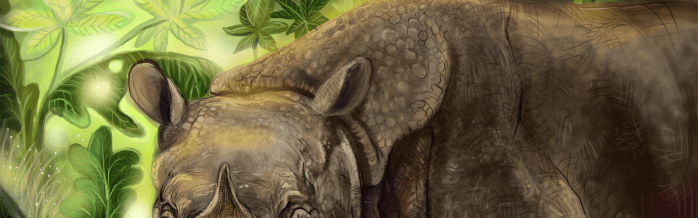
During colonial times, Javan rhinoceroses were killed by trophy hunters, but now, they're relentlessly poached for their horns and meat as rhino horn can sell for $60,000/kg.
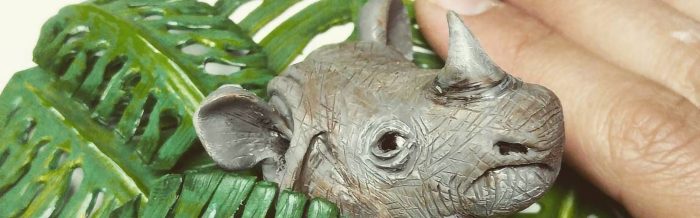
The Javan rhinoceros is threatened by the invasive Arenga palm, which is having a devastating impact on the plants the rhino relies on for food.
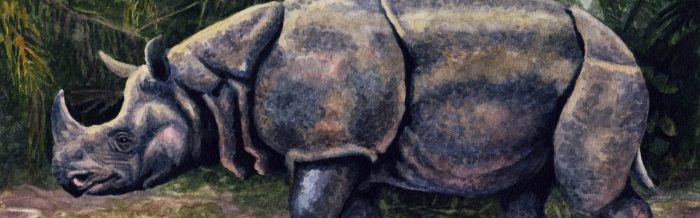
The Javan rhinoceros population in Ujung Julon National Park has been increasing over the past 5 years and the feasibility of establishing a second population in another suitable, secure habitat is being considered.

Although there's historically been 22 captive Javan rhinoceroses, none are currently captive and the species has never bred in captivity.
Following the Vietnam war in 1975, the Javan rhinoceros was thought to be extinct in Vietnam, but was later spotted in the area in 1999.
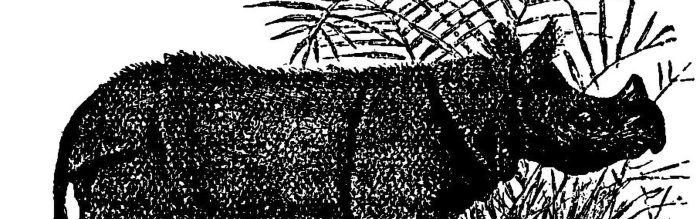
The Javan rhinoceros is a pure, herbivorous browser but was historically a mixed feeder, a more adaptable feeder than other rhinos.
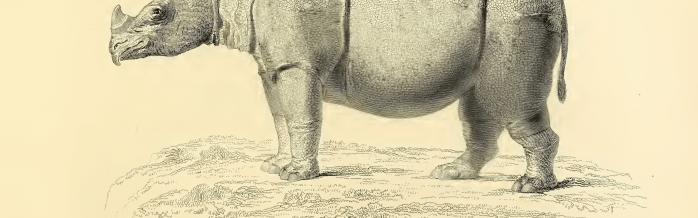
The Javan rhinoceros mates between July and November and females become sexually mature earlier than males.
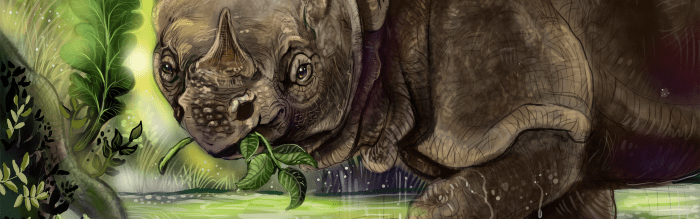
The Javan rhinoceros' scientific name, Rhinoceros sondaicus, comes from Greek and Latin referring to its horned nosed and locality in the Sunda islands of Indonesia.

For decades, Javan rhino populations have hovered around 50 animals, the effective carrying capacity of the area which they reside, with an estimated 46-67 alive today.