Pine martens are solitary except when young are in the nest, but can tolerate independent subadults that did not disperse in their first fall.

Join a creative community focusing on a unique animal each month.
FaunaFocus releases a new FaunaFact every single day! These bite-sized bits of information are interesting facts paired with a unique image of that animal.
Pine martens are solitary except when young are in the nest, but can tolerate independent subadults that did not disperse in their first fall.
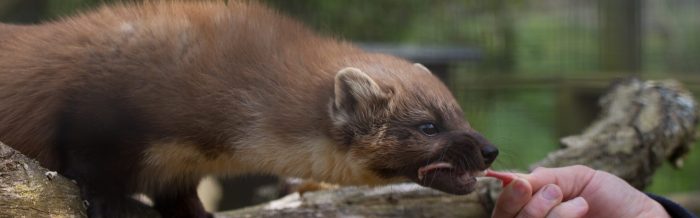
The diet composition and proportion of the pine marten changes according to season and local conditions as they respond to unpredictable rodent booms and seasonally available fruits and berries.
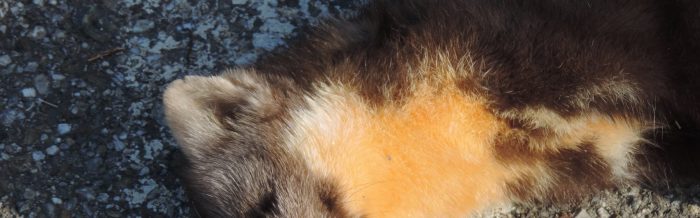
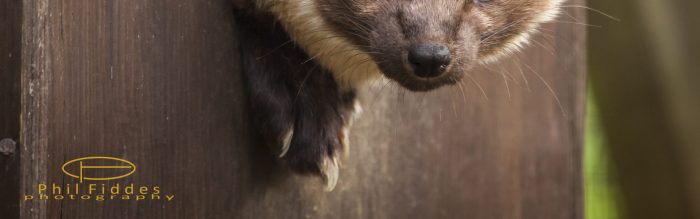
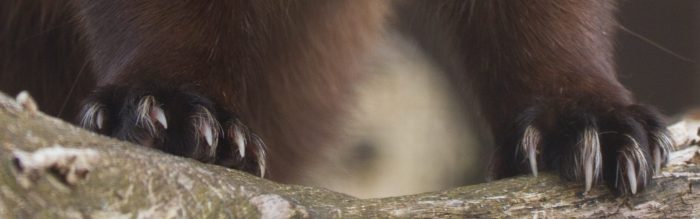
The coloration of the pine marten includes a rich brown base coat; an irregular, creamy-orange throat patch; a grayish tint on the belly; and darkening on the paws.
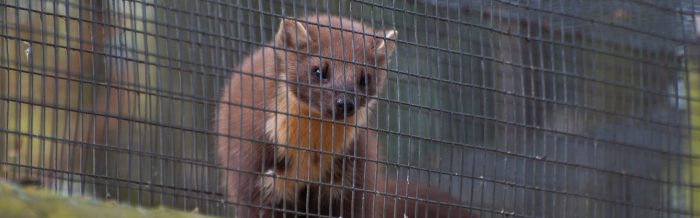
The winter coat of the pine marten has always been in high demand; as such, the species has been successfully kept on fur farms, but trade of the fur on a large, commercial scale hasn't been feasible.
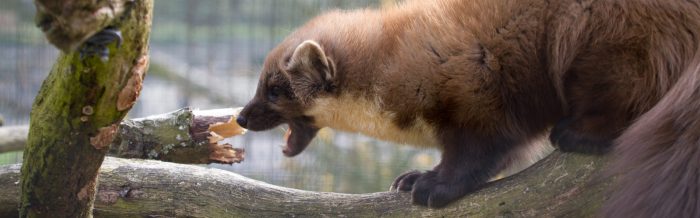
As in many mustelids, reproduction in pine martens is tied closely to the seasonality of their temperate habitats, specifically to the increase of daylight in the spring.
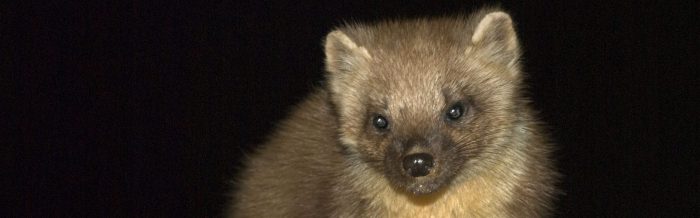
Pine martens are nocturnal, mostly active during the night and at dusk.
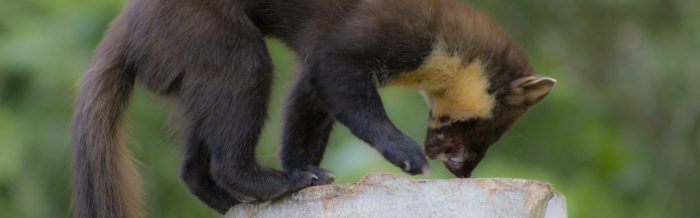
In Scotland, pine martens are habitat generalists, rather than habitat specialists, and frequent many habitat types such as forest plantations, coarse grassland, and grass moorlands.
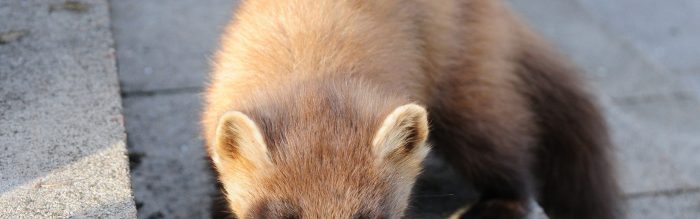
The pine marten has a rich brown fur coat that is thick and silky in the winter and short and coarse in the summer, after an annual molt in the spring.
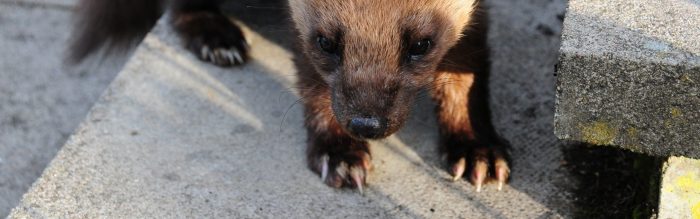
Pine martens have no known negative effects on humans and have never been known as a pest as they avoid human settlements.
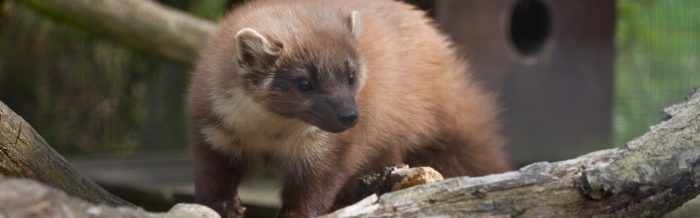
The pine marten's medium-size substantially varies geographically and males outweigh females by 12-30%.
Although the home range size of the pine marten is uncertain, it's clear that male ranges are larger than female ranges and that they overlap those of one or more females.
In the wild, pine martens may mate in their first summer at 14 months of age, but in captivity most males don't breed until 27 months old.
In highly seasonal habitats, the size of the pine marten's home range changes seasonally, shrinking up to 54% during the colder seasons as martens cover less distance at night.
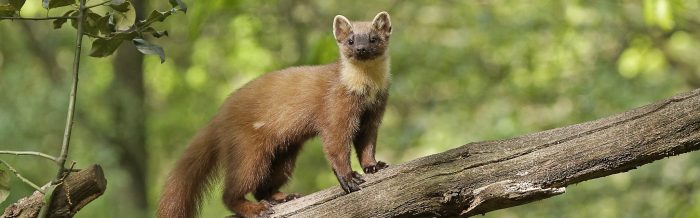
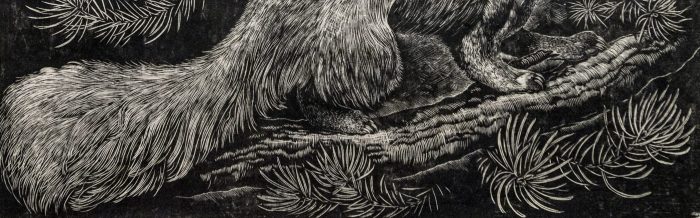
Pine martens are skillful treetop hunters and adept climbers with many physical adaptations, such as a long tail and powerful forelimbs, fit for their arboreal, acrobatic lifestyle.
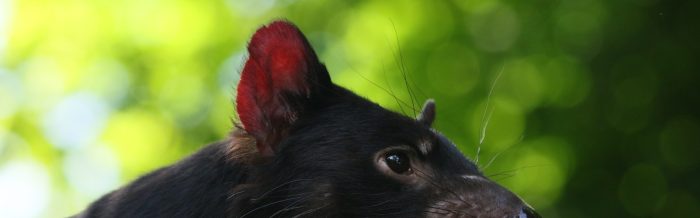
At one time, Tasmanian devils were in danger of extinction due to persecution by settlers and destruction of forest habitat, but populations have since stabilized due to protective laws.
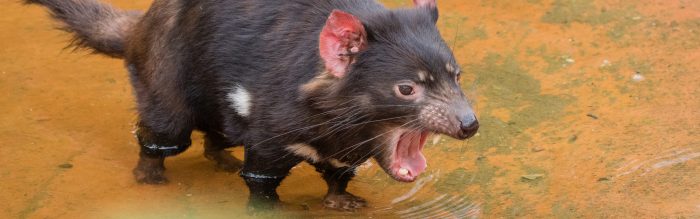
Tasmanian devils love water and are very good swimmers and will wade, splash about, sit, and lie down in water to stay cool.
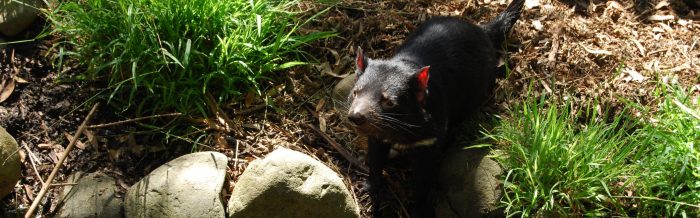
Both males and female Tasmanian devils den in hollow logs, caves, or burrows, and make nests of bark, grass, and leaves, which they inhabit throughout the day.
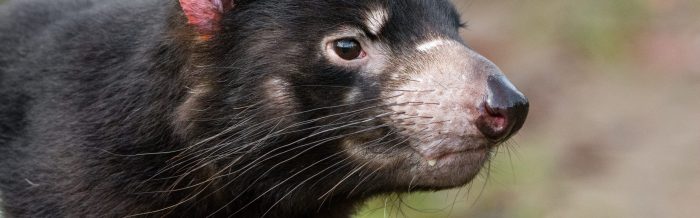
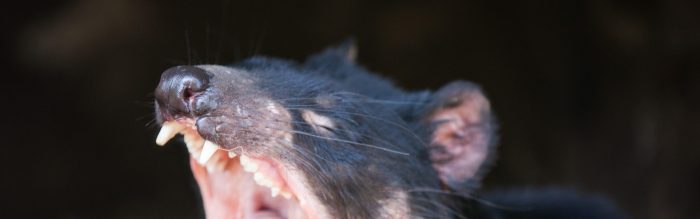
Tasmanian devils have massive heads with well-developed jaw muscles and heavy molar teeth adapted for crushing bones and tearing through thick muscle and skin.
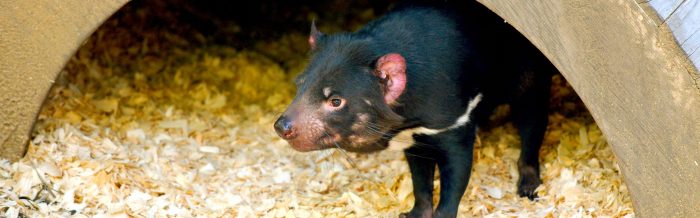
Although Tasmanian devils are not territorial, they stay within relatively small home ranges and can travel up to 16km a night in search of food.
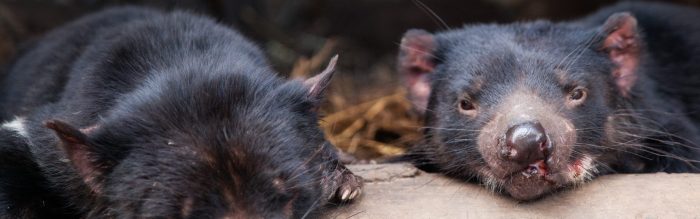
Tasmanian devils typically acquire the Devil Facial Tumor Disease (DFTD) during the bite-filled breeding season as this transferrable cancer is passed through contact.
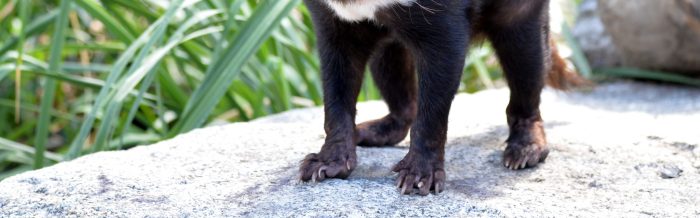
Tasmanian devils most often live to five-years-old in the wild, but they can live up to seven or eight years.
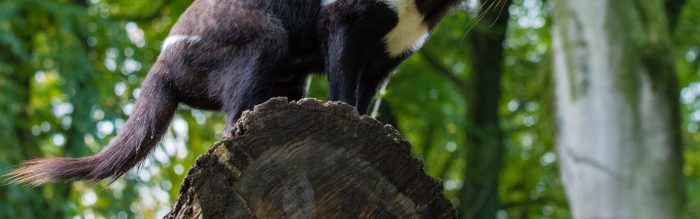
As in many dasyurids, Tasmanian devils store their fat in their tails.
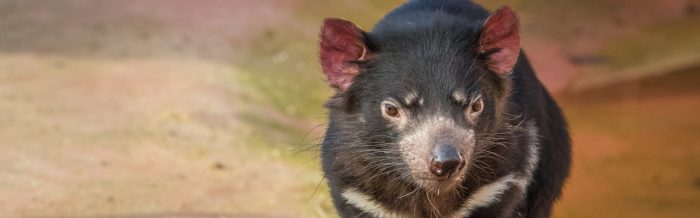
Tasmanian devils are considered nuisance animals and have been considered livestock predators, although these scavengers take most of their large prey in the form of carrion.
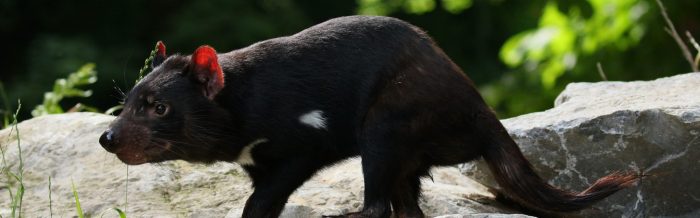
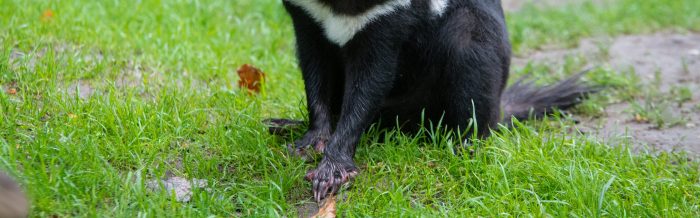
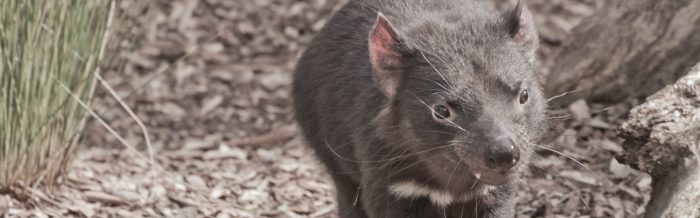
Tasmanian devils have a stocky, thick-set, squat build with a brownish, black pelage and white markings on the rump and chest.
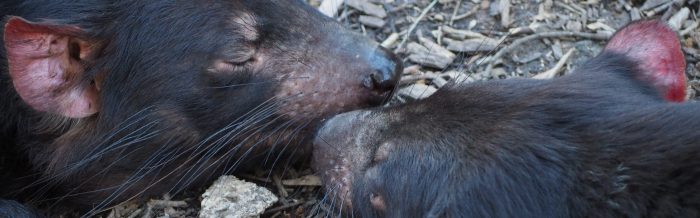
Male Tasmanian devils compete for access to breeding females and temporarily subdue females while mating.
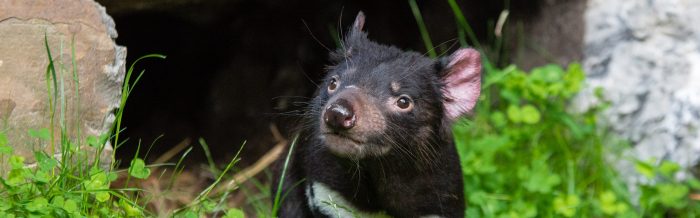
Tasmanian devils produce a strong odor when under stress, but when calm and relaxed they are not smelly.
The greatest recent threat to Tasmanian devils is Devil Facial Tumor Disease (DFTD) as populations have declined up to 80% due to the contagious cancer.
Unlike many other dasyurids, the Tasmanian devil's marsupial pouch is completely closed when breeding.
Adult Tasmanian devils have few natural predators such as eagles, owls, and spotted-tailed quolls, although Thylacines (Thylacinus cynocephalus) may have preyed on them historically.
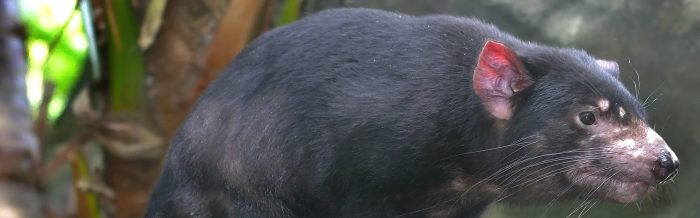
The body size of the Tasmanian devil varies considerably with diet, habitat, and age, and females tend to be slightly smaller than males.

Tasmanian devils are famous for their threatening gape or yawn, but this display is performed more from fear and uncertainty than from aggression.
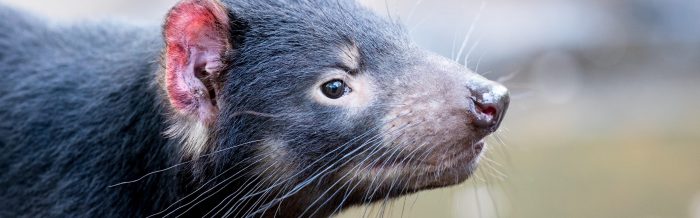
The Tasmanian devil is an "Endangered" species due to food availability, competition with other devils and quolls, loss of habitat, persecution, vehicle strike, and Devil Facial Tumor Disease.
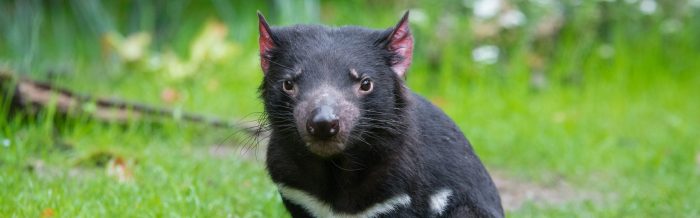
Tasmanian devils are usually solitary and not territorial, but may interact aggressively over food and follow a hierarchy in captivity.