Tasmanian devils are plagued by Devil Facial Tumor Disease (DFTD), and are one of only seven species in the world that can contract a contagious cancer.
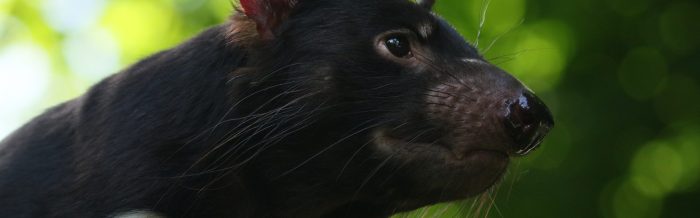
Join a creative community focusing on a unique animal each month.
FaunaFocus releases a new FaunaFact every single day! These bite-sized bits of information are interesting facts paired with a unique image of that animal.
Tasmanian devils are plagued by Devil Facial Tumor Disease (DFTD), and are one of only seven species in the world that can contract a contagious cancer.
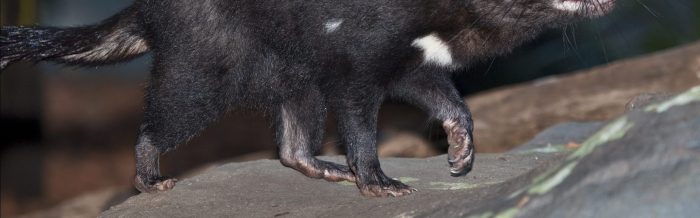
Tasmanian devils usually amble slowly with a characteristic gait but can gallop quickly with both hind feet together.
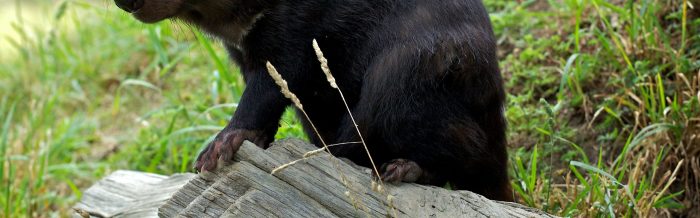
Although a Tasmanian devil can give birth to up to 40 young, only 4 can survive, with an average of 2-3, because of the limited number of mammae in her pouch.
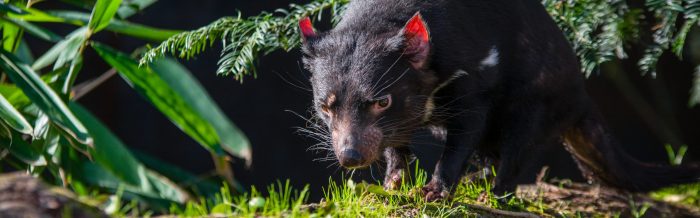
Tasmanian devils are most numerous in coastal heath and rangeland areas where agricultural practices maintain a constant supply of carrion and also occur in open, dry schlerophyll forest and mixed schlerophyll-rainforest.
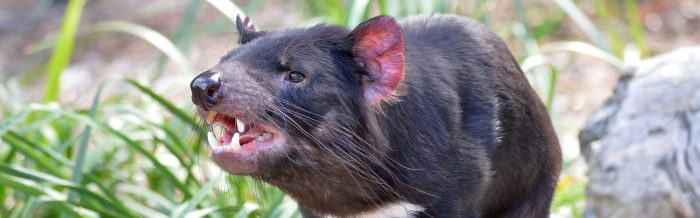
The Tasmanian devil makes a variety of fierce noises, from harsh coughs and snarls to high pitched screeches, especially when fighting.
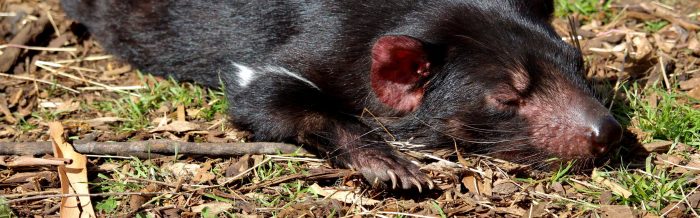
Tasmanian devils are generally nocturnal, but they may be seen sunbathing during the day in quiet areas.
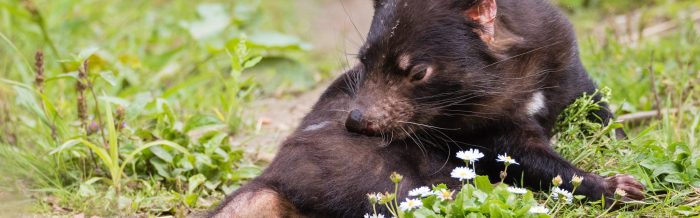
Because Tasmanian devils are marsupials, their young are born as external embryos, just the size of a grain of rice, and must find their way into the mother's pouch to continue developing.
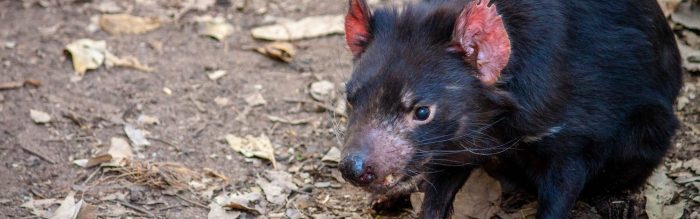
Almost all Tasmanian devils are devastated by a lethal, transferrable, cancer-like disease called Devil Facial Tumor Disease (DFTD) that grows tumors on the face until the creature starves to death.
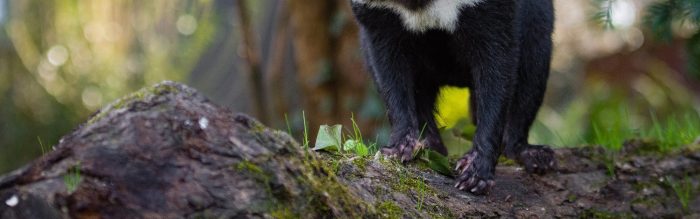
The Tasmanian devil got its name after early European settlers heard mysterious, unearthly screams in the wild and referred to it as "The Devil."
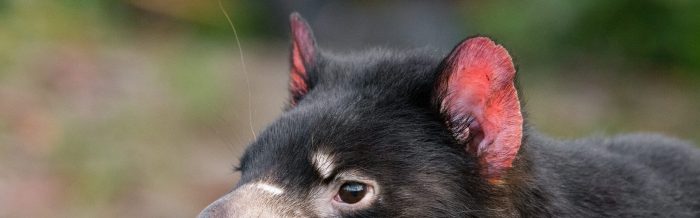
Tasmanian devils have keen senses of smell, sight, touch, and taste and communicate with a variety of vocalizations and physical cues.
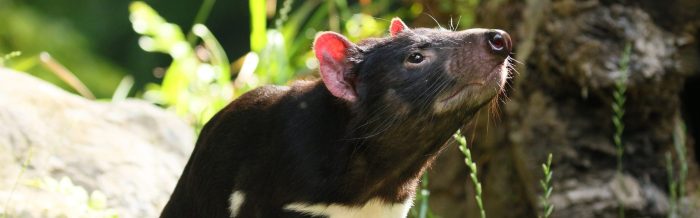
Tasmanian devils are monestrous, mating February-May and giving birth most often in April after a gestation period of 21 days.
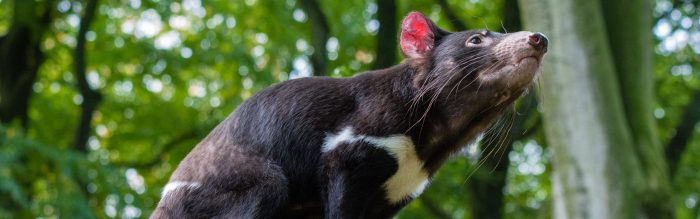
Currently, Tasmanian devils are found only in Tasmania, although fossil evidence suggests that they once occupied much of the Australian mainland.
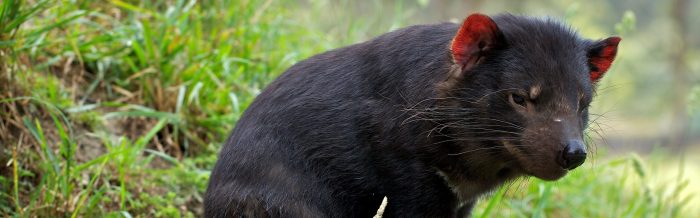
The Tasmanian devil is the largest, native, mammalian predator on Tasmania and the world's largest carnivorous marsupial, and is an important apex predator in Tasmanian ecosystems.
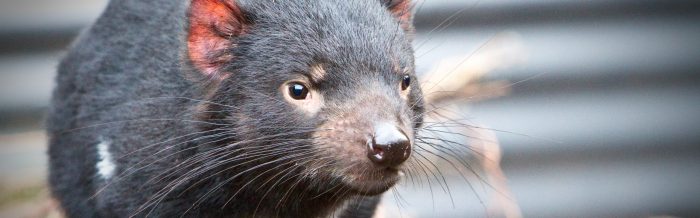
Tasmanian devils are carnivorous scavengers with powerful jaws and teeth that allow them to eat the bones and fur of carrion.

The record lifespan recorded of the rusty-spotted cat was at the Frankfurt zoo with a cat reaching 18 years of age.
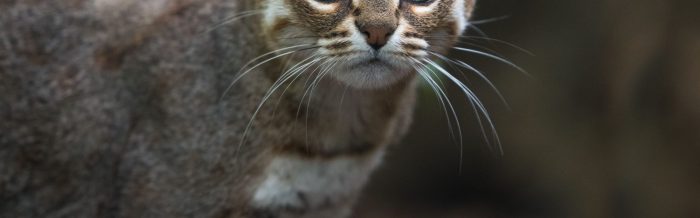
Rusty-spotted cat deaths occur in India due to vehicular slaughter, amounting to 2.8% of all vehicular mammals deaths observed.

The home range of rusty-spotted cats has not been determined, but in a related species of similar size, the leopard cat (Prionailurus bengalensis), individuals have home ranges of 1.8-3 square km.
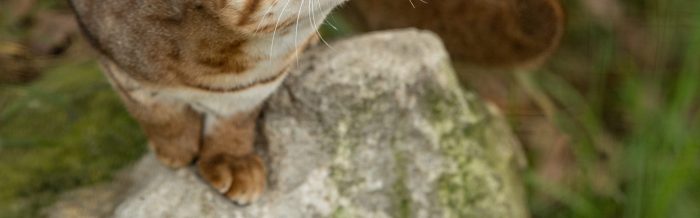
The rusty-spotted cat has been described as widespread and new research continues to increase its known range, but its population densities, distribution, and dynamics are poorly known.
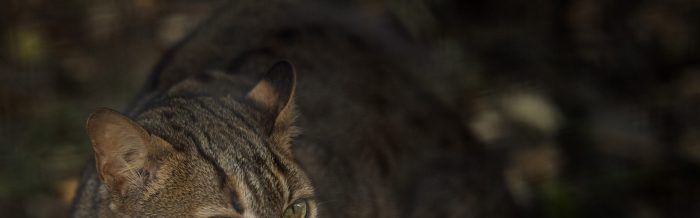
Because of its small size, the rusty-spotted cat is preyed on by larger predators, such as jackals, foxes, and other cat species.

Compared to other species, rusty-spotted cats have a relatively restricted and fragmented distribution and only occur in India, Sri Lanka, and Nepal.

Rusty-spotted cats are mostly nocturnal, but zoo observations show that they're not strictly nocturnal or crepuscular; sexually active individuals are actually more active in the daytime.
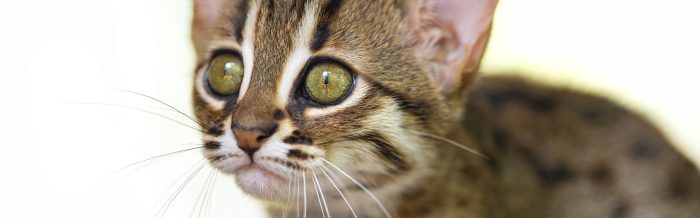
Young rusty-spotted cats already have well-developed locomotion abilities when they start to come and go from the den at 28 days of age.
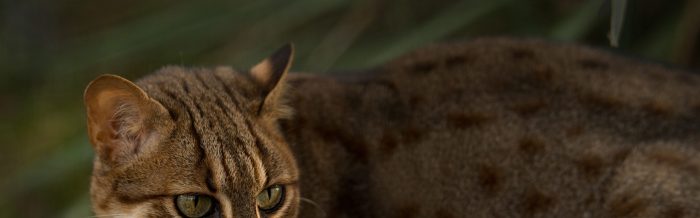
The rusty-spotted cat is fully protected by CITES over most of its range as hunting and trade are prohibited in India, Nepal, and Sri Lanka, but domestic trade in Sri Lanka is uncontrolled.
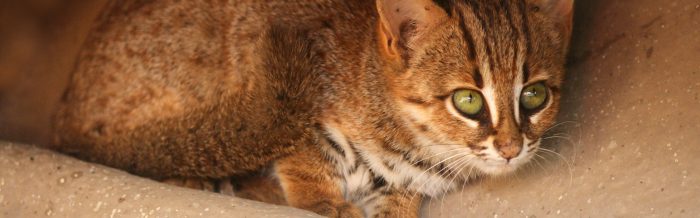
At first, young rusty-spotted cats sleep near or on their mother, but as they get older, they sleep on high ledges alone.
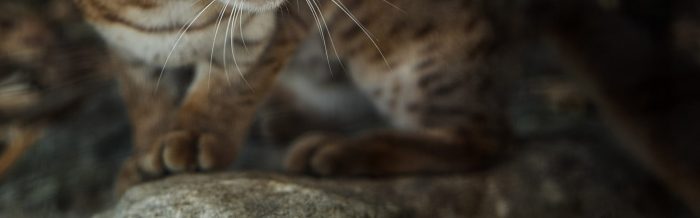
Very little is known about the rusty-spotted cat's reproduction and all the information comes from captive individuals.

The rusty-spotted cat shows tolerance for modified, human-populated, and agricultural areas away from forests because of the large rodent populations found there.
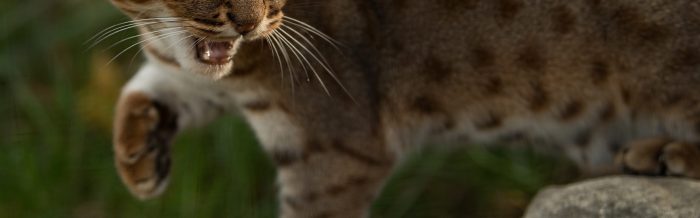
Mother rusty-spotted cats are not known to translocate their young or bring food to them, but males have been observed in zoos protecting the kittens and bringing them meat.
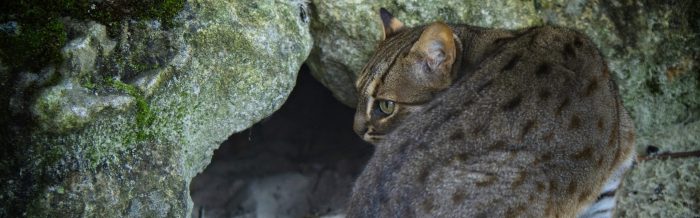
Rusty-spotted cats mainly inhabit dry deciduous forests and prefer dense vegetation and rocky areas, but also reside in semi-arid and tropical climates, such as mixed, moist, tropical thorn, and scrub forests.
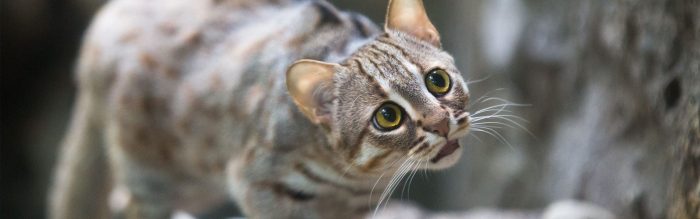
For the first 100 days of development, male rusty-spotted cats are smaller than females, but afterwards have a greater average body weight.
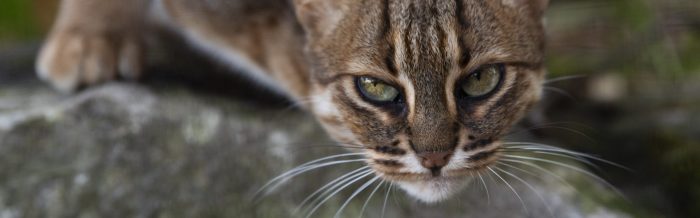
There is little information available of the rusty-spotted cat and the lack of knowledge about its status and distribution may hinder its effective conservation.
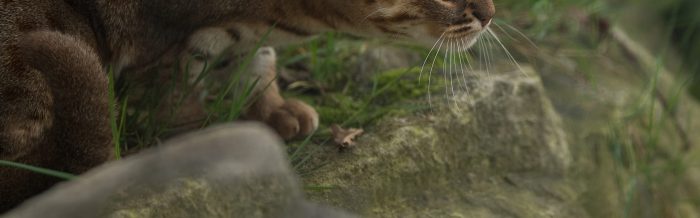
Female rusty-spotted cats prefer to give birth in low-level areas such as within hollow trees or under rock cliffs.
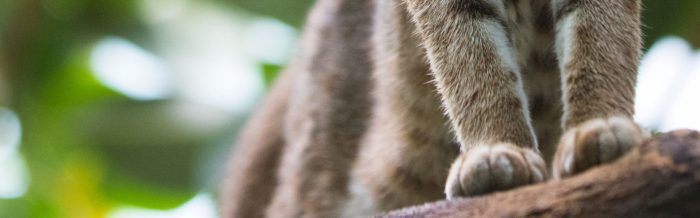
Rusty-spotted cats are "Near Threatened" as less than 10,000 are estimated to remain with no subpopulations with more than 1,000 breeding individuals.
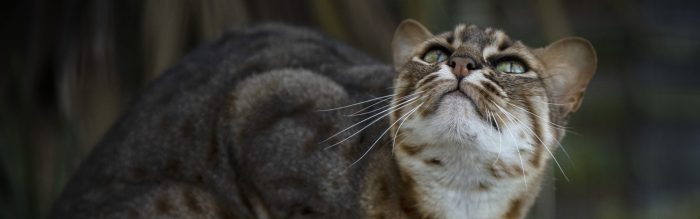
Although the rusty-spotted cat doesn't fare well in captivity and only a few are held in zoos, observations from the West Berlin Zoo and Frankfurt Zoo have helped provide information about this species.