Because the ring-tailed lemur's habitat has been altered by humans, their range is large, but their distribution is patchy and dependent on forest cover.

Join a creative community focusing on a unique animal each month.
FaunaFocus releases a new FaunaFact every single day! These bite-sized bits of information are interesting facts paired with a unique image of that animal.
Because the ring-tailed lemur's habitat has been altered by humans, their range is large, but their distribution is patchy and dependent on forest cover.

Ring-tailed lemurs are diurnal and search for food from dawn until dusk before huddling together at night to sleep.

Ring-tailed lemurs have four thin fingers and a thumb, with an opposable first toe on the lower appendage to help with climbing trees.

Ring-tailed lemurs have a complex social hierarchy in which females are dominant over males and stay within their native troop.

Ring-tailed lemurs are well-known for their thermoregulatory "sunning" postures, in which they sit upright with their forearms on their knees.

Because of their highly seasonal environment, ring-tailed lemurs are opportunistic omnivores and must exploit a wide variety of food sources throughout the year.

There is no physical sexual dimorphism in the ring-tailed lemur as male and females average the same size of 42.5cm and 2.2kg.

The fur of a ring-tailed lemur is thick and dense and is a solid color ranging from gray to brown being lighter around the face and underbelly.

Ring-tailed lemurs have overlapping home ranges, averaging 1,000m, that are seasonally expanded depending on habitat and habitat quality.

Madagascar's lemurs, including the ring-tailed lemur, are the most endangered group of mammals and represent the highest primate conservation priority in the world.

The ring-tailed lemur is named for its long, thick, black-and-white-ringed tail and is the only lemur species to possess a striped tail.

Ring-tailed lemurs are found in rainforests, continuous canopy, humid montane, subalpine, dry deciduous, gallery, mixed, dry brush, and spiny thorn, scrub bush forests.

Ring-tailed lemurs are endemic to 9 forests in southern and southwestern Madagascar on the continent of Africa.

Ring-tailed lemurs are highly social and live in groups of 15 to 30 called troops, the largest of any lemur species.

The hawksbill turtle communicates by the use of ritual mating behaviors and breeds in shallow waters near the shore.

Male hawksbill turtles are distinguished from females by a brighter pigmentation, a concave plastron, long claws, and a thicker tail.

Hawksbill turtles are found in shoals, sea grass, algal beds, mangrove bays, lagoons, islands, creeks, mud flats, continental shelves, and hard-bottomed and reef habitats containing sponges.
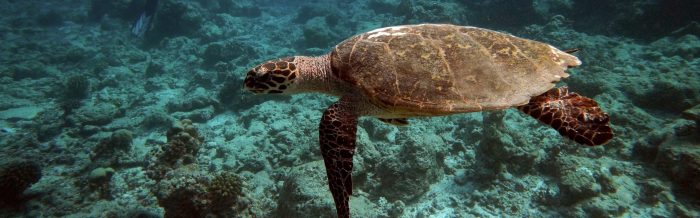
Once sexually mature, most hawksbill turtles undertake complex movements and become highly migratory, but some may settle near their natal beaches.

The hawksbill turtle inhabits the tropical and subtropical waters of the Atlantic Ocean, Indian Ocean, and Pacific Ocean and reside on the coasts of more than 108 countries.

Hawksbill turtle mating occurs in shallow waters every 2-3 years, but it's unknown whether the turtles are promiscuous or monogamous.
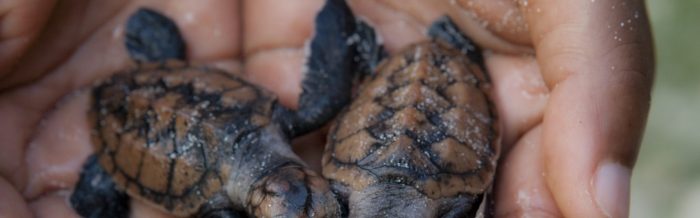
Young hawksbill turtles are unable to dive into deep water and gather in masses of floating sea plants until they're older.
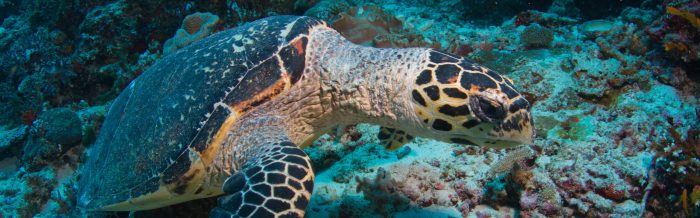
Hawksbill turtles play a positive role in the ecosystem by contributing to marine and coastal food webs and transporting nutrients within the oceans.
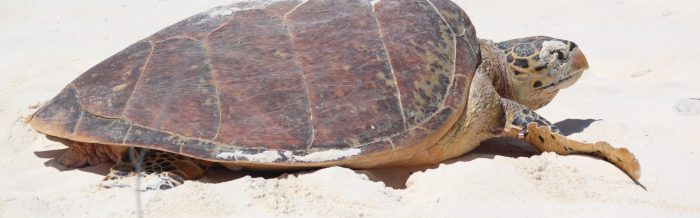
The entire hawksbill turtle nesting process takes roughly 1-3 hours in which the turtles dig pits, lay their eggs, then cover the nests and return to the sea.

Only about 1 in 1,000 hawksbill turtles will survive to adulthood because they must scramble to the ocean, directly after hatching, while avoiding predators.

Hawksbill turtles are believed to be guided inland to their nesting beaches by magnetic fields and the lunar phases and positioning of the moon.
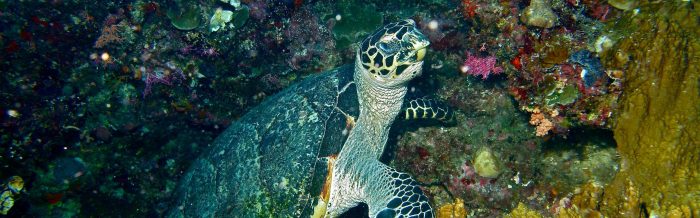
Hawksbill turtles are primarily spongivorous in the Caribbean, omnivorous in the Indo-Pacific and Great Barrier Reef, and more herbivorous in Australia.
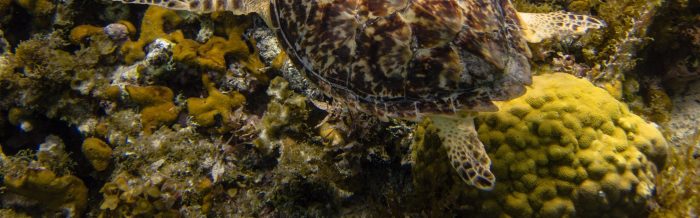
Hawksbill turtles are preyed on by humans, sharks, crocodiles, large fish, and octopi, and their nests are robbed by dogs, raccoons, rats, and humans.

Humans have become the hawksbill turtle's major predator by eating the turtle and its eggs, as well as illegally hunting them to sell their scutes.
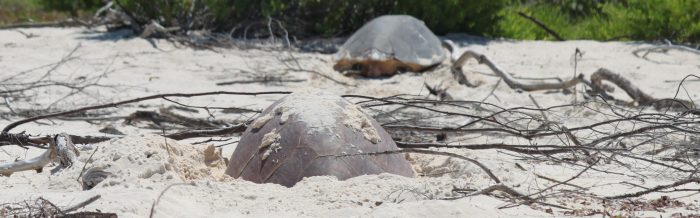
Temperature may determine the sex of hawksbill turtles, as cooler environments hatch more males and warmer nests hatch more females.
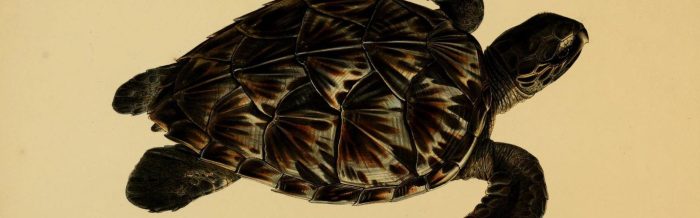
Tortoiseshell, the carapace scutes and plastron of the hawksbill turtle, has been prized and traded since ancient times.
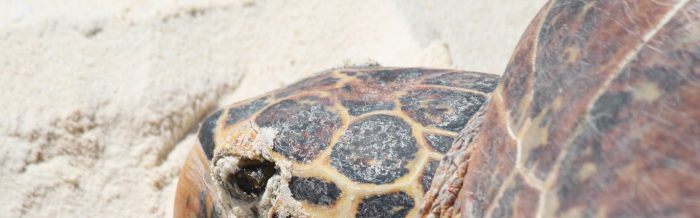
Researchers tag nesting female hawksbill turtles in order to document population estimates, nest slaughters, and total number of egg clutches.
Hawksbill turtles have seen an increase in the Caribbean, but protection of the turtle in both terrestrial and marine habitats is still needed throughout much of the world.
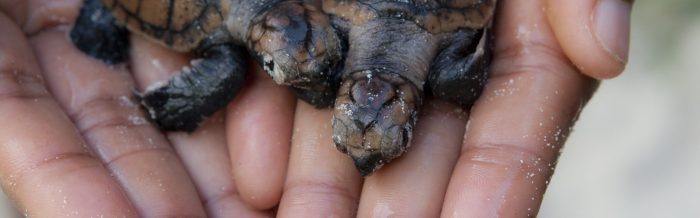
Hawksbill turtles face multiple severe threats including the tortoiseshell trade, Japanese bekko industry, marine fishery mortalities, habitat degradation, and nesting disturbances.