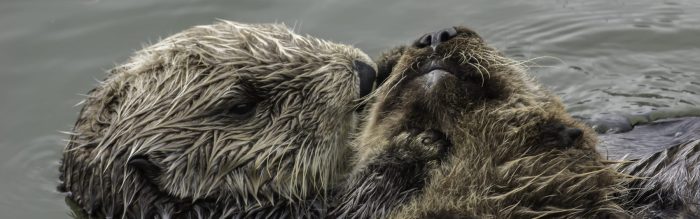
Sea otters are polygynous, with males having multiple female partners throughout the year.
Join a creative community focusing on a unique animal each month.
Sea otters are polygynous, with males having multiple female partners throughout the year.
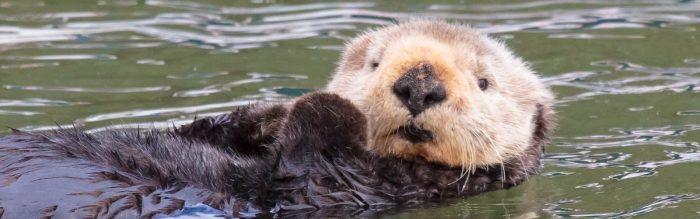
Because male sea otters hold the female's head or nose with their jaws during copulation, many females have visible face scars.
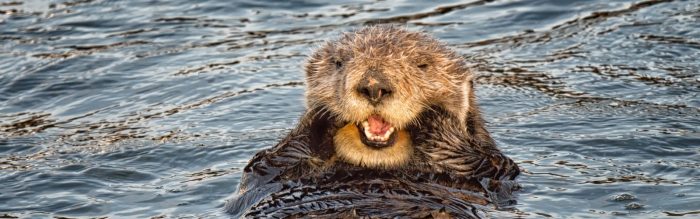
Sea otters are diurnal with crepuscular peaks in foraging activity and spend 15-55% of their time foraging, depending on food availability.

Although twins occur in 2% of sea otters births, only one pup can be raised successfully.

Male sea otters don't provide any care for their offspring while the females nurse, feed, protect, and groom the young for up to 6-8 months.

Female sea otters carry their pups on their bellies while they nurse, providing their young with 20-25% fat milk for up to 6 months.

Because sea otter fur is coveted for its density and insulating quality, sea otters were nearly hunted to extinction from the mid 1700's to 1911 when the International Fur Seal Treaty was enacted.
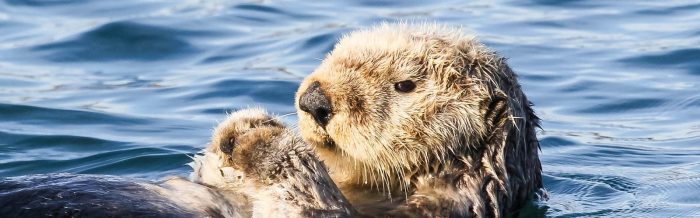
Female sea otters usually give birth to a single pup about once a year at any time, though there are peaks of birth in May-June in the Aleutian Islands and in January-March in California.

Sea ice limits the sea otter's northern range while the distribution of giant kelp forests limits its southern range.
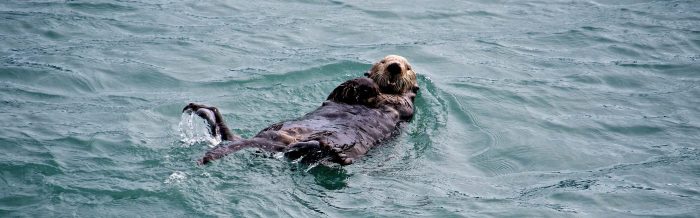
Sea otters are found in two geographic regions on the Pacific Coast around Canada, the United States, and Mexico in North America and around Russia and Japan in Asia.
Do you think you know the sea otter? Test your knowledge of sea otter FaunaFacts with this trivia quiz!
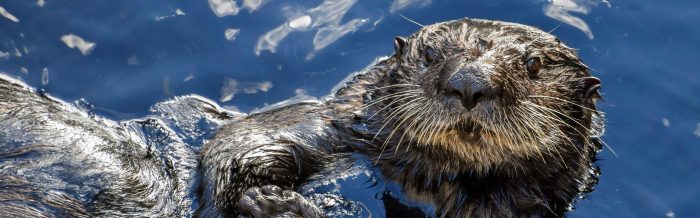
Sea otters are endangered due to large-scale population declines and hunting, but oil spills are their greatest anthropogenic threat.

Sea otters are the only carnivores with just 4 lower incisors.

Sea otters hunt on the sea floor using their sensitive whiskers to locate prey and their small, agile forepaws to capture the prey and pull it apart.

Great white sharks are one of the primary predators of sea otters, but the otters are also eaten by coyotes, bald eagles, and killer whales.
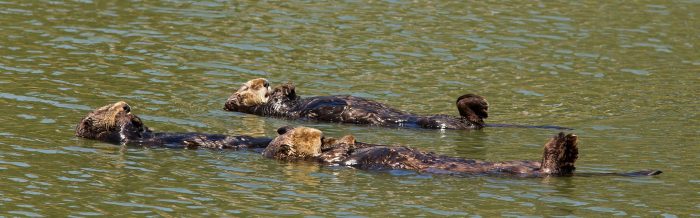
The Asian sea otter is the largest subspecies, followed by the northern sea otter, leaving the southern sea otter as the smallest.
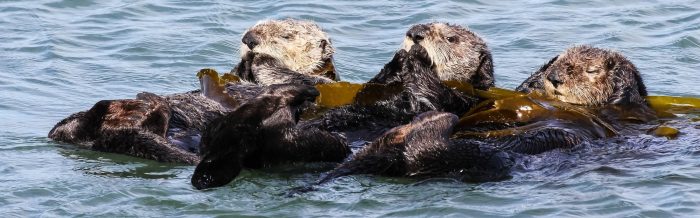
Three subspecies of the sea otter are recognized with distinct geographical distributions and facial structures.

Sea otters are one of the few mammals that exhibit tool use, using rocks to break open prey and storing the rocks in the loose skin under their forearms.

When resting or sleeping, sea otters float on their backs and wrap themselves in kelp to keep from drifting.

Sea otters are a keystone species and are vital to the overall health and diversity of the kelp forest ecosystem by controlling herbivorous invertebrates.

Sea otters are social creatures and congregate in groups known as rafts or pods, though females tend to avoid males except when mating because males steal their food.
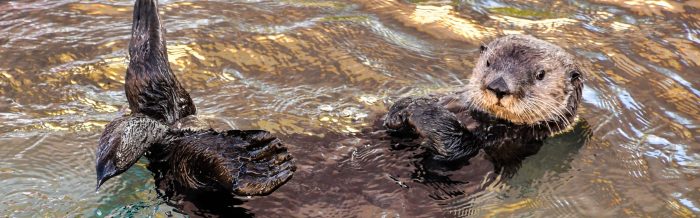
Sea otters typically remain in the same area for years and males have larger home ranges than females.
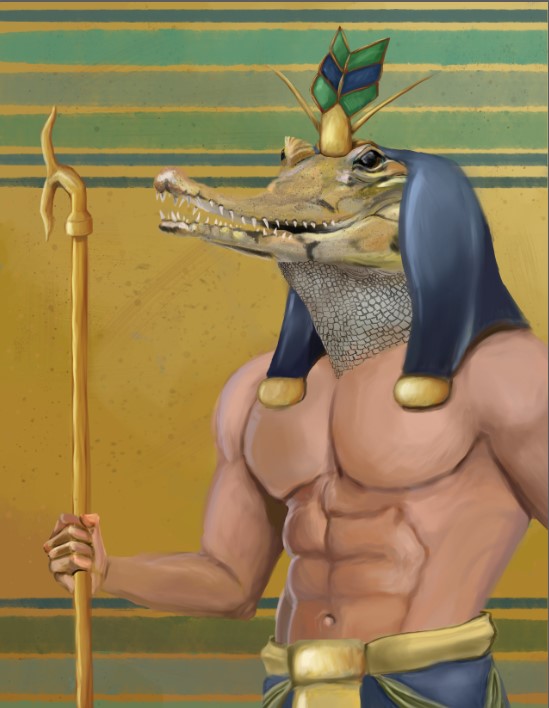
Sarah depicted the crocodilian Egyptian god, Sobek, as a slender-snouted crocodile. With a pleasing color scheme and attention to detail, Sarah’s realistic rendering of the crocodile’s scales echoed the tones of the human-like body and created an impressive looking character.
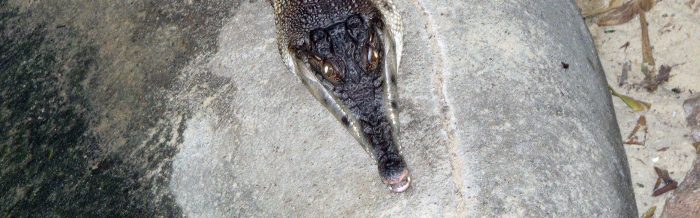
Slender-snouted crocodiles do not secrete chitinases, so any chitinous or keratinous substances, such as hair or mollusk shells, accumulate in the gut and are ejected through the mouth.
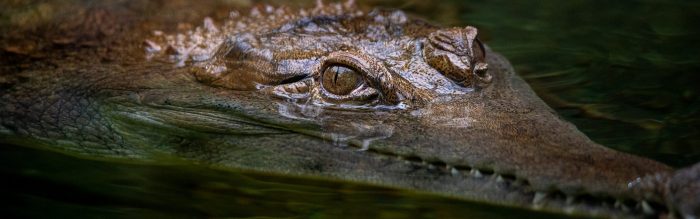
Do you think you know the slender-snouted-crocodile? Test your knowledge of slender-snouted crocodile FaunaFacts with this trivia quiz!
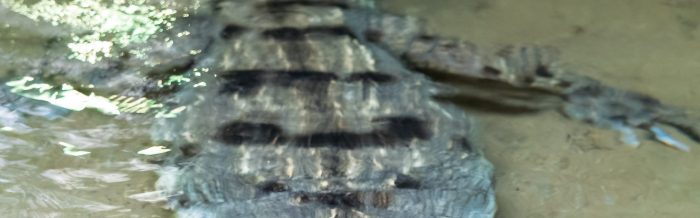
The average lifespan of wild slender-snouted crocodiles is unknown, but captive individuals have been documented to live for at least 38 years.
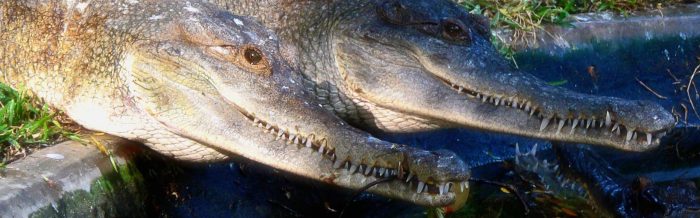
Little is known about the specific courtship and mating systems of slender-snouted crocodiles, but they are generally known to engage in sex-specific mating rituals in the water.
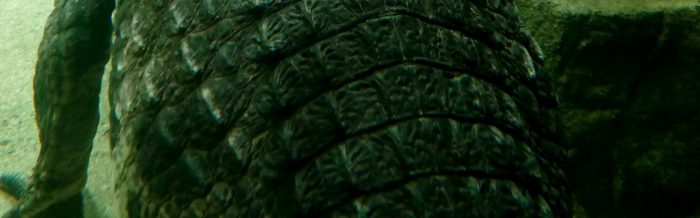
The stomachs of slender-snouted crocodiles often contain gastroliths of various sizes that serve to grind and break down food in the digestive tract.

If a hatchling shows no sign of emerging, the mother slender-snouted crocodiles will carefully place the egg in her mouth and crack it.
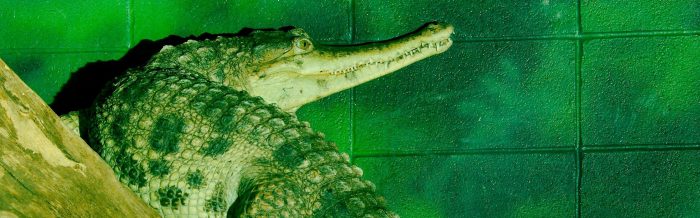
Slender-snouted crocodiles have been known to share their nests with other species of crocodilians in order to deter predators.

Among species in the genus Crocodylus, slender-snouted crocodiles produce the lowest average number of eggs per clutch, 8-22, but also exhibit the largest average egg size at 8 cm. long and 5 cm. wide.
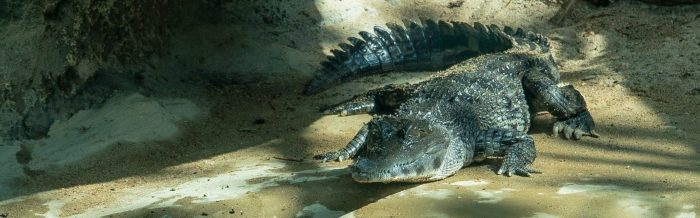
Slender-snouted crocodiles show their dominance using different rituals and perform visual displays to attract potential mates.