Both curl-crested araçari parents help brood the chicks by incubating the eggs, feeding the offspring, and cleaning the nest.
Join a creative community focusing on a unique animal each month.
Both curl-crested araçari parents help brood the chicks by incubating the eggs, feeding the offspring, and cleaning the nest.
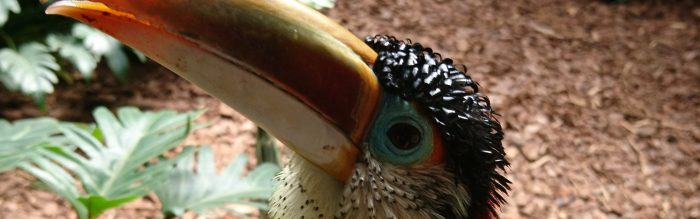
The curl-crested araçari is mainly arboreal, but has been seen on the ground feeding with other bird species.
Based on a model of Amazonian deforestation, the curl-crested araçari is suspected to lose 16.3-20.6% of its habitat over 3 generations of 21 years.
Curl-crested araçaris have been recorded mating in June and data suggests a breeding season of May to August, possibly to November or even February.
Do you think you know the curl-crested araçari? Test your knowledge of curl-crested araçari FaunaFacts with this trivia quiz!
The curl-crested araçari has a decreasing population trend and is suspected to decline about 25% over 3 generations of 21 years.
Female curl-crested araçaris lay 3-6 pure white eggs in the hollow nest cavity floor and both parents incbuate them for 16-18 days.
There is debate over whether the curl-crested araçari's scientific name should be spelled Pteroglossus beauharnaisii or Pteroglossus beauharnaesii.
Curl-crested araçari chicks are born blind and naked and fledging occurs in 43-50 days.
Male curl-crested araçaris modify the nest site in tree cavities and coax the female to it for her approval.
The curl-crested araçari is not subject to education and awareness programs and is not included in international legislation, management, or trade controls.
Very little is known about the curl-crested araçari's reproduction, and no courtship has been observed in captivity.
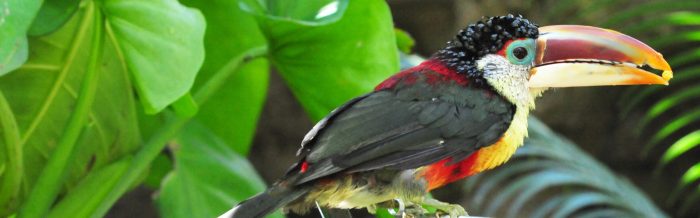
Curl-crested araçaris frequently forage in the mid-level and canopy of forest edges as well as small bushes, clearings, and even on the ground.
Although there is no action recovery plan, systemic monitoring schemes, or invasive species control in place for the curl-crested araçari, conservation sites have been identified for the bird.
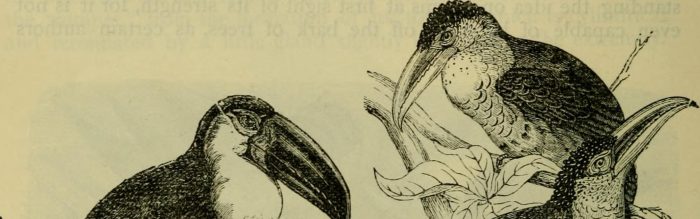
The curl-crested araçari was first described by Johann Georg Wagler in 1832 and was formerly placed in the monotypic genus, "Beauharnaisius", rather than its current genus, "Pteroglossus".
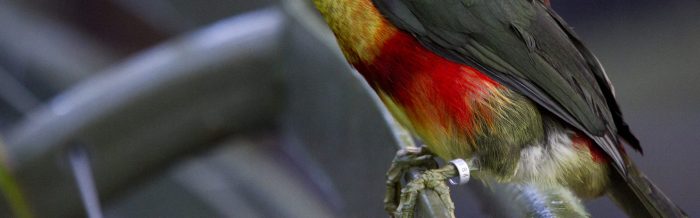
Curl-crested araçaris sleep with their long tails folded over their backs.
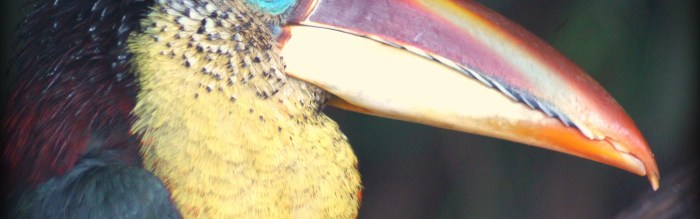
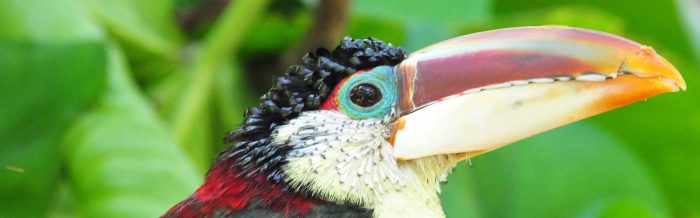
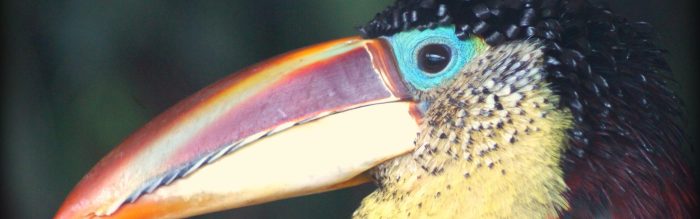
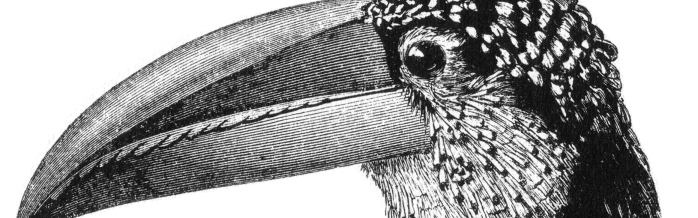
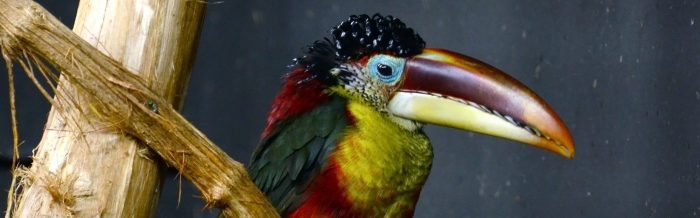
The curl-crested araçari has an over-sized, heavy, colorful bill for plucking fruit from vegetation and drinking water from the crevices of trees.
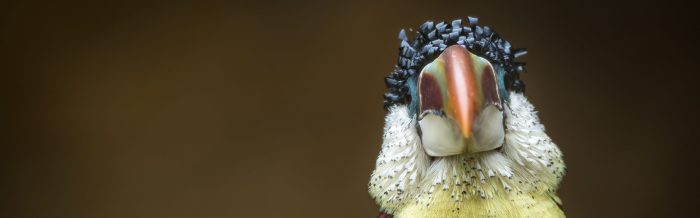
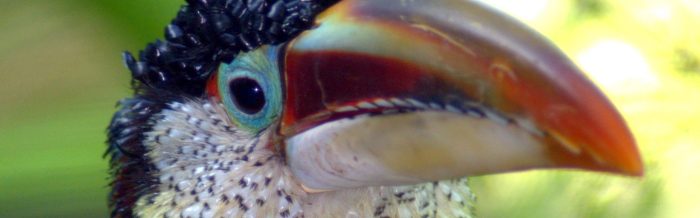
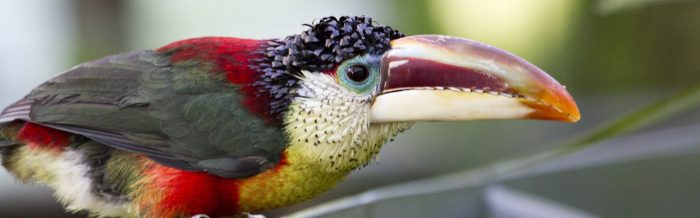
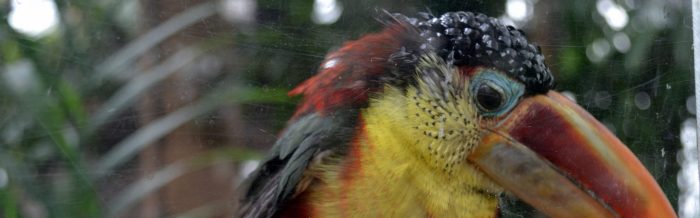
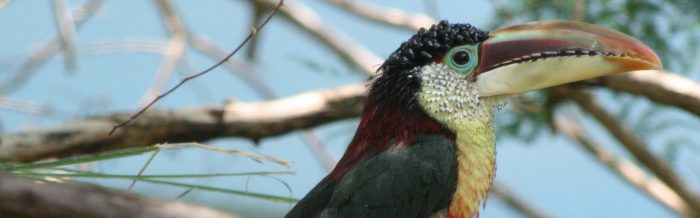
Unlike any other bird, the curl-crested araçari has modified head feathers that resemble shiny black pieces of plastic and give the bird its common name.
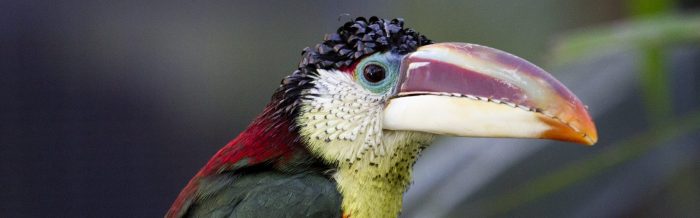
Curl-crested araçaris are docile, peaceful, social and move about in flocks of 4-12, calling frequently.
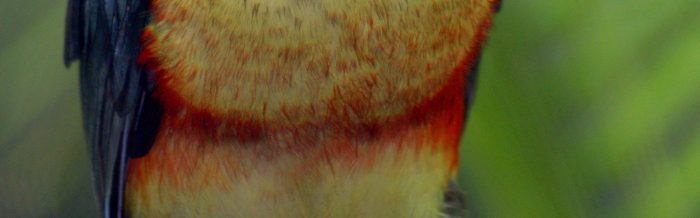
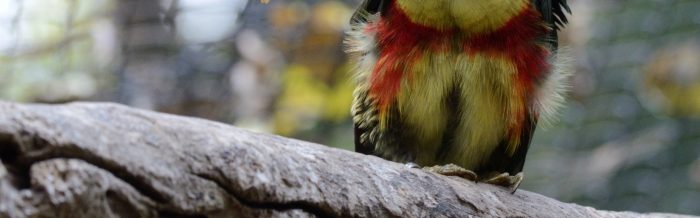
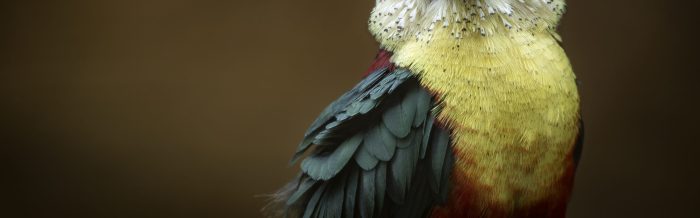
The curl-crested araçari can be identified from other araçaris by its more diffuse facial patterns, yellow underparts with a single red breast band and ornately-patterned, multicolored bill.
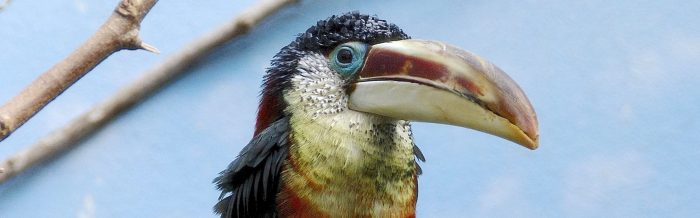
The curl-crested araçari is not a migrant and is not migratory.
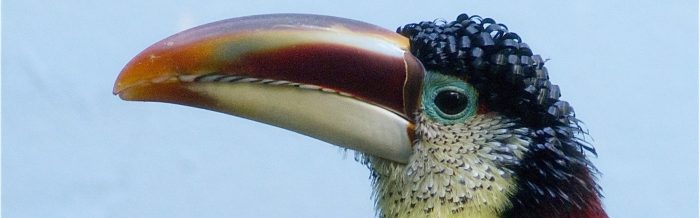
The curl-crested araçari is evaluated as "Least Concern" on the IUCN Red List because of its extremely large range and estimated population size.
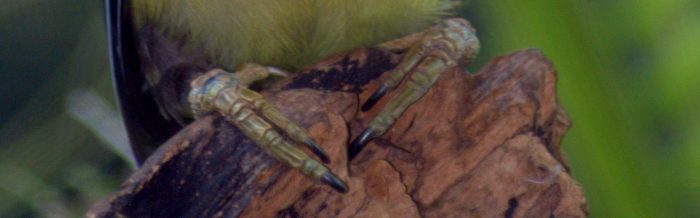
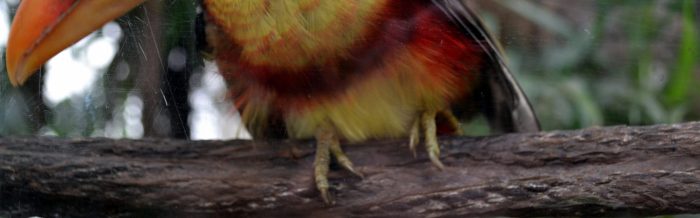
The curl-crested araçari has zygodactylous toes as two point forward and two point backwards.
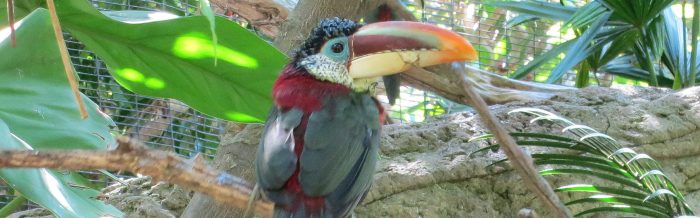
The curl-crested araçari inhabits forest habitats including subtropical and tropical moist lowlands and swamps.
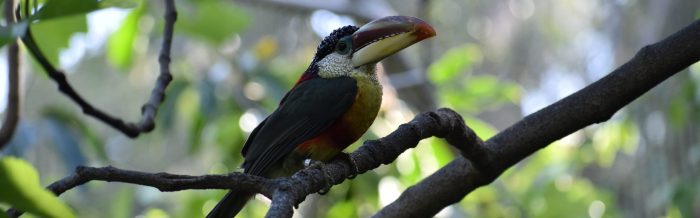
The curl-crested araçari is endemic to South America and has an extremely large range across Bolivia, Brazil, and Peru.
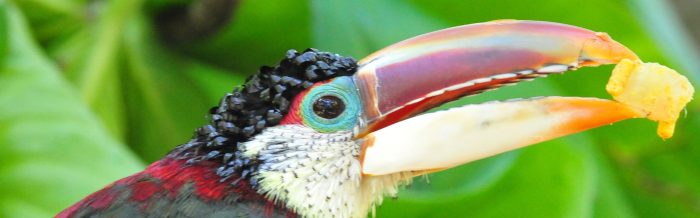
The curl-crested araçari is primarily a frugivore but will also take nestlings of birds, such as the yellow-rumped cacique.
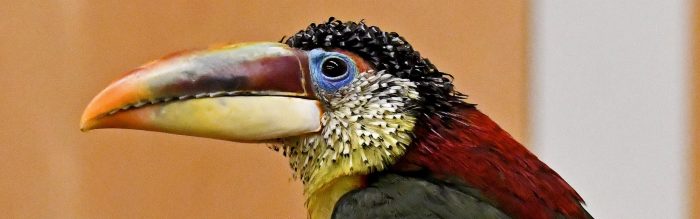
Both sexes of the curl-crested araçari measure 40-46 cm. (16-18 in.) long and weigh 164-280 g. (6-10 oz.), but females have shorter bills.
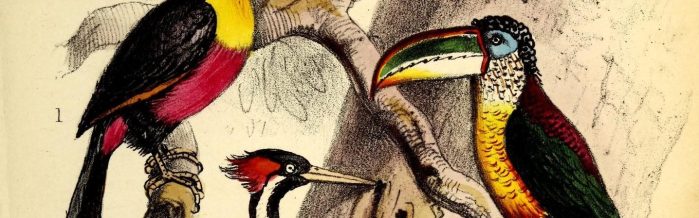
The curl-crested araçari is one of over 40 species of birds in the family Ramphastidae, the South American barbets, toucans, toucanets, and araçaris.
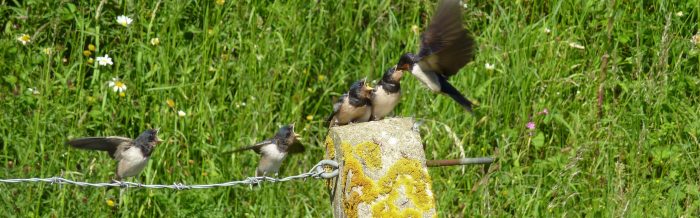
Although rare, cowbirds have been documented parasitizing barn swallow nests, leaving a cowbird egg to be raised by the barn swallow.
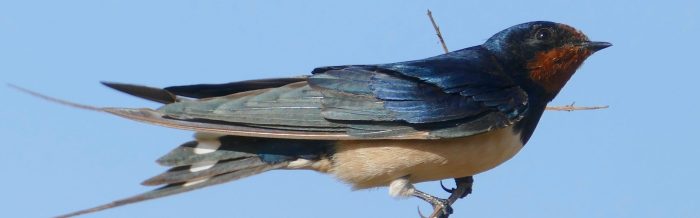
Barn swallows have many predators including kestrels, hawks, owls, gulls, grackles, rats, squirrels, weasels, raccoons, bobcats, cats, snakes, bullfrogs, fish, and fire ants.

Zoe created a fantastical depiction of a duo of fiery barn swallows soaring through a starry sky. With a rainbow of colors, this piece balances warm and cool tones, echoing the duality of the birds in the foreground. Highly detailed and well-rendered, this composition excellently featured the barn swallow.
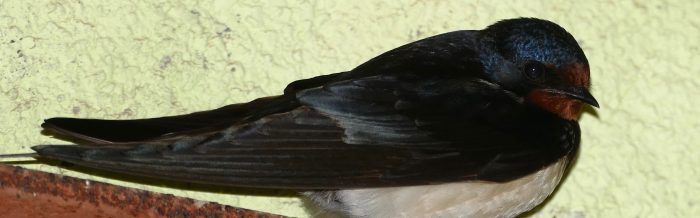
There are frequent cultural references to the barn swallow in literary and religious works due to its living in close proximity to humans and its annual migration.