Do you think you know the Livingstone's flying fox? Test your knowledge of Livingstone's flying fox FaunaFacts with this trivia quiz!

Join a creative community focusing on a unique animal each month.
Do you think you know the Livingstone's flying fox? Test your knowledge of Livingstone's flying fox FaunaFacts with this trivia quiz!

Livingstone's flying foxes are frugivorous herbivores and feed on a large variety of fruits, as well as nectar and leaves.

Livingstone's flying foxes are social and form groups of 15-250, called harems or colonies, in which they roost and forage.
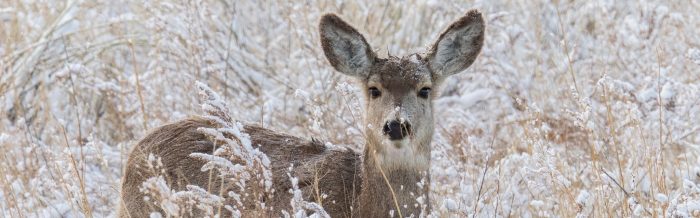
Because of their acute hearing and excellent binocular vision, mule deer specialize in detecting danger long-range and can quickly detect and visually track another animal from as far as 600 meters away.
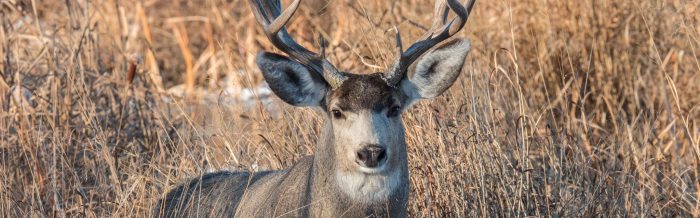
To counter agricultural development, rangeland conversion, mining, road and highway construction, and the development of housing tracts, many government agencies have purchased critical areas to maintain for mule deer.
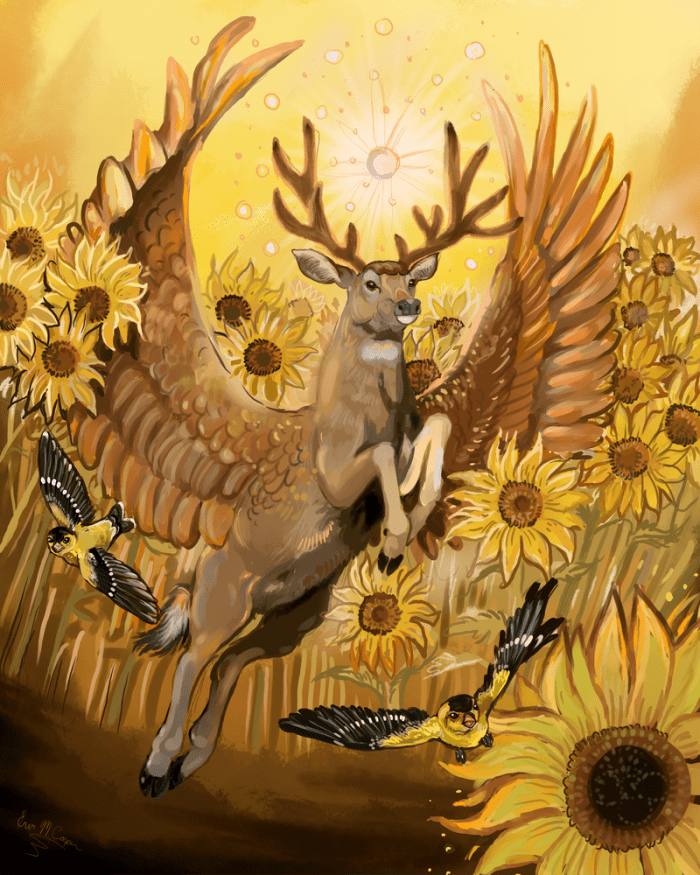
Shadowind digitally painted an analogous composition filled with oranges, yellows, and golds. This piece displays a mule deer peryton leaping from a field of sunflowers amongst a flock of birds. With skilled anatomy and careful attention to detail, this piece captures the hear of the viewer with its warm and welcoming presence.
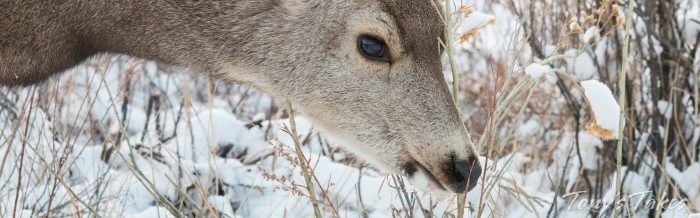
The mule deer's most urgent threat is Chronic Wasting Disease (CWD), a transmissible spongiform encephalopathy (TSE), but they are also threatened by high predator populations, competition with livestock grazing, and human-related habitat alterations.
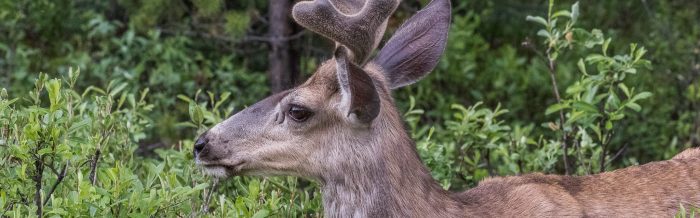
Both male and female mule deer experience parallel growth during their first year until males exceed females in body weight; chest girth; neck circumference; body, head, hindfoot, and hoof length; cranial breadth; and shoulder height.
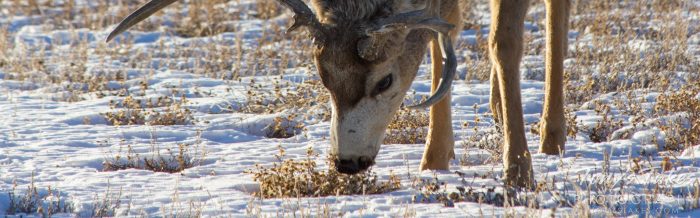
The mule deer is a target for various viral, bacterial, and parasitic diseases such as gastrointestinal nematodes, parasitic meningeal worms, neurologic disease, and foot-and-mouth disease.
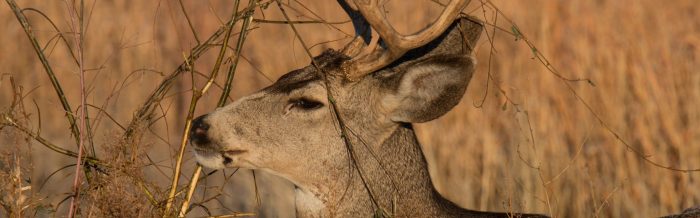
Mule deer communication is facilitated by five integumentary glands which produce specific pheromones that elicit specific reactions.

Mule deer weigh 2-5kg at birth, affected by litter size and sex as males are heavier than females.
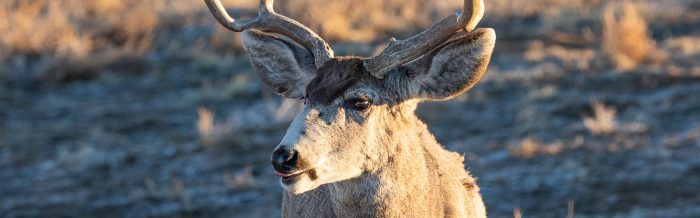
Although mule deer are "Least Concern" and not in need of conservation action, the Cedros Island subspecies is "Vulnerable" and in danger of becoming extinct because its densities are low and poaching and predation by feral dogs are high.

Do you think you know the mule deer? Test your knowledge of mule deer FaunaFacts with this trivia quiz!
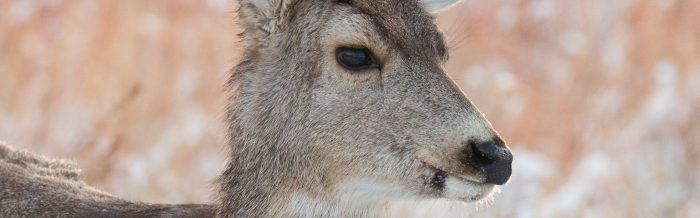
Mule deer can give birth to 1 or 2 young, but 1st or 2nd time mothers most often have a single fawn.
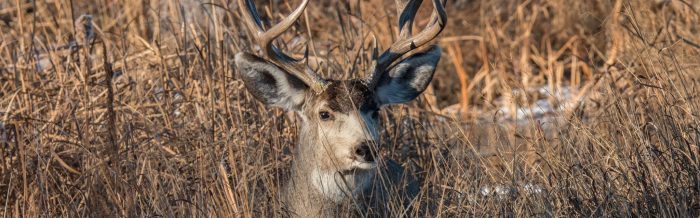
Mule deer have several distinct strategies for avoiding predators and may choose to hide or move into cover and cautiously outmaneuver the predator.
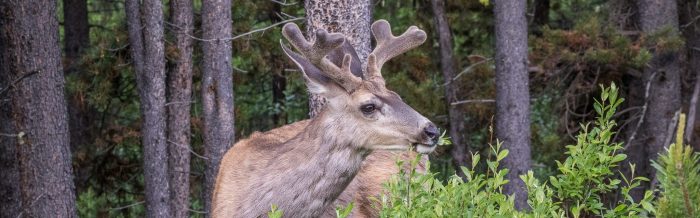
Douglas fir and Ponderosa pine are of major economic importance for commercial timber, however, these trees are browsed heavily by mule deer during both the dormant and growing seasons.
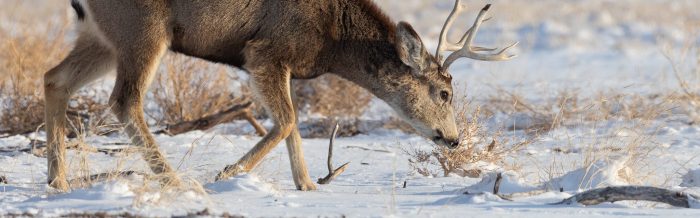
Mule deer migrate from higher elevations in the summer to lower ranges in the winter due to decreasing temperatures, severe snowstorms, and snow depths that reduce mobility and food supply.
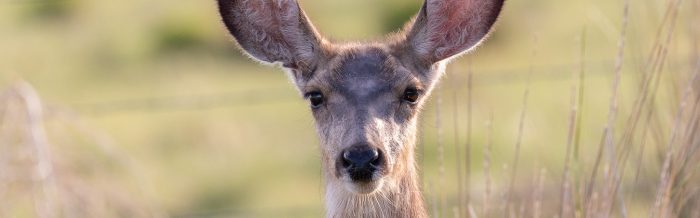
Most female mule deer conceive during their second year and give birth in June or July, though the time of birth will vary according to the environment.
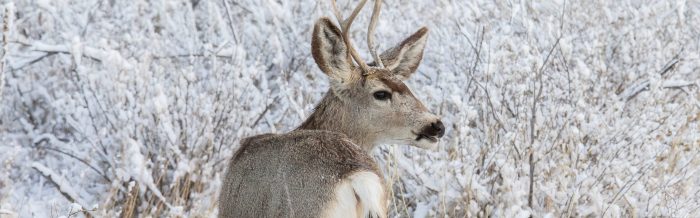
The mule deer is classified as "Least Concern" because it is adaptable to a wide range of habitats, has large, stable populations, and occurs in numerous protected areas.

The annual cycle of antler growth in male mule deer is initiated and controlled by changes in day length acting on cell types that secrete growth-stimulating hormones.
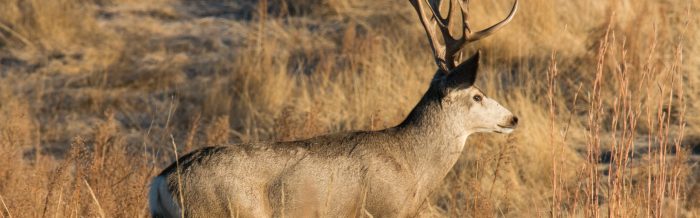
Common predators of mule deer include pumas, coyotes, bobcats, golden eagles, feral dogs, and black bears.
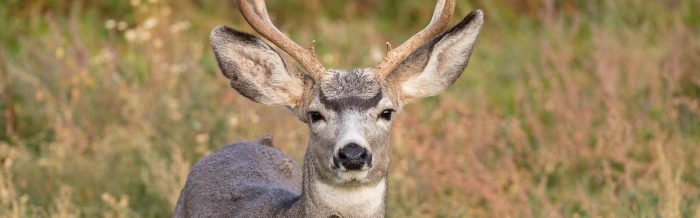
Mule deer possess an iconic dark V-shaped marking between the eyes that is more conspicuous in males.
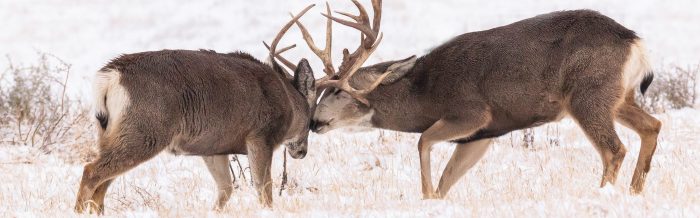
Mule deer dominance is largely a function of size, with the largest males, which possess the largest antlers, performing most of the copulations.
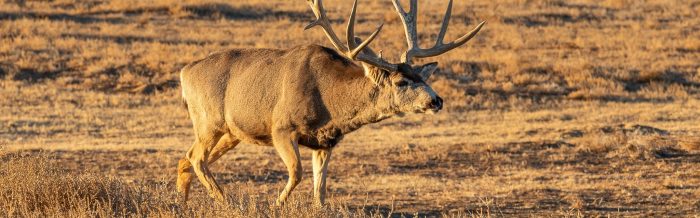
Most mule deer confine their daily movements to discrete home ranges which they use throughout the seasons in consecutive years.

Because nutritious forage is in poor supply for much of the year, the mule deer has an annual cycle of metabolic rates, capitalizing on abundant, high-quality forage in the summer and surviving on a lower intake of poor-quality forage during the winter.
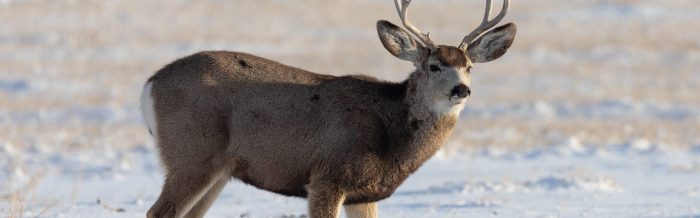
All mule deer markings vary considerably among the species, but remain constant throughout the life of an individual.
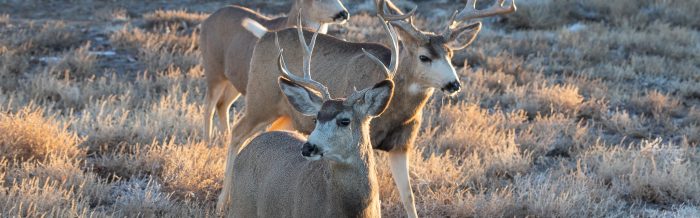
Female mule deer, related by maternal descent, form clans while males disperse as individuals or aggregate in groups of unrelated individuals, all maintained with dominance hierarchies.
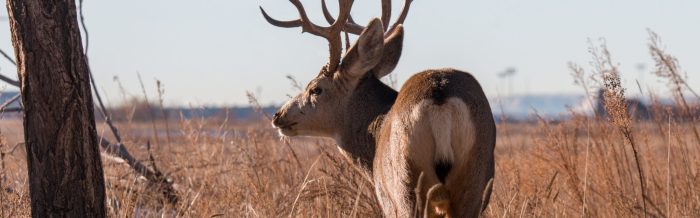
Ten subspecies of mule deer have been identified including two black-tailed deer subspecies and a hybrid subspecies of the mule deer and the white-tailed deer (Odocoileus virginianus).
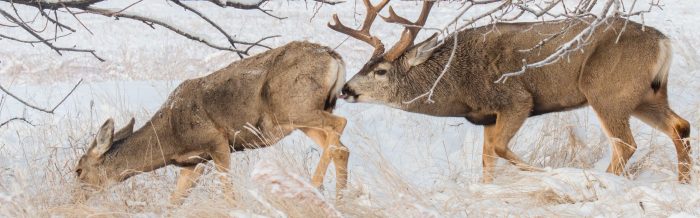
Mule deer are polygynous, having a tending-bond type breeding system, and mating within groups from late November through mid-December.
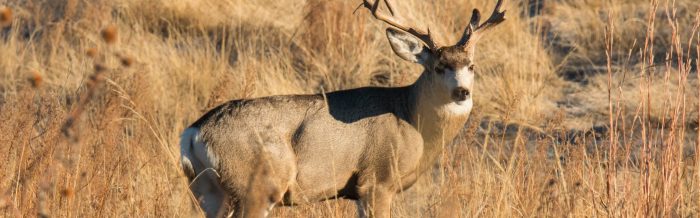
Mule deer hunting in autumn offers countless recreational opportunities for the public and generates revenue for the economy.
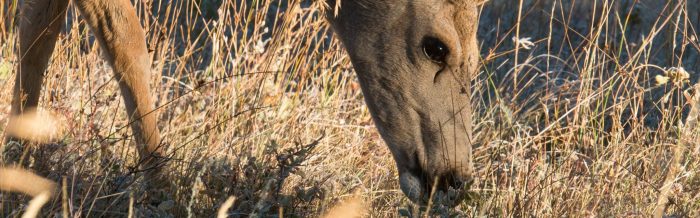
The mule deer is a small, intermediate, ruminant feeder with limited ability to digest highly fibrous roughage and feeds on leaves, twigs, acorns, legume seeds, fleshy fruits, berries, and drupes.

Mule deer have excellent binocular vision and are extraordinarily sensitive to moving objects, but are unable to detect motionless objects.