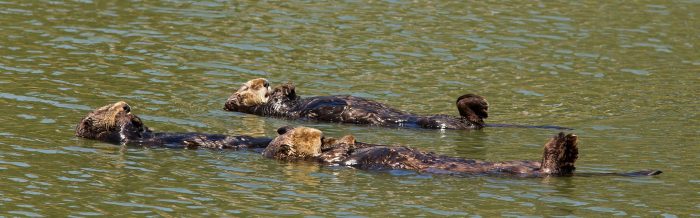
The Asian sea otter is the largest subspecies, followed by the northern sea otter, leaving the southern sea otter as the smallest.
Join a creative community focusing on a unique animal each month.
FaunaFocus releases a new FaunaFact every single day! These bite-sized bits of information are interesting facts paired with a unique image of that animal.
The Asian sea otter is the largest subspecies, followed by the northern sea otter, leaving the southern sea otter as the smallest.
Three subspecies of the sea otter are recognized with distinct geographical distributions and facial structures.
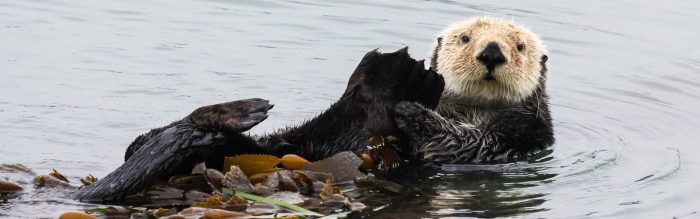
Sea otters are one of the few mammals that exhibit tool use, using rocks to break open prey and storing the rocks in the loose skin under their forearms.

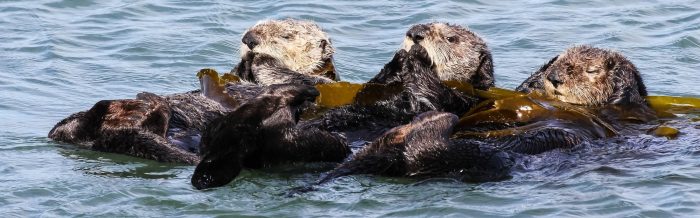
When resting or sleeping, sea otters float on their backs and wrap themselves in kelp to keep from drifting.

Sea otters are a keystone species and are vital to the overall health and diversity of the kelp forest ecosystem by controlling herbivorous invertebrates.

Sea otters are social creatures and congregate in groups known as rafts or pods, though females tend to avoid males except when mating because males steal their food.
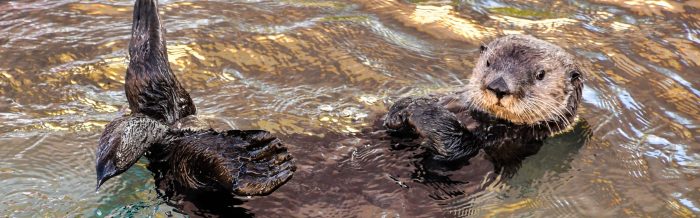
Sea otters typically remain in the same area for years and males have larger home ranges than females.
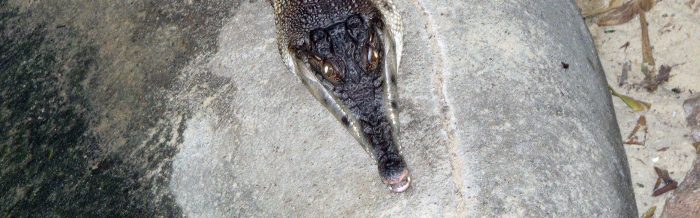
Slender-snouted crocodiles do not secrete chitinases, so any chitinous or keratinous substances, such as hair or mollusk shells, accumulate in the gut and are ejected through the mouth.
The average lifespan of wild slender-snouted crocodiles is unknown, but captive individuals have been documented to live for at least 38 years.
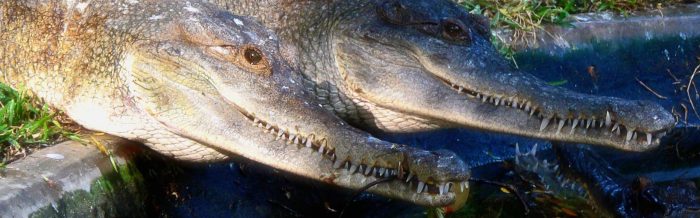
Little is known about the specific courtship and mating systems of slender-snouted crocodiles, but they are generally known to engage in sex-specific mating rituals in the water.
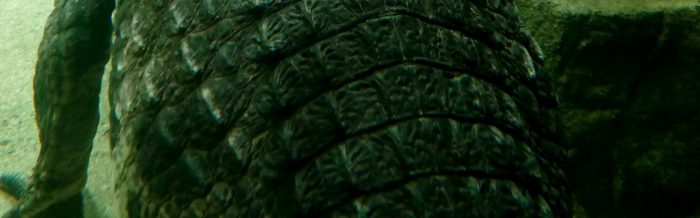
The stomachs of slender-snouted crocodiles often contain gastroliths of various sizes that serve to grind and break down food in the digestive tract.

If a hatchling shows no sign of emerging, the mother slender-snouted crocodiles will carefully place the egg in her mouth and crack it.
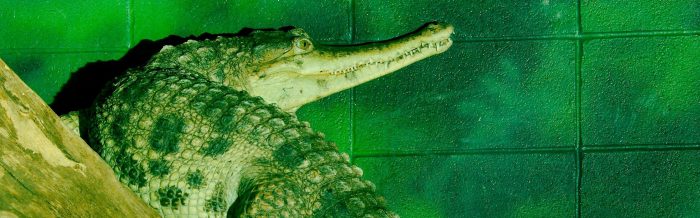
Slender-snouted crocodiles have been known to share their nests with other species of crocodilians in order to deter predators.
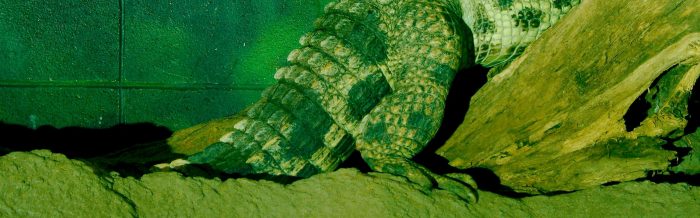
Among species in the genus Crocodylus, slender-snouted crocodiles produce the lowest average number of eggs per clutch, 8-22, but also exhibit the largest average egg size at 8 cm. long and 5 cm. wide.
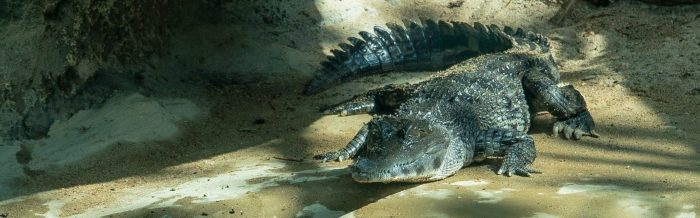
Slender-snouted crocodiles show their dominance using different rituals and perform visual displays to attract potential mates.
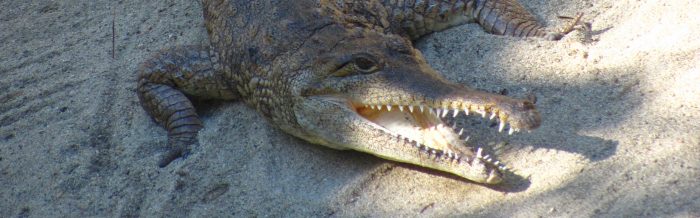
Male slender-snouted crocodiles are territorial, not tolerating males and only living with females during mating seasons.
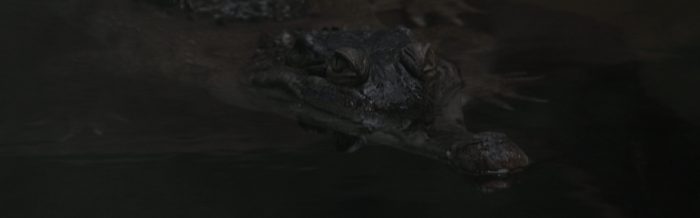
Hearing is very well developed in slender-snouted crocodiles, likely to be the primary sense organ when underwater, and is more sensitive than in other reptiles.
Slender-snouted crocodile hatchlings resemble mature adults and are fully capable of feeding and swimming from the moment they hatch.
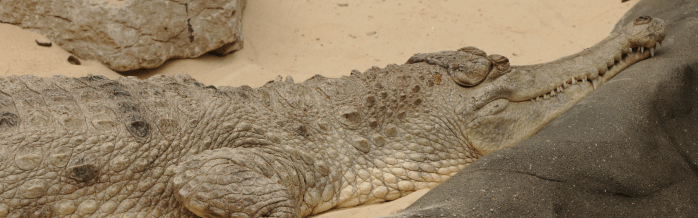
Like all crocodile species, the slender-snouted crocodile lays eggs with the temperature of the nesting conditions determining the sex of the hatchlings.
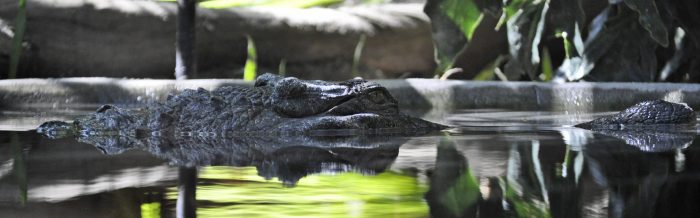
Newborn slender-snouted crocodiles are defended and cared for by both parents for some time after hatching.
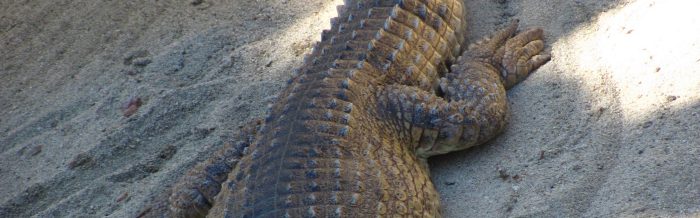
Female slender-snouted crocodiles construct 120-200 cm. wide nests of dead vegetation and mud using their hind legs.
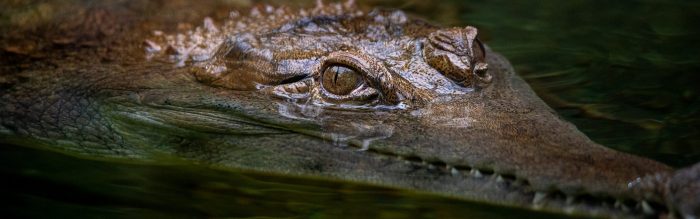
As with all crocodilian species, adult slender-snouted crocodiles are capable of severely injuring or killing humans.
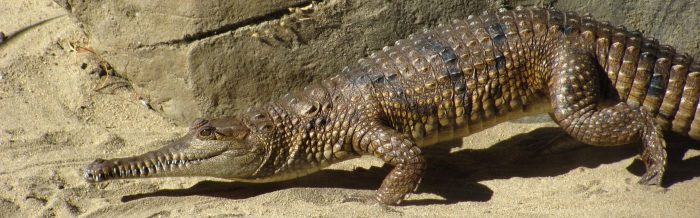
Due to their limbs being short relative to the size of their body, slender-snouted crocodiles move awkwardly outside of the water, belly crawling through mud and high walking over rocks.

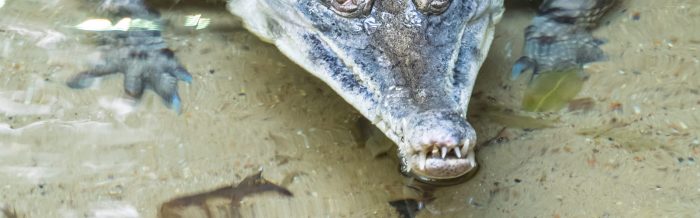
Slender-snouted crocodilians have a powerful bite force and their mouths are equipped with many sharp teeth that are designed for grabbing and hanging on to their prey and regrow when lost through fighting or feeding.
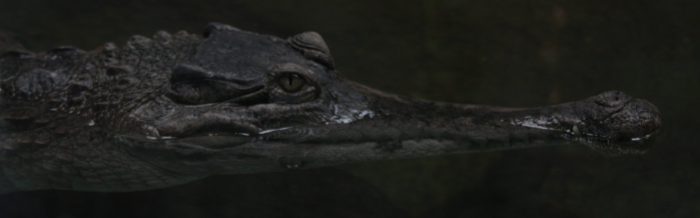
Slender-snouted crocodiles are assumed to see in color and have great night vision, but their vision is limited underwater.
Slender-snouted crocodile eggs and hatchlings are preyed on by otters, leopards, various birds and rodents, and even other crocodiles.
The slender-snouted crocodiles breeding season takes place at the start of the rainy season in January and February and lasts until July.
Slender-snouted crocodiles have a carnivorous, predatory diet and feed on fish, small crustaceans, and mammals that drink from the rivers and lakes where the crocodiles live.
Slender-snouted crocodile populations are projected to decline 60-90%, making the species extinct within one generation.

As in all crocodilian species, sexual dimorphism is present in slender-snouted crocodiles with males being larger than females of the same age class.
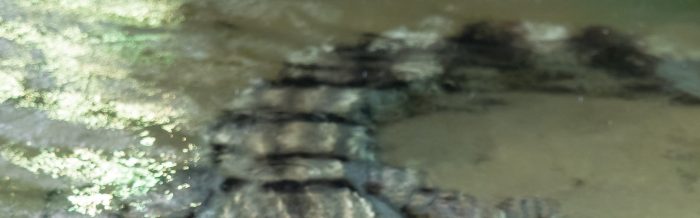
The powerful tail of the slender-snouted crocodile gives it forward propulsion in the water, allowing it to move in a graceful, serpentine motion.
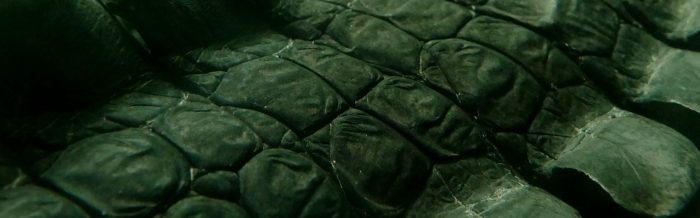
Slender-snouted crocodile skin is used to make clothing and accessories and the meat provides a means of sustenance in many areas.
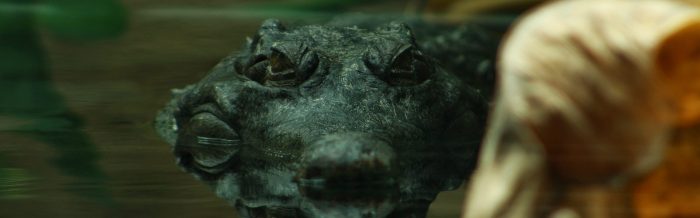
As with all crocodilians, the slender-snouted crocodile's facial features sit atop its head, suiting its ambush predatory lifestyle by allowing it to remain mostly submerged underwater when stalking prey.