Kea have gained a reputation for attacking sheep and infecting them with a fatal, blood-poisoning bacteria and deforesting pastures, causing farmers to kill them.

Join a creative community focusing on a unique animal each month.
FaunaFocus releases a new FaunaFact every single day! These bite-sized bits of information are interesting facts paired with a unique image of that animal.
Kea have gained a reputation for attacking sheep and infecting them with a fatal, blood-poisoning bacteria and deforesting pastures, causing farmers to kill them.

Kea have been observed breeding at all times of the year, except late autumn, but their main reproductive period lasts from July-January.

Kea are highly intelligent birds and can learn complicated tasks from observing others.
Kea lay clutches of 2-4 eggs, mainly in terrestrial crevices within the forest, and incubate their eggs for 3-4 weeks.
Kea have non-linear dominance hierarchies and dominant individuals can force subordinates to cooperate in tasks for their own benefit.
Although Kea are protected within New Zealand by laws that prohibit their capture, mistreatment, and export, parrot-smuggling is a lucrative business and kea are captured for the black market pet trade.
Male kea take on the responsibility of feeding the female while she nests, as well as the young until they disperse from their natal range.
The kea population has declined 50-80% over the last 3 generations, or 36 years, largely due to persecution, and continues to decline rapidly.
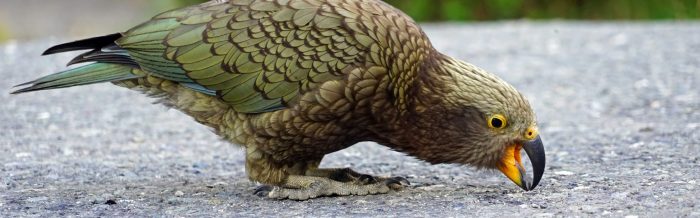
As opportunistic, generalist omnivorous foragers, kea are primary, secondary, and higher-level consumers and only compete with the kaka for food resources.

After a female kea initiates copulation by inviting play or being submissive, the male will feed her a regurgitated meal before mounting.
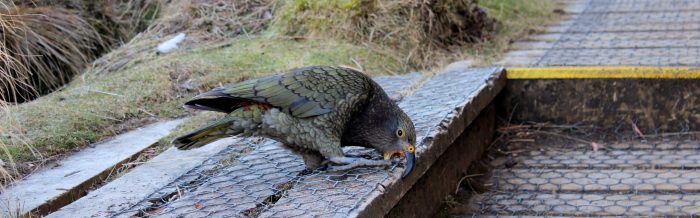
The kea's diet varies by season as it feeds on plants during flowering seasons and relies on trash heaps, flesh, and bone marrow in the winter when foods are scarce.
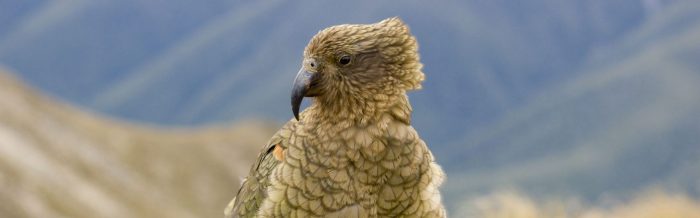
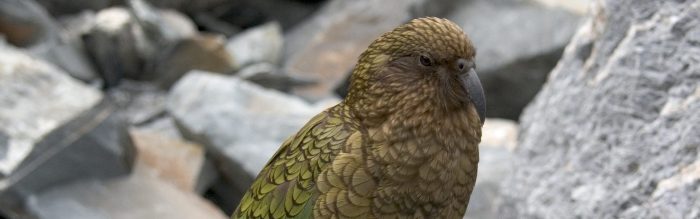
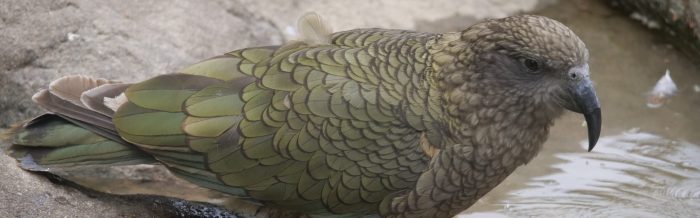
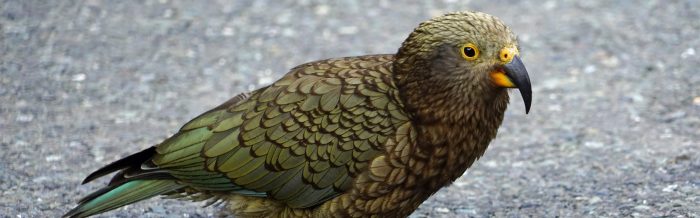
Kea have decurved upper bills, or culmens, and females have shorter, less curved culmens.
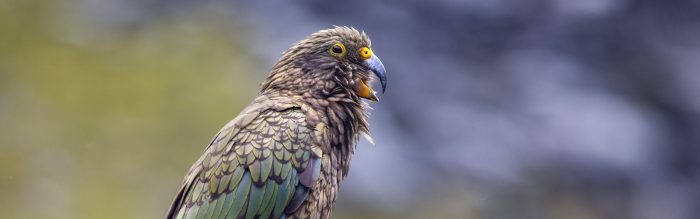
Kea have a polygynous mating system in which males fight for dominance to become part of the 10% that is allowed to breed in certain years.
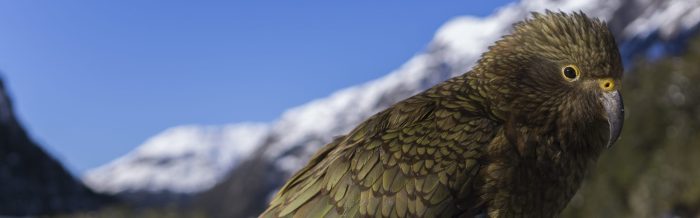
Kea are diurnal and call and forage in the morning, roost in the middle of the day, and forage again before sleeping in the trees.

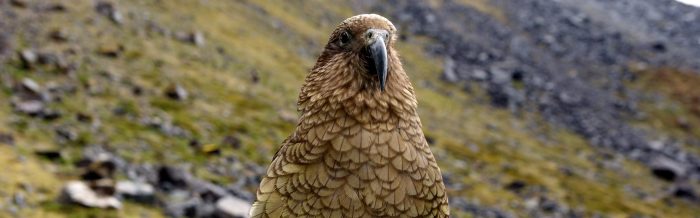
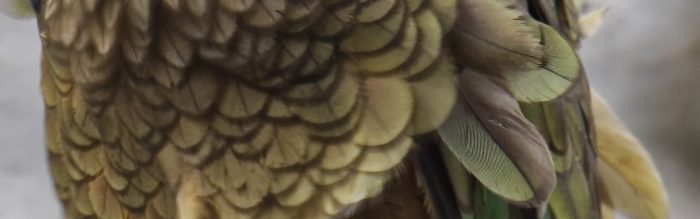
Kea are colorful birds with bronze olive-green bodies, dull blue primaries, red-orange coverts, and a dull red lower back.
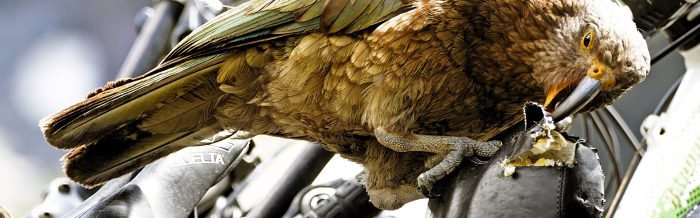
Due to a life in an extreme alpine environment, kea are encouraged to opportunistically and inquisitively explore their surroundings and will commonly investigate and destroy human belongings.
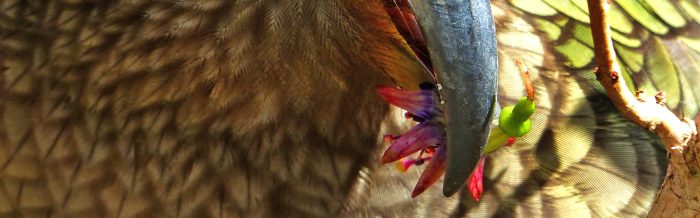
Kea are opportunistic, generalist, omnivorous foraging parrots that rely on the leaves, buds, and nuts of southern beeches as an important part of their diet.
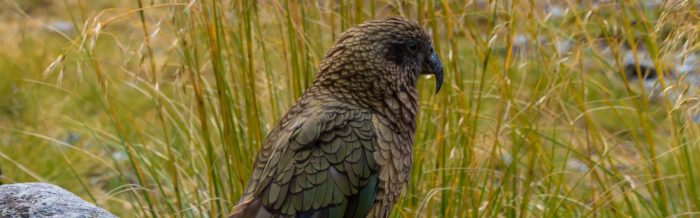
Kea are alpine parrots and inhabit temperate and subtropical/tropical moist lowland forests, shrubland, grassland, and even artificial terrestrial habitats, such as pastureland and urban areas.
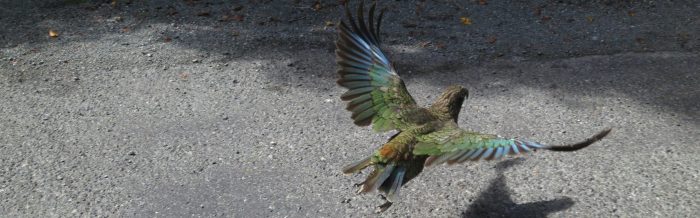
The kea was described by ornithologist, John Gould, in 1856 and is named after its loud, in-flight "keee-aa" call.
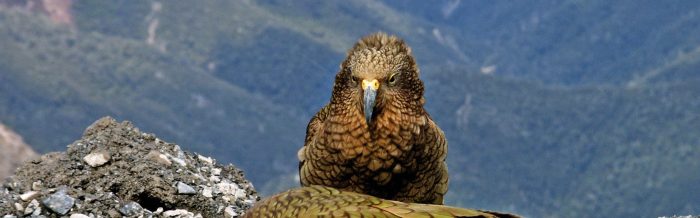
Kea are endemic to the mountains of South Island, New Zealand and range from Kahurangi to Fiordland, including the Kaikoura Ranges.
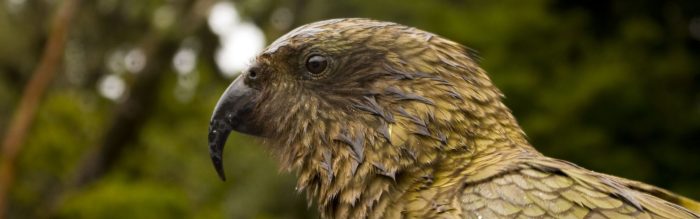
Kea are highly social birds that live in family groups of 30-40 and exhibit a variety of social behaviors, such as intricate play.
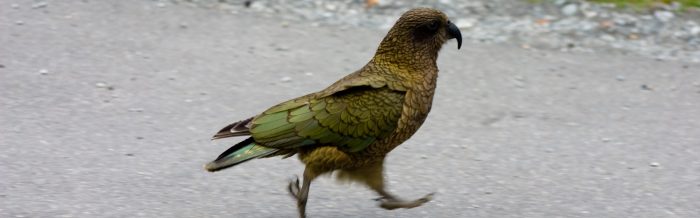
Kea are crow-sized parrots, about 48 cm. long, that display sexual dimorphism as males weigh 20% more and are 5% longer than females and have 12-14% longer bills.
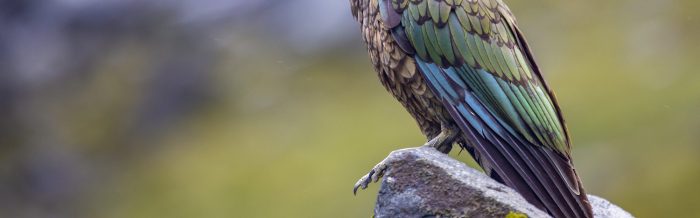
Kea are currently "Endangered" and declining rapidly due to predation by introduced mammals and a variety of anthropogenic threats.
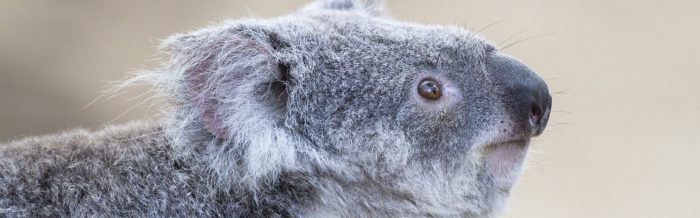
Koalas were nearly exterminated in the early 20th century because they were extensively hunted for their warm, thick fur and their environments were destroyed by fires caused by humans.

At high population densities, koalas can defoliate preferred tree species, causing tree death and subsequent koala population crash and making the species difficult to manage.
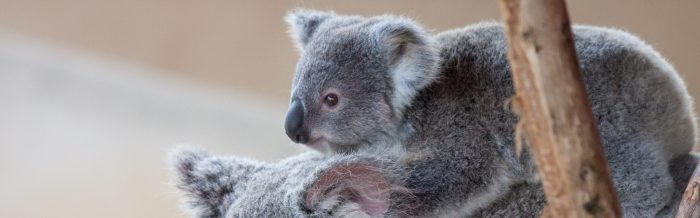
Climate change is expected to lead to an increased rate of koala population reduction over the next 20-30 years, and the impacts of other threats will magnify over this period.
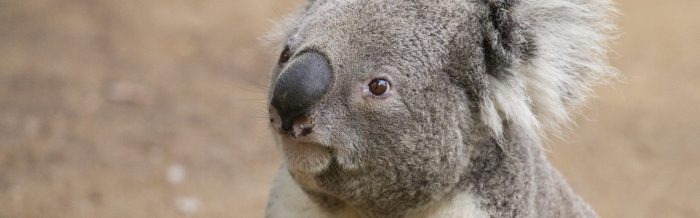
The koala's population size has declined about 30% over the last 18-24 years due to climate change and a severe decline in inland regions most exposed to recent drought.
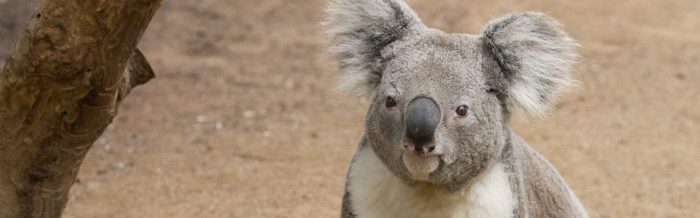
Koalas are currently threatened by habitat fragmentation and modification, bushfires, and disease, but their main threat is habitat destruction.
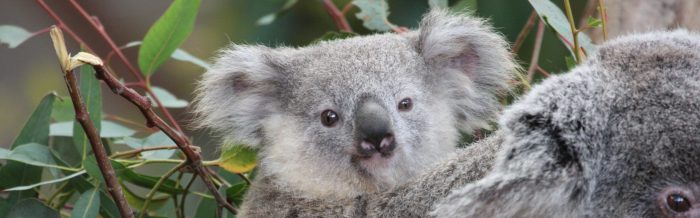
The koala is evaluated as "Vulnerable" on the IUCN Red List due to its projected rate of decline as a result of climate change, habitat destruction, and disease.
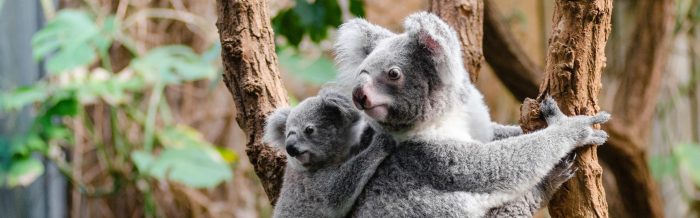
Young koalas weigh less than 0.5 g. when born and live in the mother's pouch for 5-7 months feeding on milk and predigested leaves.
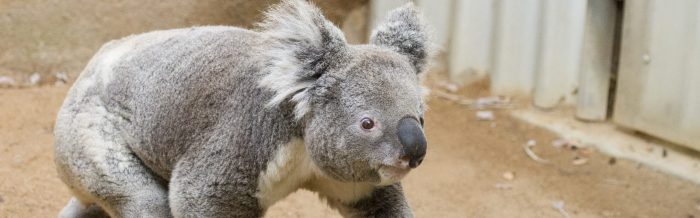
Although there is no national recovery plan for the koala, there's numerous captive breeding facilities internationally.
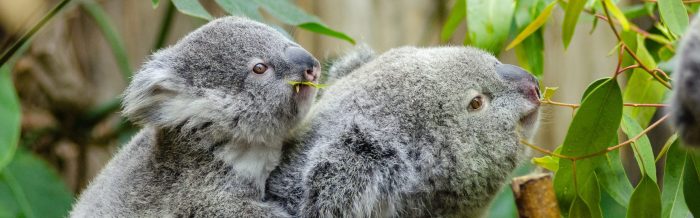
Female koalas are seasonally polyestrous and usually breed once a year giving birth to 1-2 young in mid-summer after a gestation of 25-35 days.
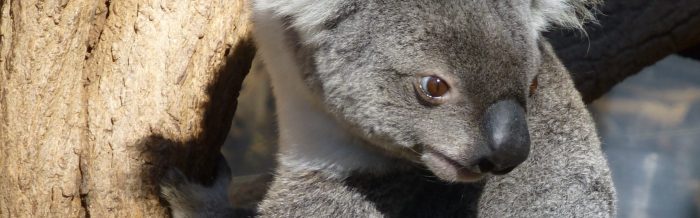
During the breeding season, male koalas use loud, bellowing calls and resonant, growling expirations to advertise their presence and warn off males.