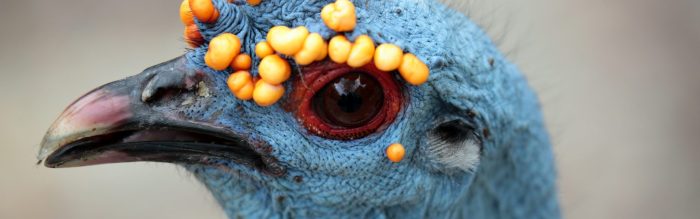
The head of the male ocellated turkey has a fleshy blue crown adorned with yellow-orange nodules which enlarge during breeding season.
Join a creative community focusing on a unique animal each month.
The head of the male ocellated turkey has a fleshy blue crown adorned with yellow-orange nodules which enlarge during breeding season.

The spots on the ocellated turkey's tail helped give it its name, as the Latin word for "eye" is "oculus".

The ocellated turkey is the smallest species of turkey and is significantly smaller than any of the 5 subspecies of North American wild turkeys.

Very little research has been done on the ocellated turkey and less is known about it than any other turkey species or subspecies.
The ocellated turkey is one of only 2 species of turkey in the world, the other being the North American wild turkey (Meleagris gallopavo).

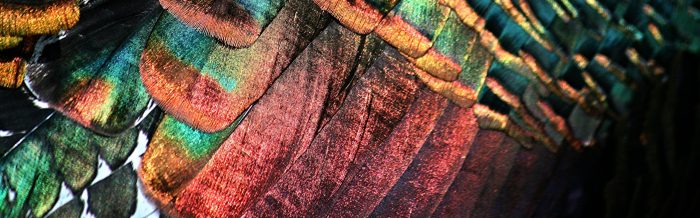
It may be possible to age male ocellated turkeys based on the width of the rich copper band on their wings as adults of both sexes appear to have wider bands.
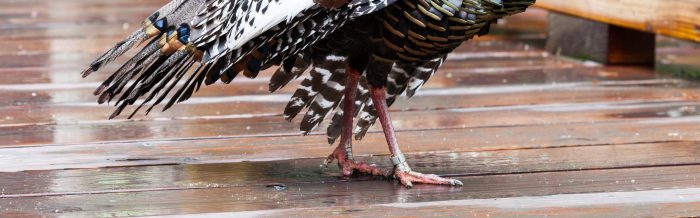
Leg lengths of the ocellated turkey differ between sexes as females have shorter legs than males.
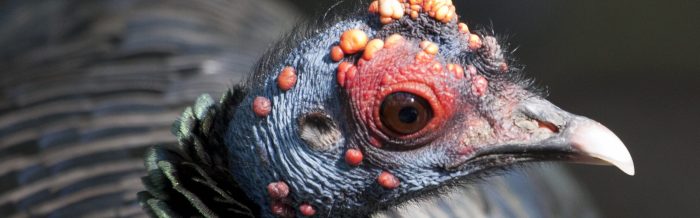
Both sexes of ocellated turkeys have distinctive caruncle-like growths, called nodules, but they're more pronounced on males.

The mandibular salivary glands of the aardwolf are twice the size of the glands of a similar-sized dog.
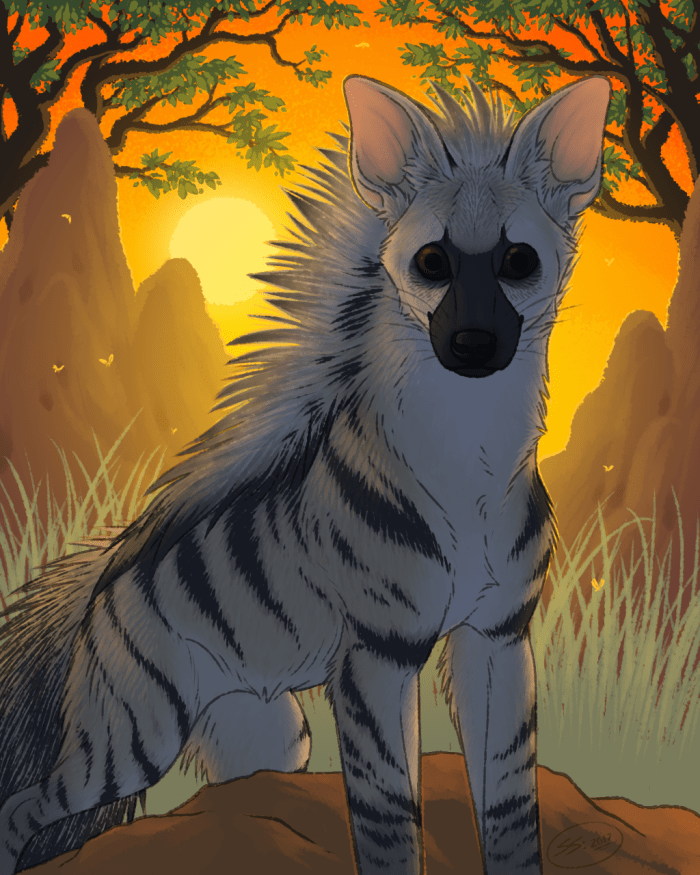
Shane S. (Yodeldog) digitally painted an optimistic aardwolf amongst an African savannah habitat. Bathed in the golden glow of a sunset, this hyena appears to be waking up for his daily snooze to hunt termites in the dead of night.
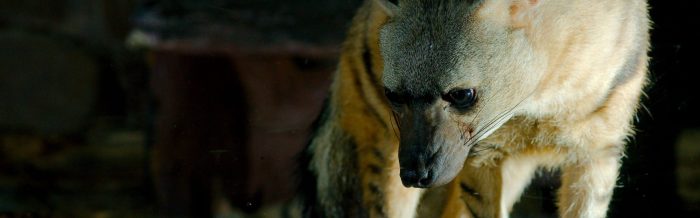
Despite its relatedness to hyenas, the aardwolf is one of only 18 species that feeds exclusively on termites and is one of the few true mammalian myrmecophages.
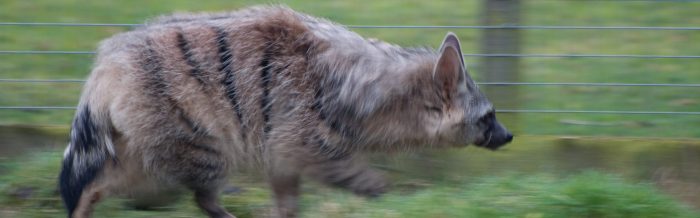
Aardwolves cannot be caught with food-baited traps, but may be lured with scent-marks of other aardwolves.
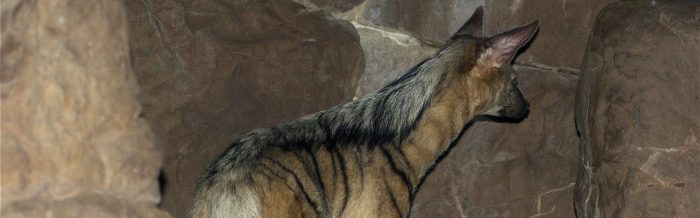
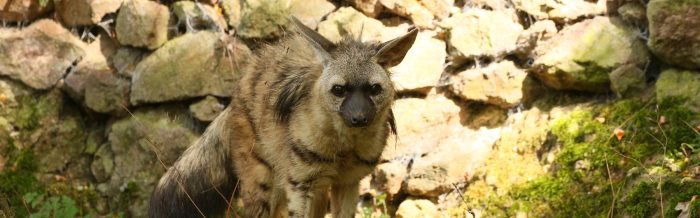
The aardwolf has a black mane extending from head to tail which it erects when threatened to appear larger.

Aardwolves are solitary foragers, except when accompanying their young cubs.
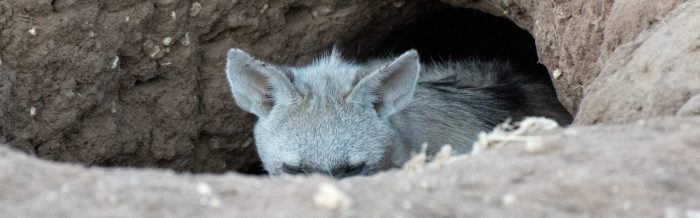
Aardwolf cubs are raised in dens, often old aardvark, porcupine, or springhare burrows.

The aardwolf is primarily nocturnal as its activity is determined by the activity of the termites it eats.

Although aardwolves are socially monogamous and often live together in pairs, they're genetically polygynous and mating is not necessarily exclusive.
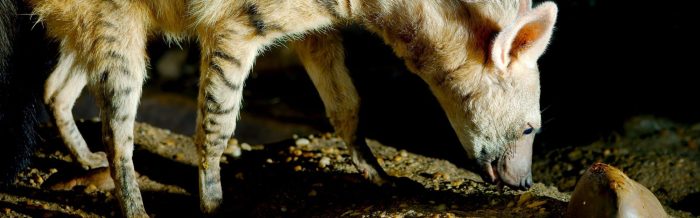
A single aardwolf can consume as many as 300,000 termites in a single night and up to 105,000,000 within a year.

Both sexes of the aardwolf scent-mark their territories, a behavior sometimes called pasting, though males paste more than females.

The aardwolf is tolerant of the noxious secretions of the soldier termites it feeds on.

Male aardwolves help in rearing the young by guarding the den against black-backed jackals.
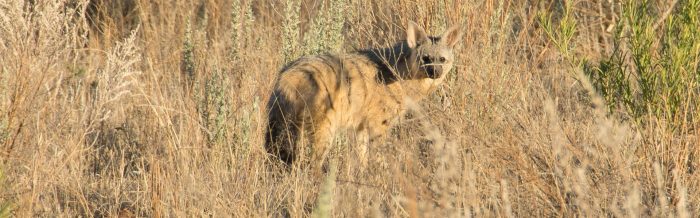
The aardwolf is considered one of the indicator species for the Somalia-Kalahari semidesert axis as its distribution is related to the area's ancient climatic history.
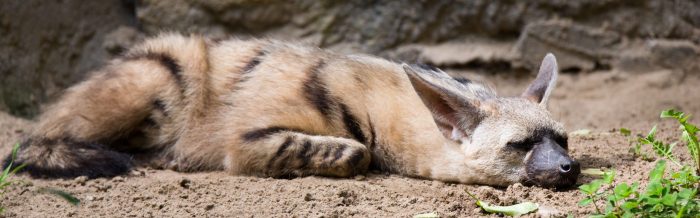
The aardwolf's scientific name, Proteles cristata, orginates from Greek and Latin and refers to the five digits on its forepaws and its long, dorsal crest.
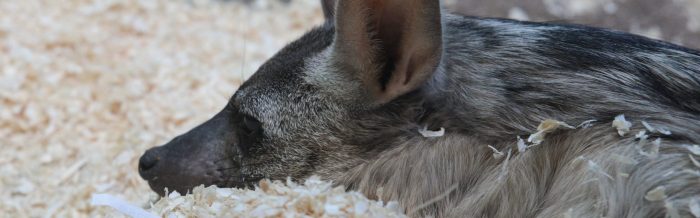
The record lifespan for an aardwolf is 18 years 11 months.
Do you think you know the aardwolf? Test your knowledge of aardwolf FaunaFacts with this trivia quiz!

At 1-year old, when the next cubs have emerged from the den, young aardwolves have left their natal territory unless an aardwolf parent of the same sex has died.
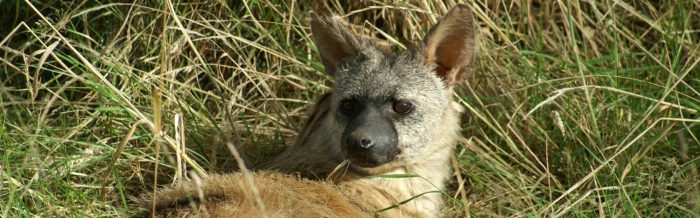
The aardwolf is also known as the civet hyena, gray jackal, and maanhaar jackal, (mane-jackal in Afrikaans), but its common name translates to earth-wolf in Afrikaans and Dutch.
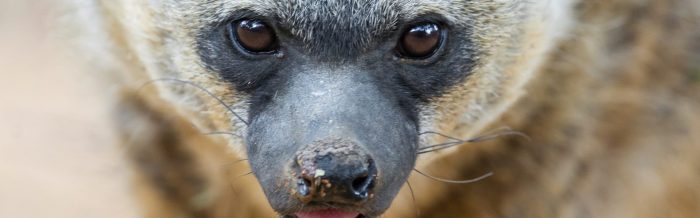
The use of the aardwolf's canines for fighting is clearly reflected in their wear, as in old animals they are broken down to rounded stumps.

The black-backed jackal is the aardwolf's greatest natural enemy as the hyenas frequently have aggressive territorial disputes with the canines and chase them from their dens.
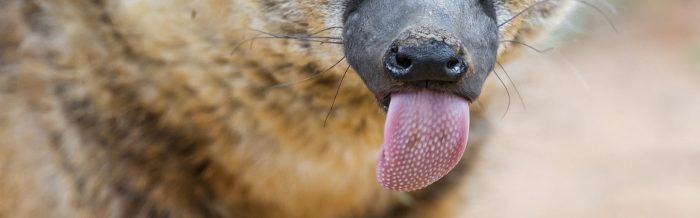
Unlike most other ant- or termite-eating mammals, which have to dig to access their prey, the aardwolf licks termites from the soil surface using its broad, sticky tongue.
There are two separate populations separated into two different subspecies, of aardwolves, one located in southern Africa and the other in northeastern Africa.

The aardwolf is slightly larger than a jackal or a fox.