The Silverstone's poison frog's circular tympanum, or eardrum, is concealed post-dorsally and is greater than 50% of the eye.
Join a creative community focusing on a unique animal each month.
The Silverstone's poison frog's circular tympanum, or eardrum, is concealed post-dorsally and is greater than 50% of the eye.
Due to the constantly wet climate, Silverstone's poison frogs probably breed throughout the year and females are assumed to lay eggs more than once a year.
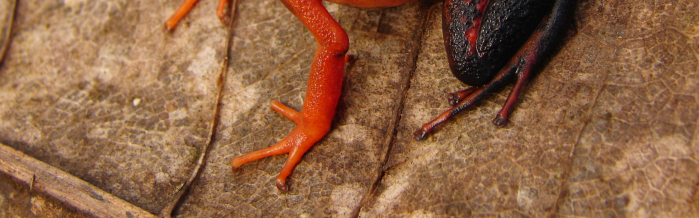
The Silverstone's poison frog's fingers are flattened and have small, expanded discs at the tips with no webbing between the digits.

The Silverstone's poison frog is threatened by agriculture, habitat destruction, and illegal smuggling for the international pet trade.

Prior to the Silverstone's poison frog's official description in 1979 as Ameerega silverstonei, it was known under incorrect names, such as Phyllobates bicolor or Epipedobates silverstonei.

The Silverstone's poison frog is "Endangered" due to its small, declining, threat-defined range and continuing decline of mature individuals due to illegal harvesting.
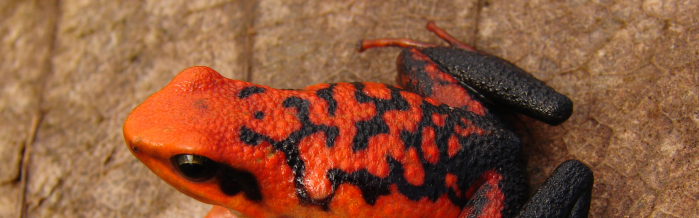
The skin of the Silverstone's poison frog's lower body and hind limbs is coarsely granular, gradually smoothing out in the skin of the head, forelimbs and ventral surfaces.

The Silverstone's poison frog is not a migrant.

The Silverstone's poison frog is known to be distasteful to snakes, but not much more is known of the frog's predators.

The Silverstone's poison frog's hind limbs are moderately long and the toe discs tend to be slightly wider than the finger discs.
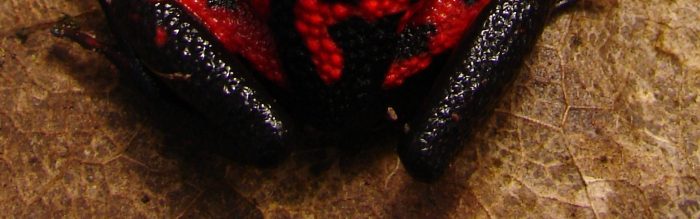
To defend against predators, the Silverstone's poison frog's skin secretions contain small amounts of pumiliotoxin-A alkaloids that lack great potency.

The Silverstone's poison frog's head is generally as wide as the body and is characterized with a sloping and rounded snout.
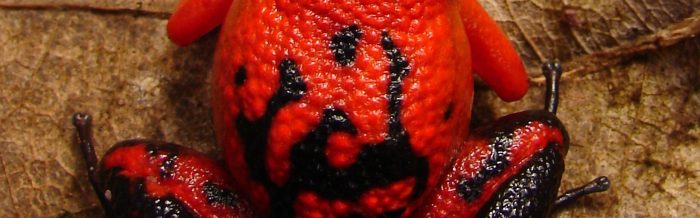
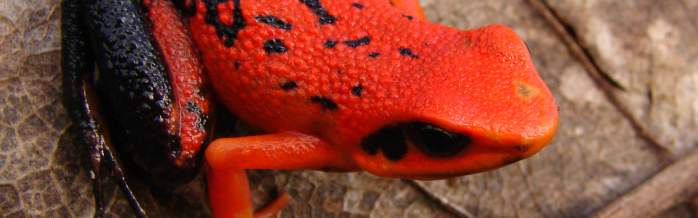
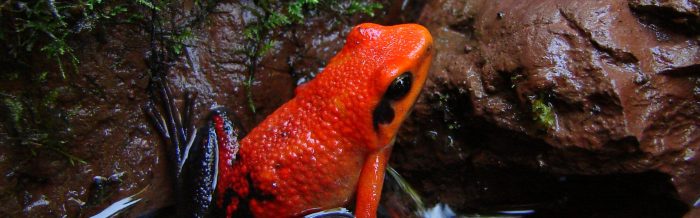
The Silverstone's poison frog gains its brightly orange, red, and black colors at 1 year of age to deter potential predators.

The Silverstone's poison frog is endemic to the Cordillera Azul mountain range on the eastern side of the high Andes, Huánuco Region in Peru and can be found at elevations from 1,200-1,800 m. above sea level.

The Silverstone's poison frog is a diurnal, terrestrial and freshwater species that is found among the leaf litter of subtropical or tropical moist montane forests and wetlands.
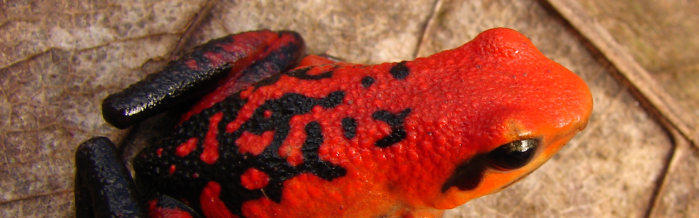
The Silverstone's poison frog is a species of frog in the family Dedrobatidae and can be distinguished by its large size and the lack of stripes in its coloration.

Both sexes of gerenuk are of similar size, but the males are more muscular than females causing them to outweigh them.
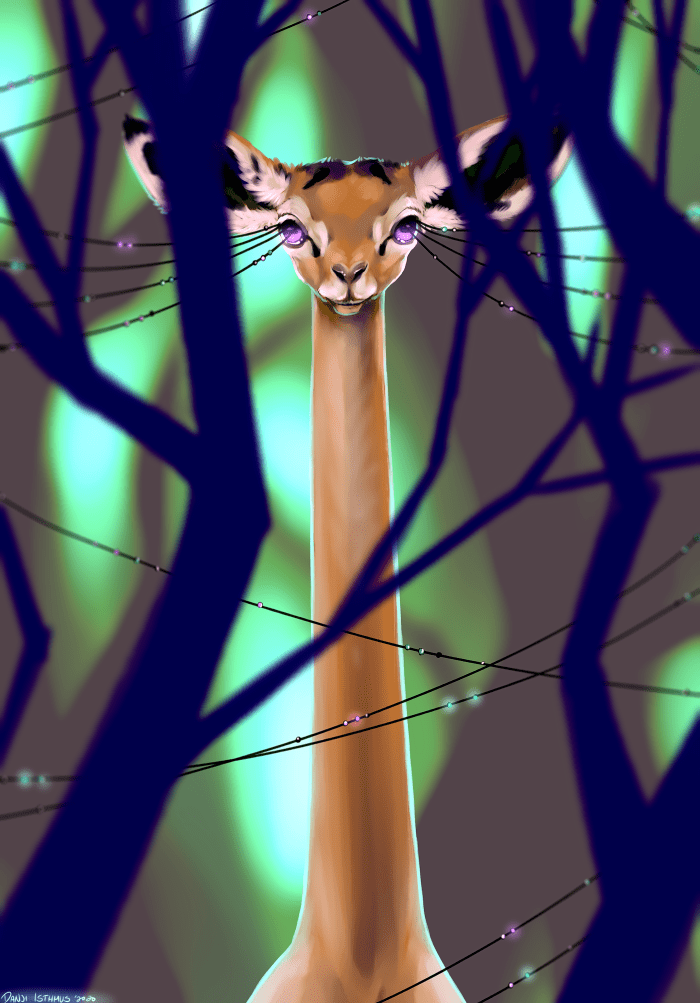
Danji Isthmus created a stunning, yet perplexing digital illustration of the gerenuk. With an exaggerated long neck and intense eyelashes, this gerenuk appears to stare into the viewer's soul, capturing their curiosity.
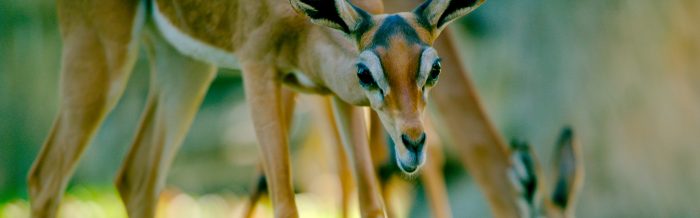
Gerenuk have never been an abundant species and make up less than 0.5% of the total biomass of hoofed mammals in Tsavo National Park where it is a protected species and enjoys good habitat.

The gerenuk was first described by Victor Brooke in 1879 and the species was named after the specimen-provider Gerald Waller's deceased brother.
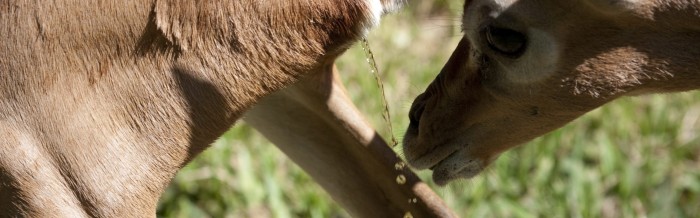
Male gerenuks guard their mates and perform flehmen tests, or lip curl tests, by sampling the female's urine to check for estrous.
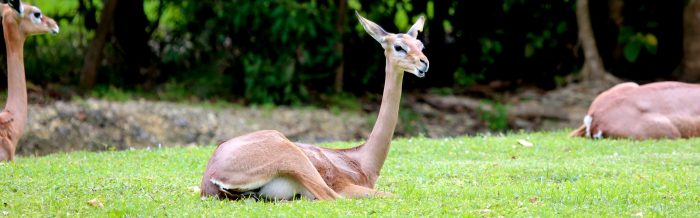
Gerenuk mothers look after their young until their weaned, and male offspring are weaned later than females.
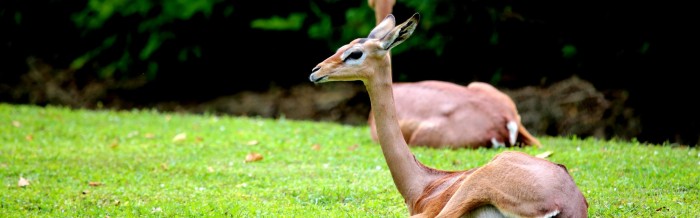
Female gerenuks give birth to 1 offspring, rarely 2, after a gestation period of 165 days, any time throughout the year depending on the quality of available nutrition.
Do you think you know the gerenuk? Test your knowledge of gerenuk FaunaFacts with this trivia quiz!
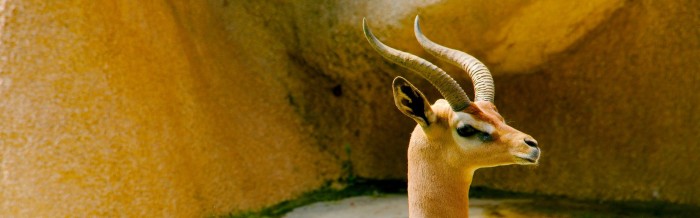
Gerenuks have a polygynous mating system as males will attempt to mate with as many females as they can.

The gerenuk is adaptable and does well in a variety of habitats, inhabiting dry savanna and subtropical/tropical dry shrubland habitats.

The gerenuk inhabits the dry, brushy region of east Africa from the Serengeti plain of Tanzania north along the coast through Kenya, Ethiopia, Eritrea, and into southern Somalia.
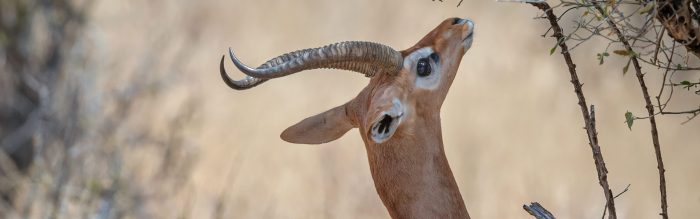
As a game animal, the gerenuk is protected in most of its range in the form of tags or permits, and about 10% of the gerenuk population occurs in protected areas.

Although it has a limited population and range, the gerenuk has been hunted for trophies and bush meat as an uncommon game animal in Africa for over 200 years.

If current trends continue, the gerenuk may eventually disappear from large parts of its present distribution due to hunting, human encroachment, deforestation, civil conflicts, agricultural expansion, and drought.

The gerenuk population is decreasing and the largest surviving populations occur in south-western Ethiopia and the northern and eastern rangelands of Kenya.

Although the gerenuk is currently "Near Threatened", it's close to meeting the threshold for "Vulnerable" due to a decline of 25% over the last 14 years.