Bald eagles are the largest semi-altricial birds in Norther America, weighing 60 grams at hatching and gaining up to 180 grams per day.

Join a creative community focusing on a unique animal each month.
Bald eagles are the largest semi-altricial birds in Norther America, weighing 60 grams at hatching and gaining up to 180 grams per day.

Although bald eagles are often solitary, they pair bond during the nesting season and may congregate in areas with ample prey or roost communally in groups of up to 400 individuals.
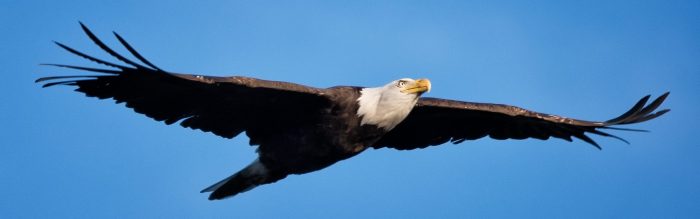
Bald eagles have been the national symbol of the United States since 1782 and draw bird watchers and other nature enthusiasts with their charisma.
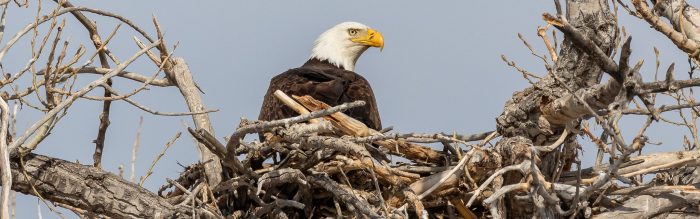
Because bald eagles reuse and build upon their nests each year, they become massive in size, weighing up to 2 tons.
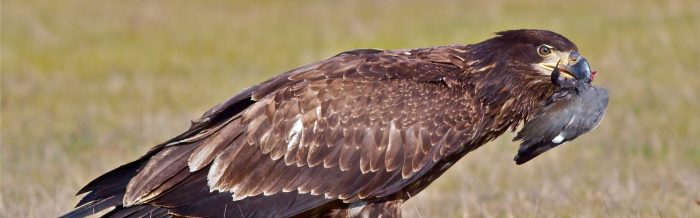
Bald eagles forage, hunt, and pirate for their food, and the speed of a river's flow can greatly impact and eagle's hunting success.
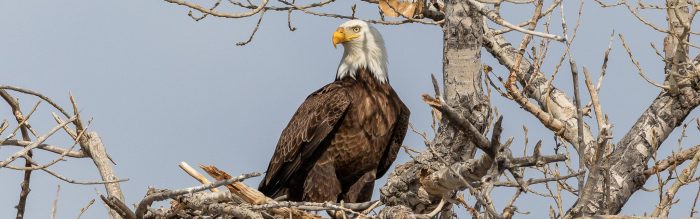
Although fully grown bald eagles are not often subject to predation, their eggs and young can be preyed upon by magpies, gulls, ravens, crows, bears, raccoons, bobcats, wolverines, and arctic foxes.
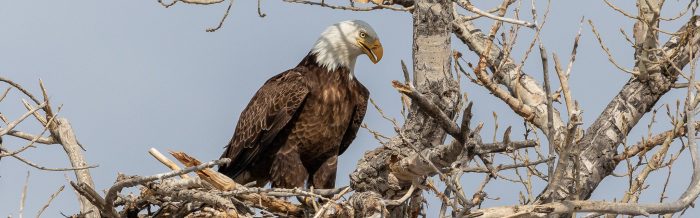
About 1-3 months prior to egg-laying, male and female bald eagles will construct nests together, though the dates vary regionally, nesting earliest in the East and latest in the West.

Bald eagles perform flight displays with their mates, plummeting towards the ground with their feet clasped and letting go just before impact.

If lost, a bald eagle's flight feathers may take 2-3 years to regrow.
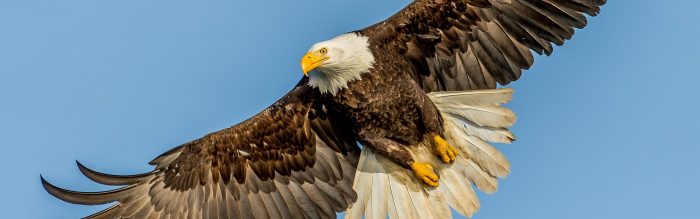
Bald eagles are fully migratory and most populations of bald eagles, specifically those in northern regions, migrate to southern, milder climates annually.
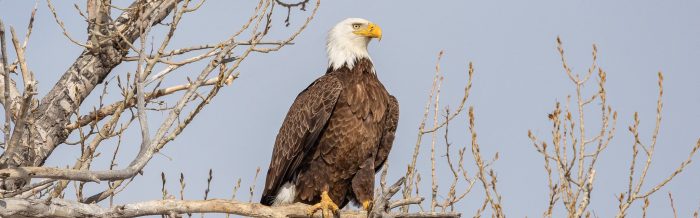
Bald eagles have a low fecundity and typically produce one brood of 1-3 round, white eggs per season, but may have replacement clutches if needed.

Bald eagles are diurnal and are less active during the winter, when winds are especially high, or when there's precipitation.

Bald eagles begin breeding when they are 5 years old and have a monogamous mating system, mating for life.
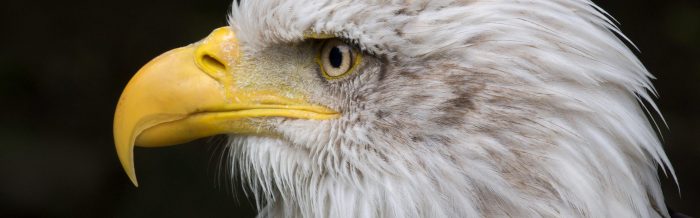
With large, forward facing eyes, bald eagles likely have very good binocular vision.

Bald eagle breeding varies geographically as populations located further north tend to have shorter breeding seasons and more synchronous nesting periods and produce larger eggs.

While bald eagles choose habitats with plenty of prey and tall trees, they will inhabit areas further from foraging grounds in order to avoid human interaction as human activity decreases their feeding by 35%.
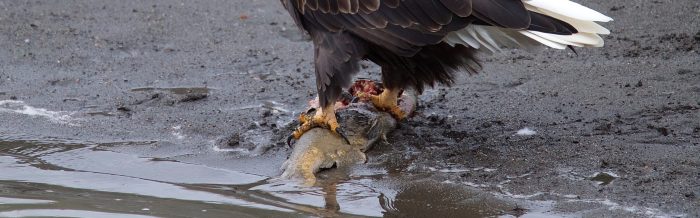
Bald eagles are opportunistic foragers and have a wide, varied diet feeding on fish; adult water birds, their nestlings, and their eggs; carrion; small mammals; and even human refuse.
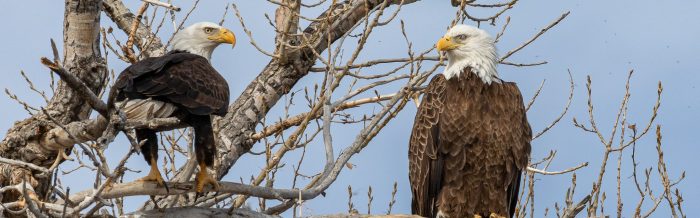
Bald eagles have sexually monomorphic plumage coloration, although females generally have a somewhat larger body size.
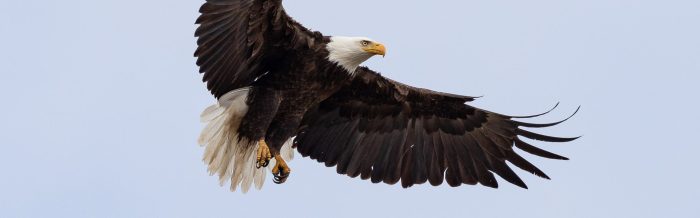
There are two recognized subspecies of bald eagle with the larger subspecies, H. l. alascanus, being larger than the southern, nominate subspecies, H. l. leucocephalus.
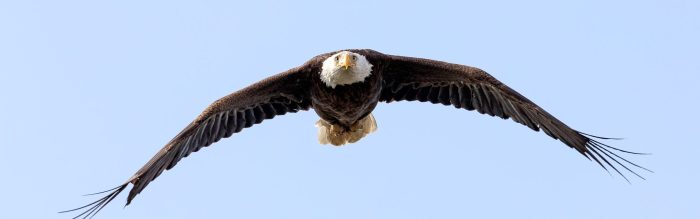
Bald eagles are found throughout North America and prefer areas near large bodies of water such as sea coasts, coastal estuaries, and inland lakes and rivers, typically residing within 3 km. of water.
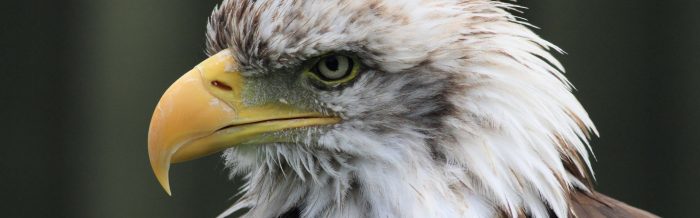
The bald eagle gets its common and scientific names from the distinctive appearance of the adult's head as mature coloration is reached in the eagle's fifth year.

Zoe digitally painted a pair of sea otters floating amongst the colorful stars. With a flurry of star dust swarming around the otters echoing the ripples of water, this piece uses complimentary colors to highlight the love between this raft.

Sea otters display sexual dimorphism as males are larger than females, measuring 1.2-1.5 m. in length and weighing up to 45 kg.
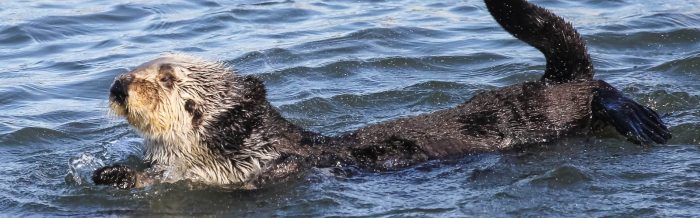
Sea otters utilize vertical undulates of the body to swim and can swim up to 9 kph or 6 mph underwater.
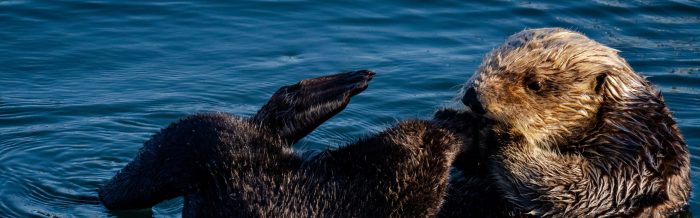
Sea otters inhabit marine neritic and oceanic habitats, spending most of their time foraging below the canopy and eating, resting, and grooming at the water's surface.
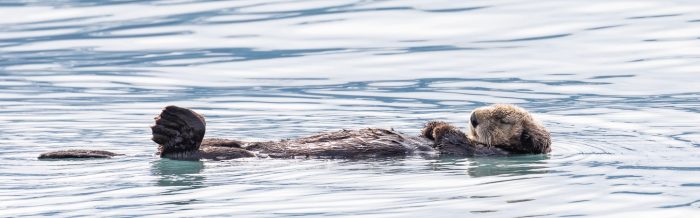
Sea otters are one of several species of mammals that undergo delayed implantation that allows for birth under favorable conditions and produces varied gestation times.
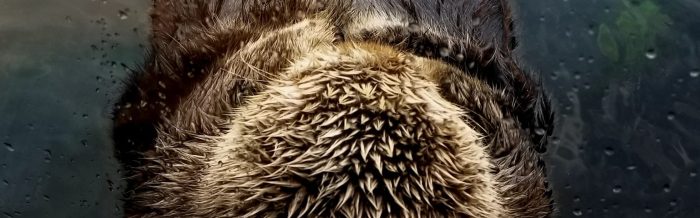
Because sea otter's don't have insulating fat, their reddish brown fur consists of two layers and is the densest of all mammals with about 100,000 hairs/cm².
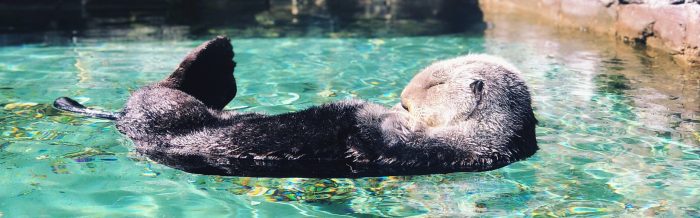
Starting at 2 months of age, sea otters are capable of diving to depths of at least 45 m., but prefer coastal waters up to 30 m. deep to find food easier.
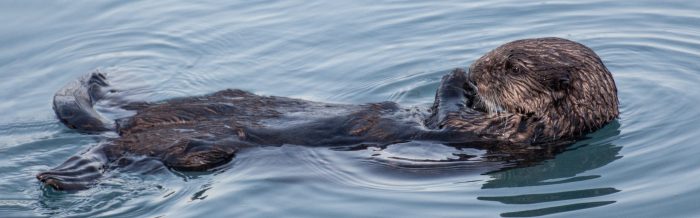
Cat and opossum feces travel to storm drains via runoff and toilet disposal, eventually coming into contact with sea otters and infecting them with deadly apicomplexan protozoan parasites that cause encephalitis.
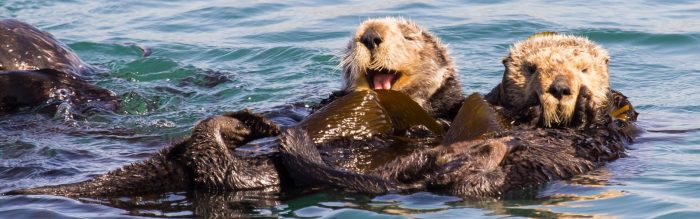
Sea otters communicate with 9 vocalizations and each otter has its own distinct scent that convey identity, age, and sex.

The maximum estimated lifespan of sea otters is 23 years in the wild.
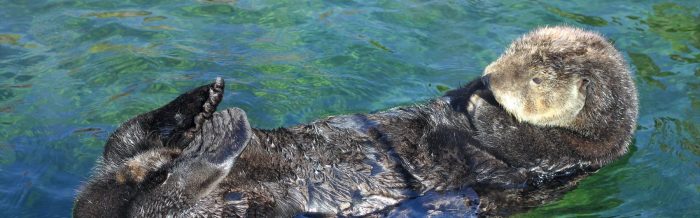
Sea otters consume 20-25% of their body weight each day, eating 3-4 times a day, and tend to be specialized in their choice of prey.