Male slender-snouted crocodiles are territorial, not tolerating males and only living with females during mating seasons.
Join a creative community focusing on a unique animal each month.
Male slender-snouted crocodiles are territorial, not tolerating males and only living with females during mating seasons.

Hearing is very well developed in slender-snouted crocodiles, likely to be the primary sense organ when underwater, and is more sensitive than in other reptiles.

Slender-snouted crocodile hatchlings resemble mature adults and are fully capable of feeding and swimming from the moment they hatch.
Like all crocodile species, the slender-snouted crocodile lays eggs with the temperature of the nesting conditions determining the sex of the hatchlings.
Newborn slender-snouted crocodiles are defended and cared for by both parents for some time after hatching.
Female slender-snouted crocodiles construct 120-200 cm. wide nests of dead vegetation and mud using their hind legs.
As with all crocodilian species, adult slender-snouted crocodiles are capable of severely injuring or killing humans.
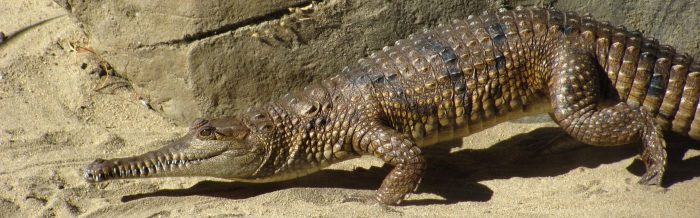
Due to their limbs being short relative to the size of their body, slender-snouted crocodiles move awkwardly outside of the water, belly crawling through mud and high walking over rocks.

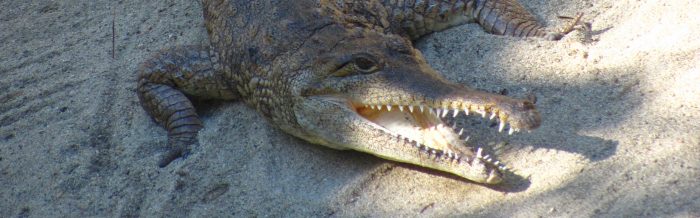
Slender-snouted crocodilians have a powerful bite force and their mouths are equipped with many sharp teeth that are designed for grabbing and hanging on to their prey and regrow when lost through fighting or feeding.
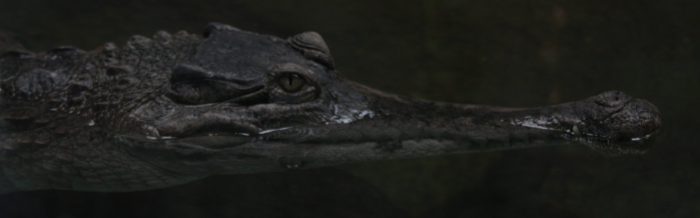
Slender-snouted crocodiles are assumed to see in color and have great night vision, but their vision is limited underwater.
Slender-snouted crocodile eggs and hatchlings are preyed on by otters, leopards, various birds and rodents, and even other crocodiles.
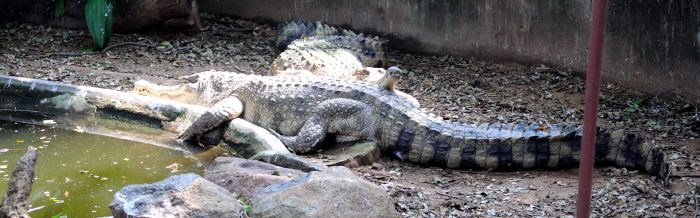
The slender-snouted crocodiles breeding season takes place at the start of the rainy season in January and February and lasts until July.
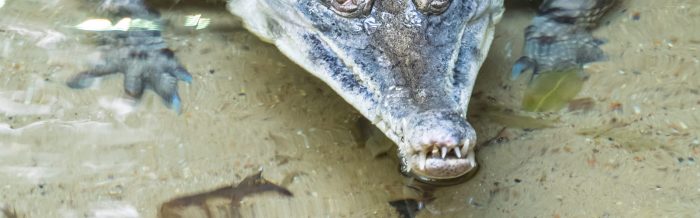
Slender-snouted crocodiles have a carnivorous, predatory diet and feed on fish, small crustaceans, and mammals that drink from the rivers and lakes where the crocodiles live.
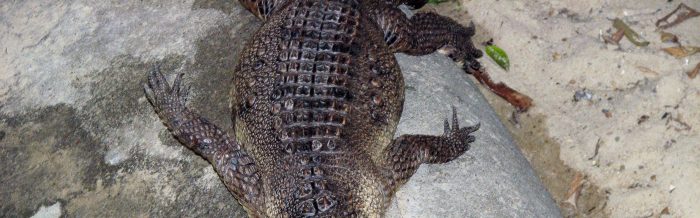
Slender-snouted crocodile populations are projected to decline 60-90%, making the species extinct within one generation.

As in all crocodilian species, sexual dimorphism is present in slender-snouted crocodiles with males being larger than females of the same age class.

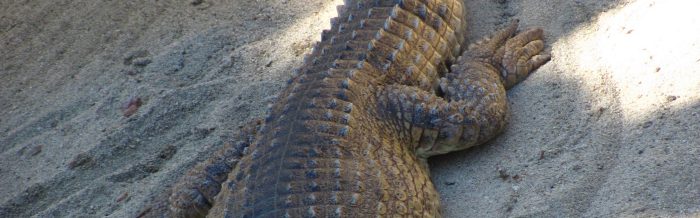
The powerful tail of the slender-snouted crocodile gives it forward propulsion in the water, allowing it to move in a graceful, serpentine motion.
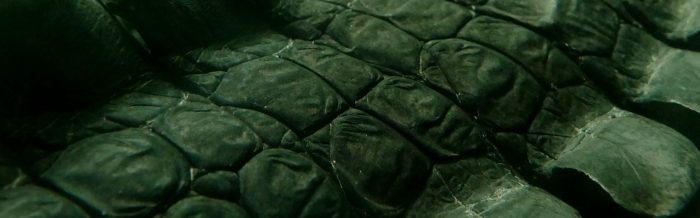
Slender-snouted crocodile skin is used to make clothing and accessories and the meat provides a means of sustenance in many areas.
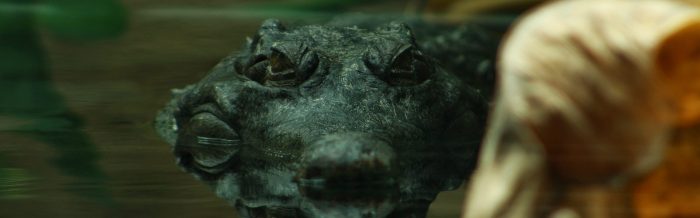
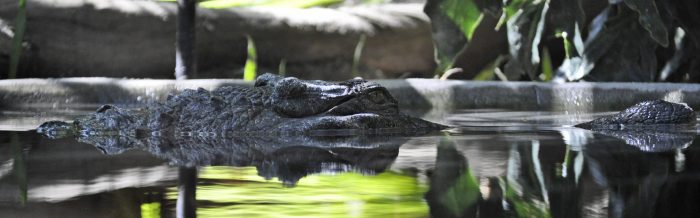
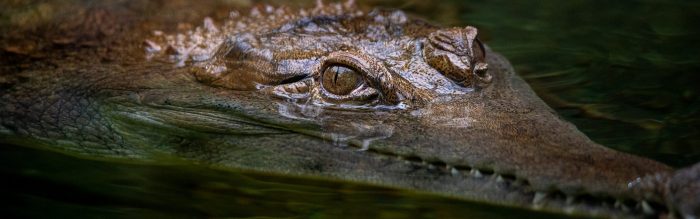
As with all crocodilians, the slender-snouted crocodile's facial features sit atop its head, suiting its ambush predatory lifestyle by allowing it to remain mostly submerged underwater when stalking prey.
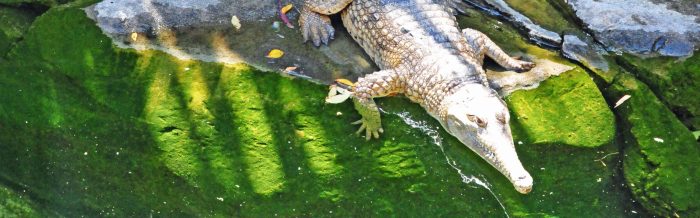
Slender-snouted crocodiles inhabit forest, savanna, inland wetlands, marine neritic, and marine coastal/supratidal habitats.

Slender-snouted crocodiles are endemic to central Africa from Senegal in the west, Tanzania in the east, Chad in the north, and Zambia in the south.
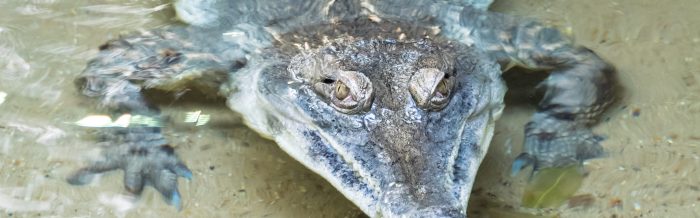
The slender-snouted crocodile is listed as "Critically Endangered" due to exploitation, habitat alteration, human encroachment, invasive species, and population reductions of 50-80%.
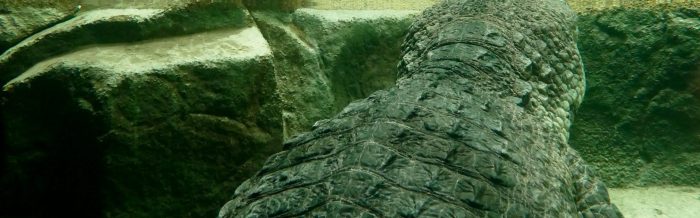
A recent molecular phylogenetic analysis suggested that slender-snouted crocodiles constitute a distinct genus, Mecistops, though some authors continue to use the genus name Crocodylus.
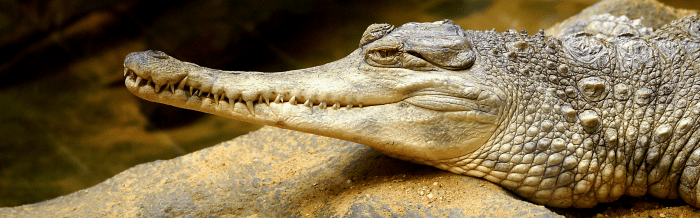
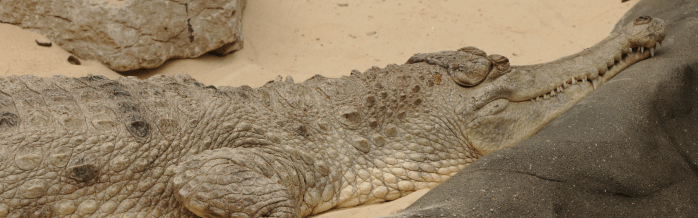
As the common name suggests, the slender-snouted crocodile can be distinguished from other crocodiles by its extremely long, slender snout, olive-colored back, and yellow-colored ventral surface.

The crested porcupine is strictly protected under international and domestic legislation in Europe and is found in several protected areas throughout its range.

In addition to humans, enemies of the crested porcupine include lions, leopards, large birds of prey, and hyaenas.
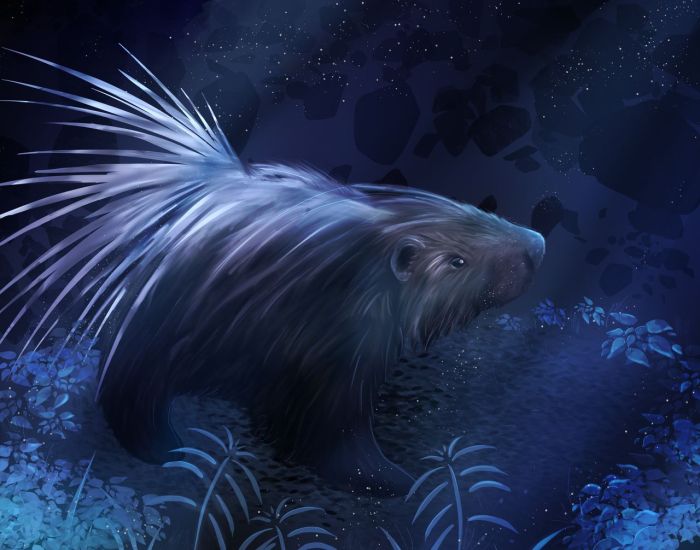
OrangeDrawer depicted the nocturnal crested porcupine scrounging about some nighttime foliage, in search of food and bones. Bathed in hues of blue and violet, this porcupine was well-rendered with distinctive quills and soft-looking fur. Viewers can enjoy feeling as if they've come upon this porcupine in the middle of the night.
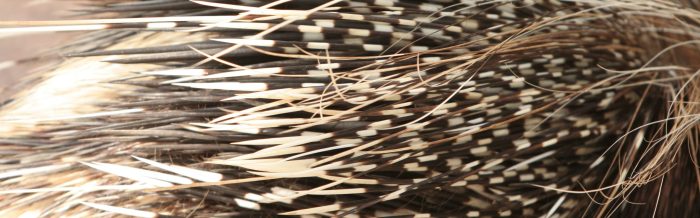
In Morocco, the crested porcupine is widely used for traditional medicine and witchcraft and is sold very commonly in local markets.

Crested porcupines have five high crowned teeth in each jaw with plane chewing surfaces for grinding plant cells that are then digested in the stomach.
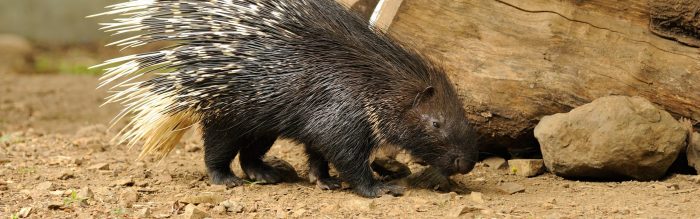
Although crested porcupines are terrestrial and rarely climb trees, they are able to swim.
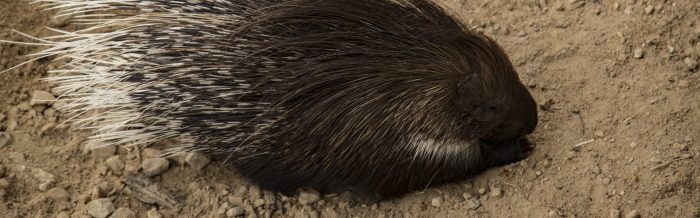
Young crested porcupines are born with open eyes, incisors, and soft spines that harden a week later.
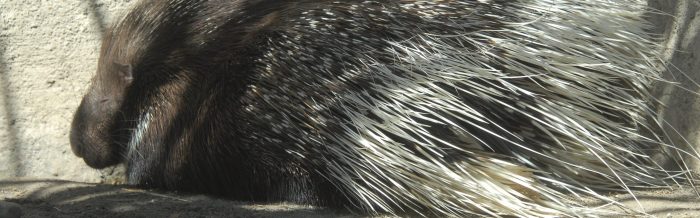
Individual crested porcupines may remain in burrows through winter but they don't truly hibernate.
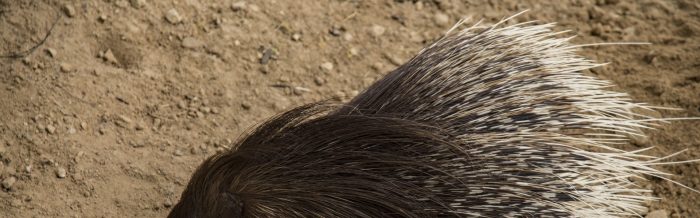
Crested porcupines are known to collect thousands of animal bones at night and store them in underground chambers or caves.