Over the last 150 years, the European mink has been extirpated from most of its former range from Finland to east of the Ural mountains, to northern Spain and the Caucasian Mountains.

Join a creative community focusing on a unique animal each month.
Over the last 150 years, the European mink has been extirpated from most of its former range from Finland to east of the Ural mountains, to northern Spain and the Caucasian Mountains.

The European mink population recently discovered in the Danube delta is clearly the most viable in the world with 1,000-1,500 individuals.

As a semiaquatic mustelid, the European mink has specialized wetlands habitat requirements and is rarely found more than 100 meters from freshwater.
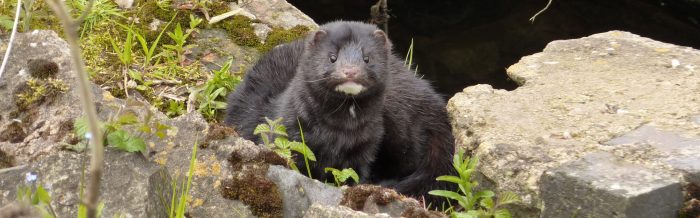
Western European mink populations have very low genetic variability while the eastern populations have the greatest variability.
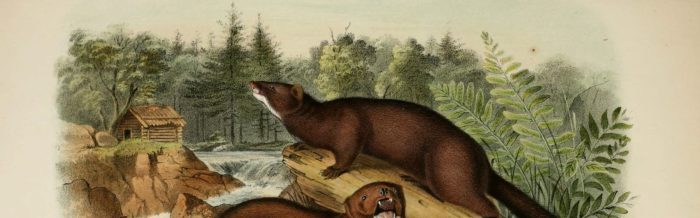
The European mink is also known as the Russian mink and Eurasian mink as is native to Europe and Eurasia.


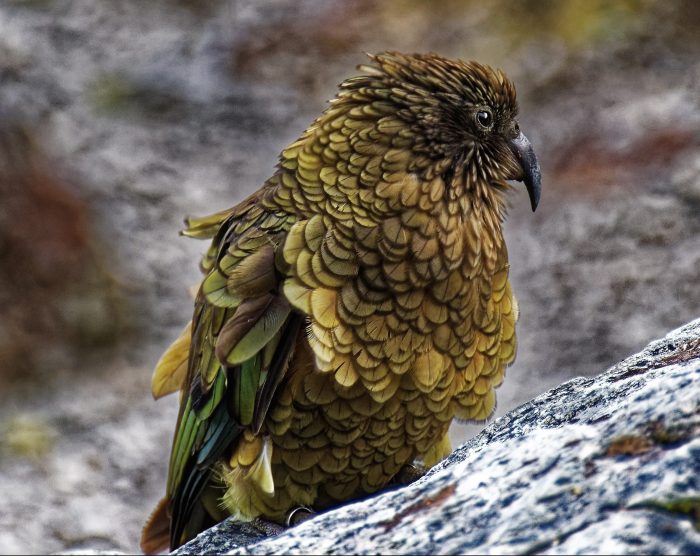
Visual Kraft Design used digital media to reveal the hidden rainbow of colors underneath the kea’s wingspan. With a surreal arrangement of highly saturated foliage surrounding the bird, the piece is given a whimsical, magical feeling.

It is unknown exactly how many kea are left in the wild, but estimates range from 2,000-5,000 birds.
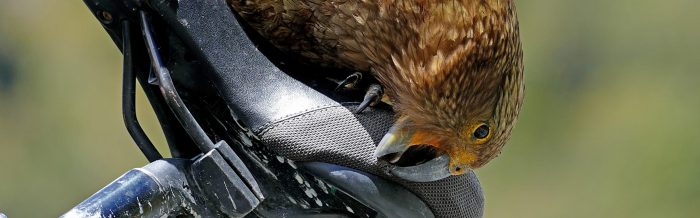
Kea have been called "The Clown of New Zealand's Southern Alps" and are important for New Zealand's tourism industry, attracting crowds when they convene on automobiles.
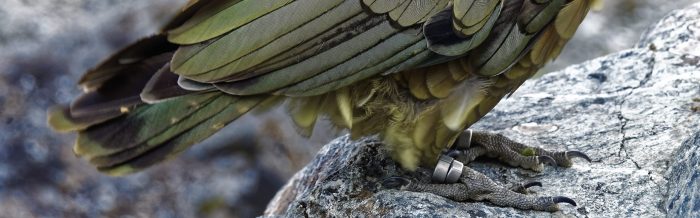
Kea can live 14.4 years in captivity and the oldest recorded wild bird was at least 22 years of age.
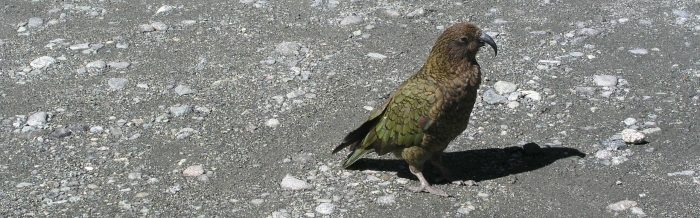
Kea remain alert for air attacks when foraging and band together to chase falcons that threaten their group.
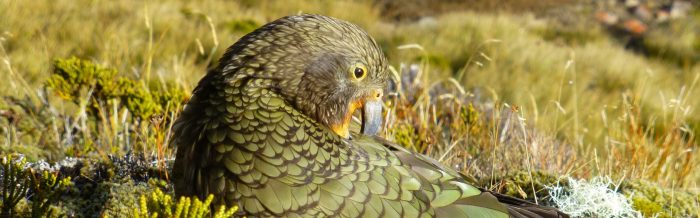
Because kea are fairly heat-intolerant, the timing of their daily activities varies with the weather as they spend more time roosting on hot days.
Introduced mammalian predators, such as stoats, cats, and possums, have spread into most of the kea's range and caused episodic, high mortality events, but invasive control toxins cause lead-poisoning in kea.
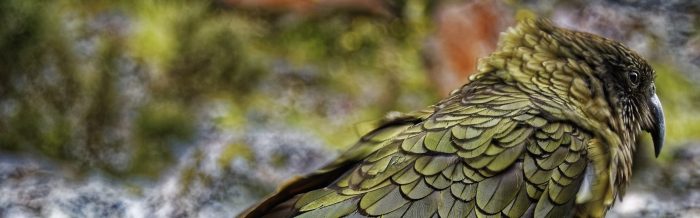
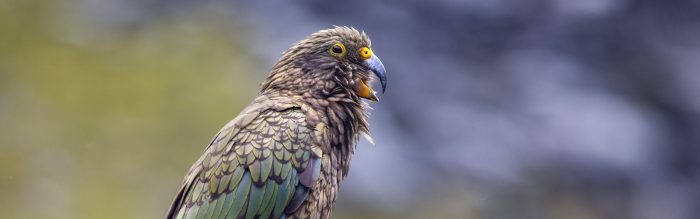
Kea perceive visual, tactile, auditory, and chemical stimuli and communicate with a wide array of vocalizations and by posturing and fluffing their head feathers into facial expressions.
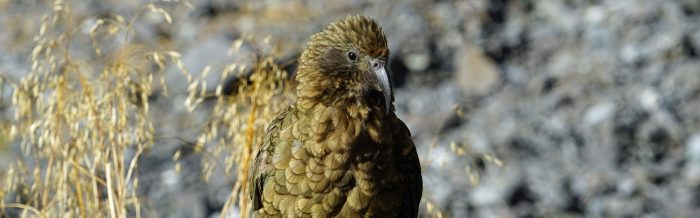
Kea hatchlings are altricial and fledge after 13 weeks before dispersing from their natal ranges after another 5-6 weeks.

Kea have gained a reputation for attacking sheep and infecting them with a fatal, blood-poisoning bacteria and deforesting pastures, causing farmers to kill them.

Kea have been observed breeding at all times of the year, except late autumn, but their main reproductive period lasts from July-January.

Kea are highly intelligent birds and can learn complicated tasks from observing others.
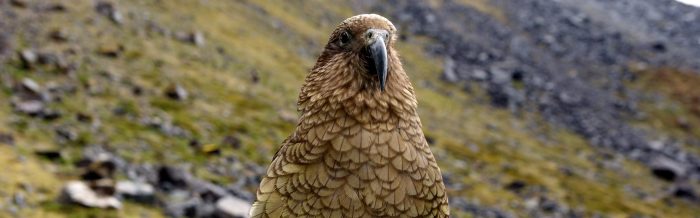
Kea lay clutches of 2-4 eggs, mainly in terrestrial crevices within the forest, and incubate their eggs for 3-4 weeks.
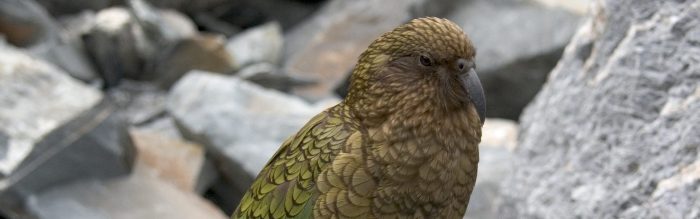
Kea have non-linear dominance hierarchies and dominant individuals can force subordinates to cooperate in tasks for their own benefit.
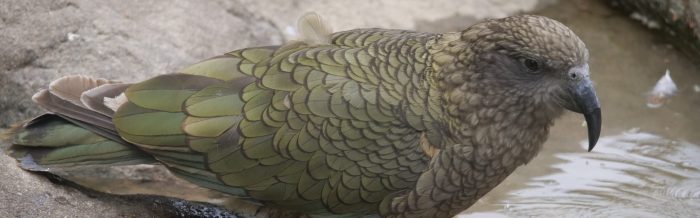
Although Kea are protected within New Zealand by laws that prohibit their capture, mistreatment, and export, parrot-smuggling is a lucrative business and kea are captured for the black market pet trade.
Male kea take on the responsibility of feeding the female while she nests, as well as the young until they disperse from their natal range.
The kea population has declined 50-80% over the last 3 generations, or 36 years, largely due to persecution, and continues to decline rapidly.
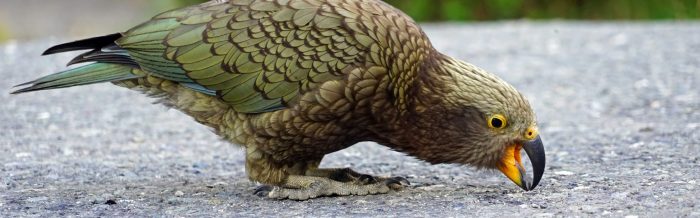
As opportunistic, generalist omnivorous foragers, kea are primary, secondary, and higher-level consumers and only compete with the kaka for food resources.

After a female kea initiates copulation by inviting play or being submissive, the male will feed her a regurgitated meal before mounting.

The kea's diet varies by season as it feeds on plants during flowering seasons and relies on trash heaps, flesh, and bone marrow in the winter when foods are scarce.

Kea have decurved upper bills, or culmens, and females have shorter, less curved culmens.
Kea have a polygynous mating system in which males fight for dominance to become part of the 10% that is allowed to breed in certain years.
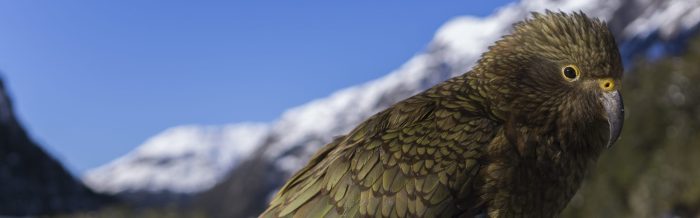
Kea are diurnal and call and forage in the morning, roost in the middle of the day, and forage again before sleeping in the trees.

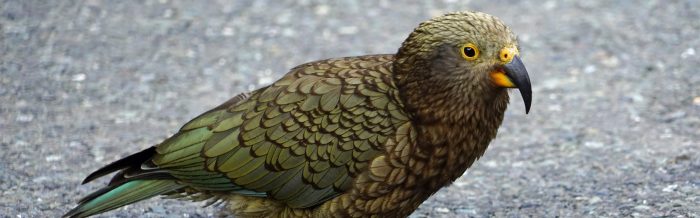
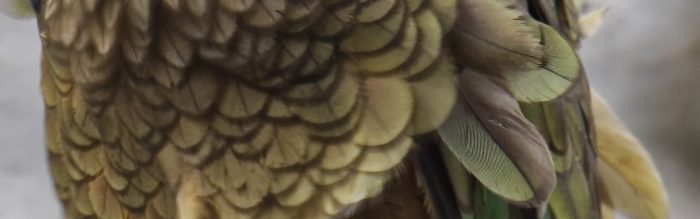
Kea are colorful birds with bronze olive-green bodies, dull blue primaries, red-orange coverts, and a dull red lower back.
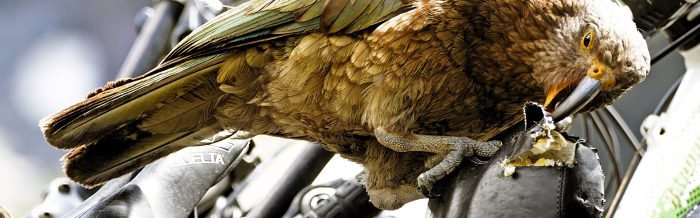
Due to a life in an extreme alpine environment, kea are encouraged to opportunistically and inquisitively explore their surroundings and will commonly investigate and destroy human belongings.
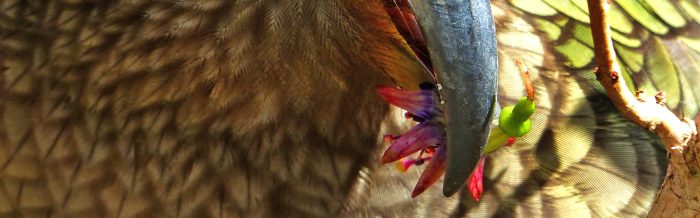
Kea are opportunistic, generalist, omnivorous foraging parrots that rely on the leaves, buds, and nuts of southern beeches as an important part of their diet.
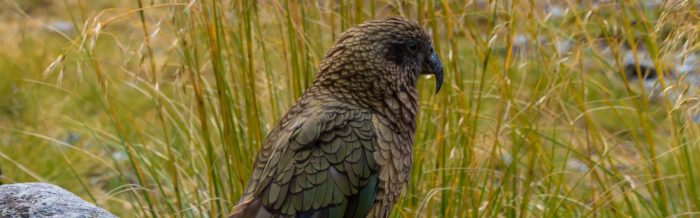
Kea are alpine parrots and inhabit temperate and subtropical/tropical moist lowland forests, shrubland, grassland, and even artificial terrestrial habitats, such as pastureland and urban areas.