The vaquita's name "sinus" is Latin, meaning "bay," referring to the occurrence of the species in the Gulf of California.

Join a creative community focusing on a unique animal each month.
The vaquita's name "sinus" is Latin, meaning "bay," referring to the occurrence of the species in the Gulf of California.

Fishermen in the upper Gulf of California were familiar with the vaquita long before scientists were aware of its existence.
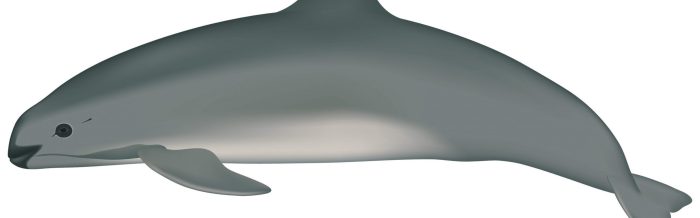
The vaquita first became known to the scientific community after the discovery of a bleached skull in 1950.
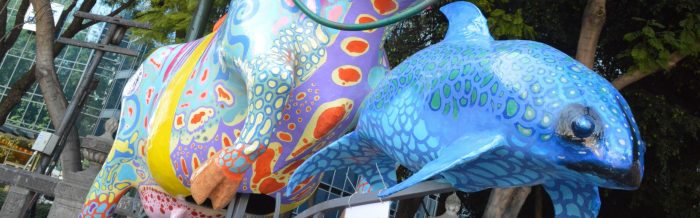
The most commonly used name for Phocoena sinus is "vaquita" which translates to "little cow" in Spanish.

The vaquita is known by several different names.

The vaquita is believed to represent a relict population of an ancestral species.

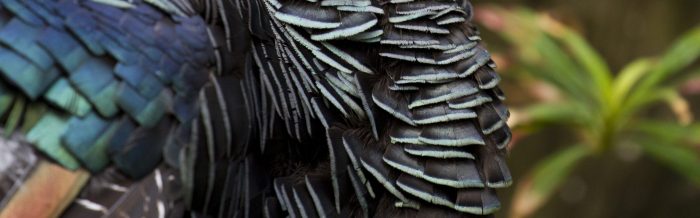
Zoe’s traditional composition was well-constructed with contrasting elements that came together to create an interesting composition. A sense of duality was created as the ocellated turkey was drawn in full-frame in the foreground using a monochromatic color scheme contrasting with a close-up of the bird’s colorful feathers painted in the full chroma of shades.
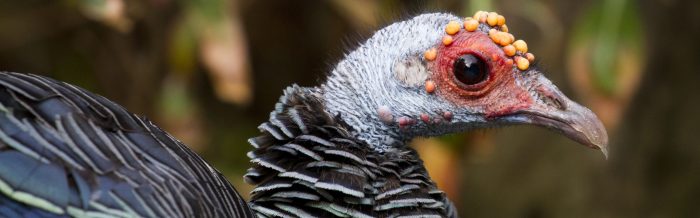
Ocellated turkeys lack the chest tuft and wattles of the North American species and their heads are blue instead of red.

The ocellated turkey is omnivorous and feeds on grass, seeds, leaves, fruits, succulent vegetables, insects, and corn.

There was speculation that chicken-born diseases were introduced into the ocellated turkey population by domestic poultry.
Ocellated turkeys are excellent eating and are heavily hunted for food, trade, and occasionally sport, even within reserves.

The ocellated turkey is Near Threatened as it has a small declining population due to hunting pressure and habitat loss.
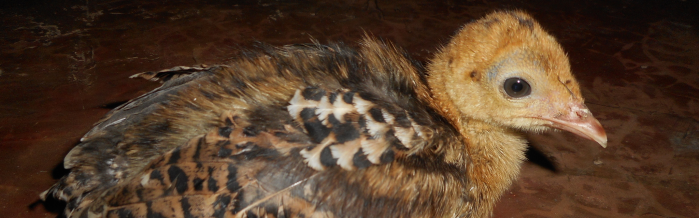
Ocellated turkey chicks are bright yellow underneath and have black down with yellow tips on their backs and wing stubs.
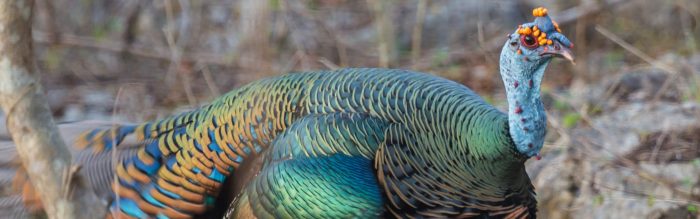
The ocellated turkey was never domesticated as the wild turkey, but they have been kept in captivity and fattened for eating.
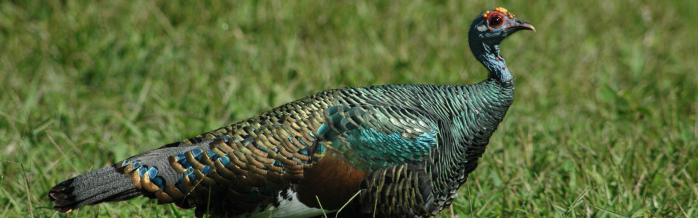
Several zoos in the United States have ocellated turkeys on display, but few have bred the birds successfully.

Ocellated turkeys were valued for Mayan ceremonial banquets and are still eaten by locals today.

The ocellated turkey's vocalization has been written phonetically as “whump-whump-whump—pum-pum-pum-peedle-glunk” or “ting-ting-ting—co-on-cot-zitl-glung."

Nesting season is the only time when ocellated turkeys are associated with heavily vegetated areas, called "bajos".
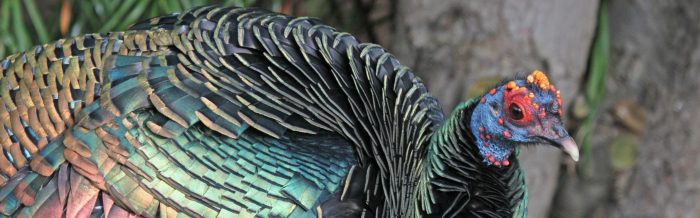
Ocellated turkeys are not nearly as vocal as the other species and subspecies of turkey.

Ocellated turkeys can be found in arid brushlands, savanna, marshland, forests, mature rain forests, and abandoned farmland.
Do you think you know the ocellated turkey? Test your knowledge of ocellated turkey FaunaFacts with this trivia quiz!

Ocellated hens lay an average of 12 eggs, with an average of 6 poults hatching per hen.

Ocellated turkey predators include gray fox, ocelot, margay, raccoon, coati, jaguarundi, tira, cougar, jaguar, birds, & snakes.
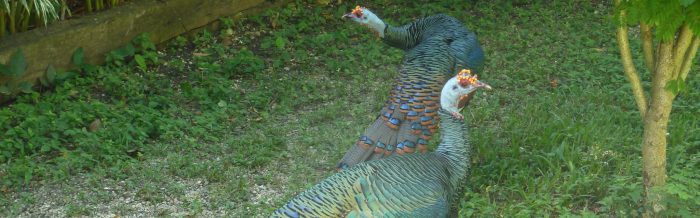
Approximately 70% of ocellated turkey hens and 13% of poults survive the nesting and brood-rearing period.

Much more information is needed regarding the ecology of the ocellated turkey as habitat needs, population dynamics, and management techniques are required to properly conserve this valuable resource.
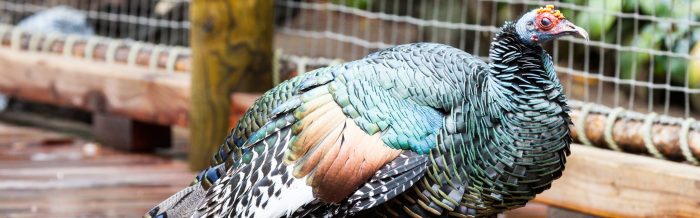
Large scale timbering operations followed by slash-and-burn agriculture are one of the ocellated turkey's primary threats.
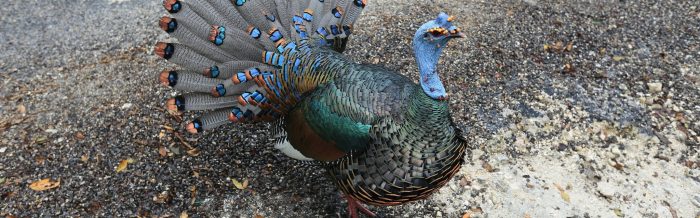
The strutting display of ocellated turkeys is referred to as dancing by the people of Central America.

There appears to be a good correlation of ocellated turkey spur length with age; the longer the spur, the older the turkey.

The ocellated turkey is referred to as pavo and pavo ocelado by Central American locale, and its Mayan Indian name is ucutz il chican.
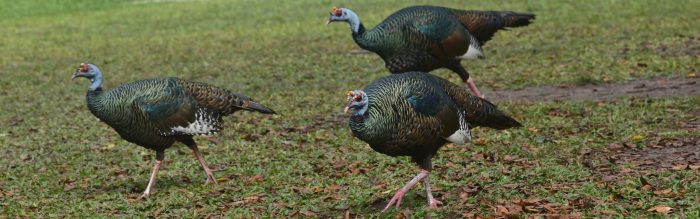
On rare occasions, female ocellated turkeys have been spotted with spurs.
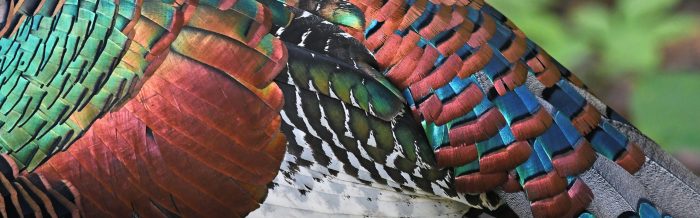
An ocellated turkey's tail spots are similar to a peacock's, causing scientists to once believe it was more related to peafowl.

Legs of adult male ocellated turkeys have pronounced spurs that are longer and more attenuated than those of North American gobblers.

The ocellated turkey only exists in a 50,000 square mile area on the Yucatán Peninsula of Mexico, northern Belize, and the El Petén region of northern Guatemala.