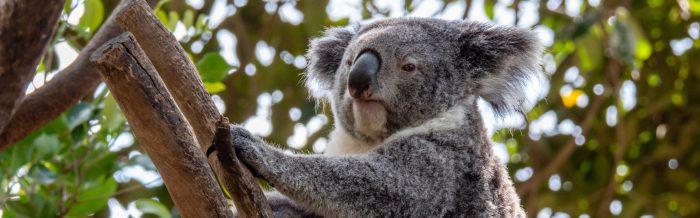
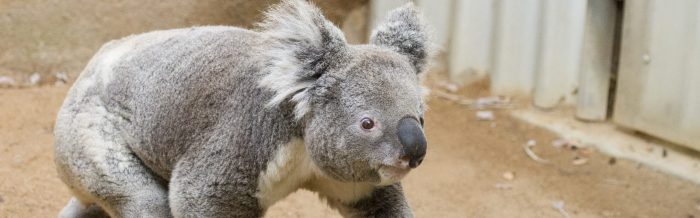
Koalas are completely arboreal, only coming to the ground to move to another tree or to lick up soil or gravel which aids in digestion.
Join a creative community focusing on a unique animal each month.
Koalas are completely arboreal, only coming to the ground to move to another tree or to lick up soil or gravel which aids in digestion.
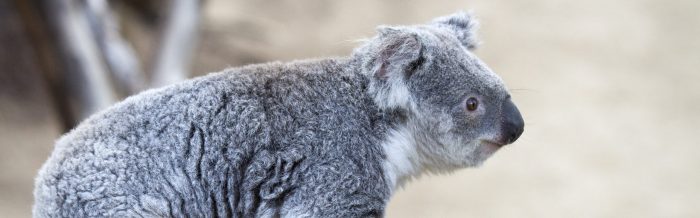
Koalas have dense, wooly fur that varies with geographic location and ears fringed with long, white hairs.

Throughout the month of December, FaunaFocus will be collaborating with WWF and hosting another 24-hour charity host train in order to keep koalas climbing! View the 24-hour schedule featuring 13 different artists!
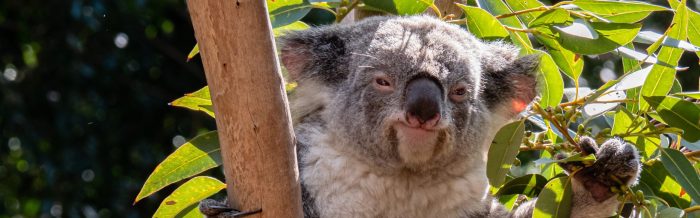
The leaves that koalas feast on are highly toxic, but koalas have a flora of bacteria in their stomachs that metabolize the toxins of the leaves.
Do you think you know the koala? Test your knowledge of koala FaunaFacts with this trivia quiz!
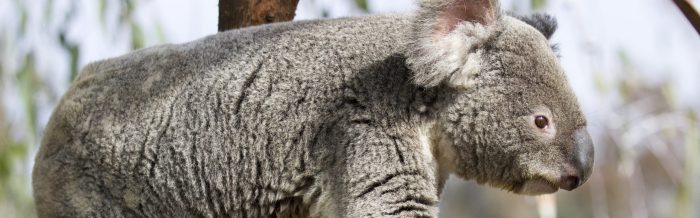
Koalas have a vestigial tail.
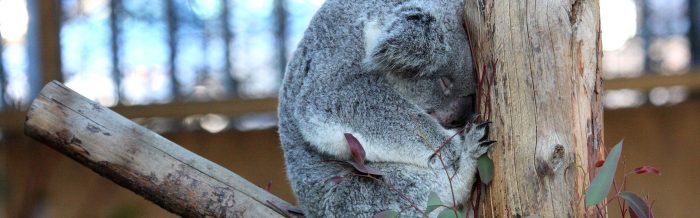
Because of their low-quality diet, koalas conserve energy by their relatively sedentary behavior, moving slowly and sleeping up to 18 hours a day.
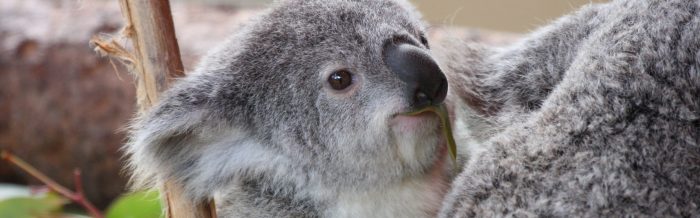
Although koalas are commonly called "koala bears," they are not bears, but instead marsupials in the Diprotodontia order.
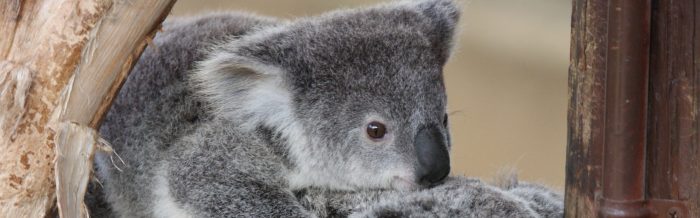
The koala is endemic to Australia and lives in the eastern range from northern Queensland to southwestern Victoria.
Throughout the month of December, FaunaFocus will be collaborating with WWF and hosting another 24-hour charity host train in order to keep koalas climbing!
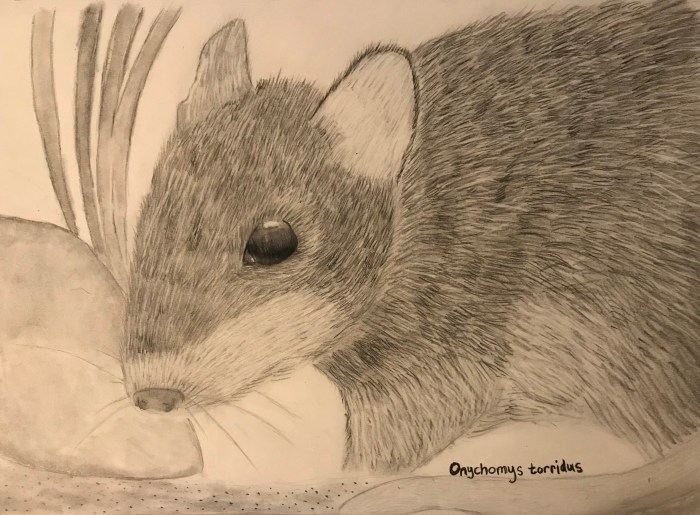
ShadowsFuri used traditional materials to skillfully depict the southern grasshopper mouse’s fine fur. With a desert scene and a close-up composition, this artwork presented a warm scene of an adorable character.
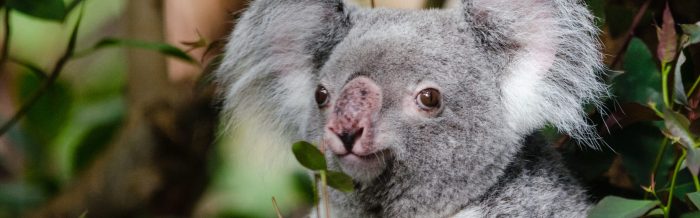
Koalas have a highly specialized, herbivorous diet and only eat 20 of the 350 eucalyptus species, preferring only 5 depending on their geographic location.

As with many rodents, southern grasshopper mice are extremely fertile and difficult to wipe out, even by humans.

The southern grasshopper mouse is fairly common throughout its range, but generally has low population densities due to its short reproductive life and unique testicular pauses.

Predators of the southern grasshopper mouse include raptors, snakes, and predatory mammals.

There are no conservation measures specific to the southern grasshopper mouse, but there are several protected areas within its range.

Young southern grasshopper mice immediately begin nursing from their mother, open their eyes at 2 weeks, and are weaned at 3 weeks.

The southern grasshopper mouse is an extremely aggressive predator and seizes its prey with a rush, killing with a bite to the head.

The southern grasshopper mouse has no specialized physiological adaptations to arid conditions and obtains moisture from food under natural conditions.

Southern grasshopper mice produce a loud, piercing wolf-like howl when faced with an adversary, while standing on their hind legs with their noses pointed upwards.

Female southern grasshopper mice become receptive at 6 weeks and are able to produce up to 6 litters in a year, but their reproductive life is short, few breeding in their second year.

The southern grasshopper mouse is notable for its resistance to venom as it routinely kills and eats Arizona bark scorpions, a species with a highly venomous sting.

The southern grasshopper mouse is not migratory and does not have seasonal movements.

As with all predators, southern grasshopper mice require large territories and guard them fiercely against all intruders.

Although Southern grasshopper mice protect crops from insects and rodents, they will also feast upon crops if their usual prey becomes scarce.

Southern grasshopper mice are capable of breeding year-round, but most reproductive activity occurs during the late spring and the summer.

There is sexual dimorphism displayed in the physiology of the southern grasshopper mouse as females are heavier and longer than males.

The southern grasshopper mouse is usually known to be a monogamous species with both, maternal and paternal, parental investment.

The southern grasshopper mouse is categorized in the order Rodentia and family Cricetidae, but is unique among other North American rodents due to its arthropod-heavy diet.

Southern grasshopper mice are cannibalistic and will kill other members of their species when threatened or in need of food.

The southern grasshopper mouse is listed as "Least Concern" due to its wide distribution, presumed large population, stable population trend, unlikeliness to decline, and no known major threats.

The southern grasshopper mouse nests in small underground burrows that were abandoned or taken by force.