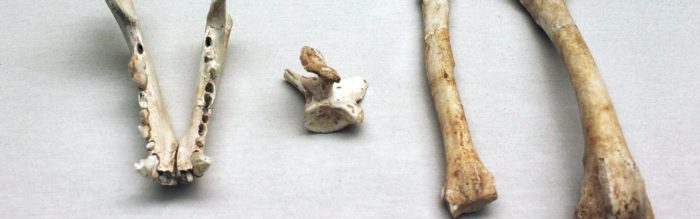
The dhole is 1 of only 3 canid species with specialized dental adaptations for a hypercarnivorous diet, and have a thicker muzzle, shorter jaw, and 2 less molar teeth than other canids.
Join a creative community focusing on a unique animal each month.
The dhole is 1 of only 3 canid species with specialized dental adaptations for a hypercarnivorous diet, and have a thicker muzzle, shorter jaw, and 2 less molar teeth than other canids.

Unlike many other canines, the dhole seldom kills by biting the throat, but instead attacks from the rear.

Every pack member of a dhole pack is reproductively suppressed and instead helps care for the young of the dominant breeding pair.

Dholes have the largest land requirements of any Asian species and prefer open spaces, such as clearings and river beds.

Dholes engage in obligate cooperative group hunting and group care of their young and, of the canids, are most similar to African wild dogs due to their social behaviors.

With fewer than 2,300 mature individuals remaining, the dhole is endangered due to habitat loss, inter-species competition, depletion of prey, persecution, and disease.

Dholes are docile, gentle, communal animals and do not show aggression toward each other.

Each dhole pack contains a dominant monogamous breeding alpha pair.

The dhole is a hypercarnivore, with a diet of at least 70% meat, the majority consisting of deer and other ungulates.

Dholes are highly social animals that live in packs averaging 5-12, but can number up to 40 depending on the ecosystem and prey availability.

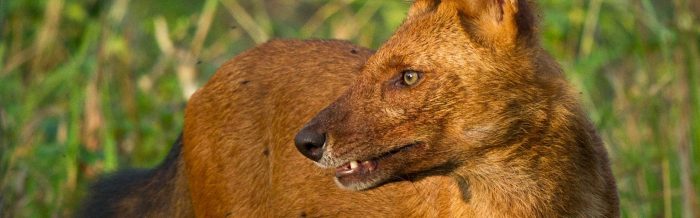
Depending on the region, an adult dhole's pelage may vary from light brownish-charcoal gray to a sandy beige or red coat.

Dholes are known as "whistling dogs" because of their vocal nature and bird-like whistling calls.

The dhole is about the size of a medium-sized dog, and males tend to be larger and heavier than females.

The dhole is the only species in the Cuon genus and is known by many names, though the origin of "dhole" is unknown.

The dhole was originally distinguished as two seperate species of Cuon, but later recognized as a single species, separated into 11, then 3, subspecies.

Dholes are intelligent canines and can be trained to follow commands.
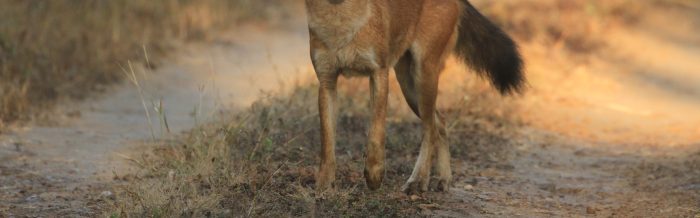
Dholes are great diggers.
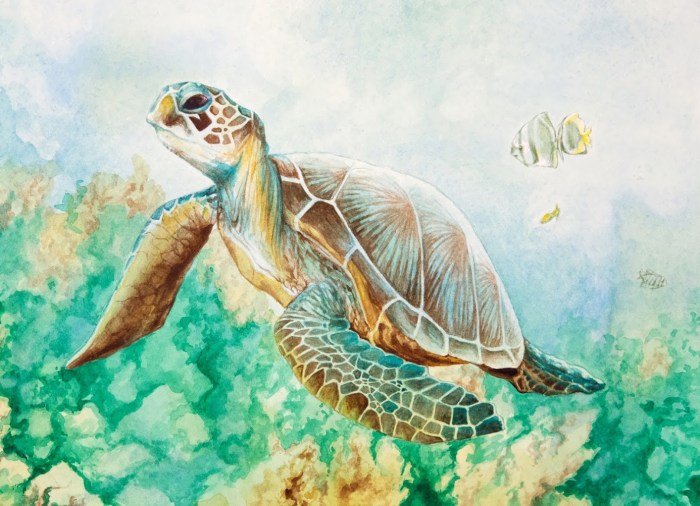
TheMissFox painted an impressive illustration of a green turtle amidst a sea of greens and blues. Mostly depicted in cool colors, the turtle is composed within the sea amongst heavily textured coral and vegetation. Slight accents of yellows and browns allow for warm tones to complement the color scheme and create a harmonious painting altogether.

All 8 species of sea turtles, including the green turtle, are endangered or threatened due to vulnerability to anthropogenic impacts during all life-stages.

Artificial light alters the behavior of nesting green turtles and can be fatal to hatchlings attracted to the light sources instead of the water.
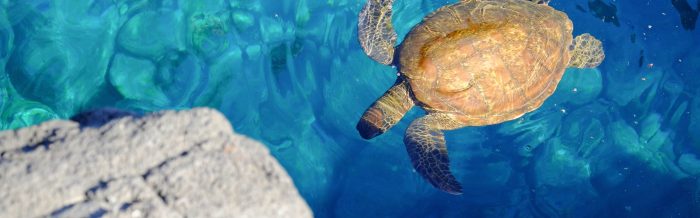
Due to warming climates, 90% of green turtles at the Great Barrier Reef are hatching female.
Do you think you know the green turtle? Test your knowledge of green turtle FaunaFacts with this trivia quiz!
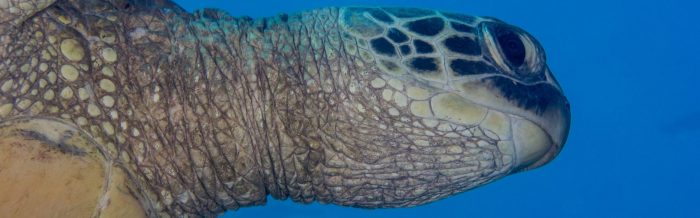
Green turtle copulation can last several hours, with the longest recorded mounting episode lasting 119 hours.

Green turtles use wave propogation direction and magnetic channels to help them navigate.
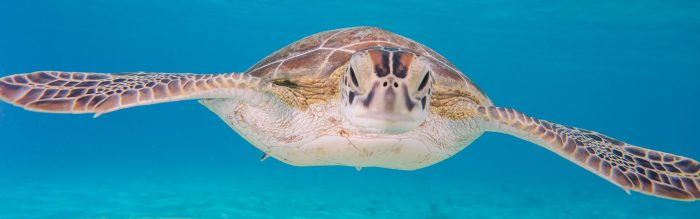
Unlike other sea turtles, green turtles only have one pair of prefrontal scales.

Green turtles primarily use vision to detect plants and prey and use visual displays when communicating, such as during mating.
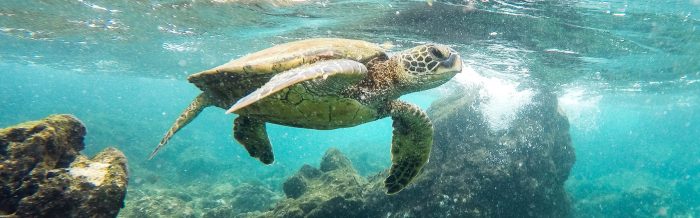
Green turtles are polygynandrous, meaning that females and males will have multiple mates.

Although many countries have laws protecting green turtles, they are poached for their eggs, meat, and shells in areas around the world, such as South East Asia.

Green turtles are black upon hatching, but change color over the course of thier lives.
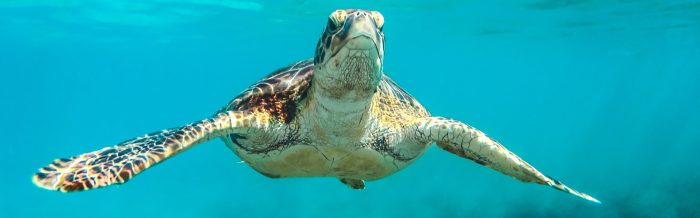
Juvenile green turtles are faster swimmers than other sea turtles because of the way they stroke their foreflippers.

Green turtles suffer from parasitic trematode eggs, known as flukes, that cause inflammation and death.
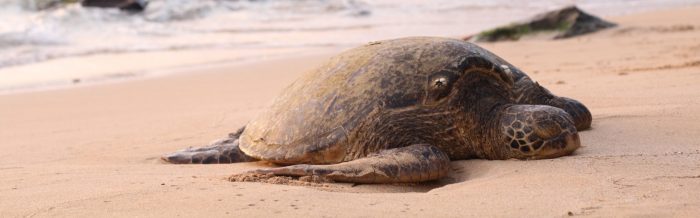
The soft-shelled, white eggs of green turtles take 30-90 days to incubate, taking longer in wet seasons.