Skip to content
  • Get Involved
    • Assets
    • Calendar
    • Contact
    • F.A.Q.
  • Education
    • Fauna
    • FaunaFacts
    • Trivia
  • Inspiration
    • Art
    • Artists
    • Free-For-All
  • Conservation
Przewalski's Horse#FaunaFocus

FaunaFocus

Join a creative community focusing on a unique animal each month.

Author: Noelle M. Brooks

Visual Artist | Commissions Available: noelle@noellembrooks.com
Green Turtle

Green Turtle

Posted on February 15, 2018March 22, 2019 by Noelle M. Brooks in FaunaFacts

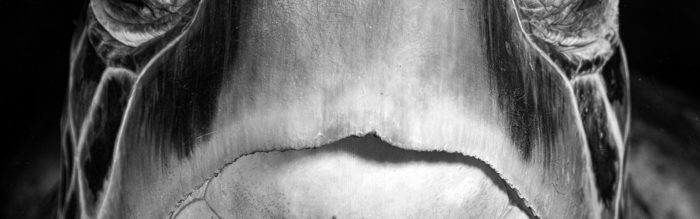
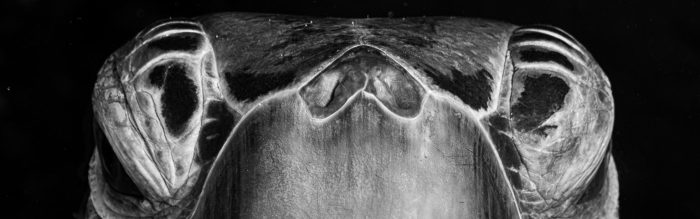
The green turtle has a strong beak and short, serrated jaws that aid in ripping and tearing apart plants.
Tagged Green TurtleLeave a comment
Green Turtle

Green Turtle

Posted on February 14, 2018March 22, 2019 by Noelle M. Brooks in FaunaFacts

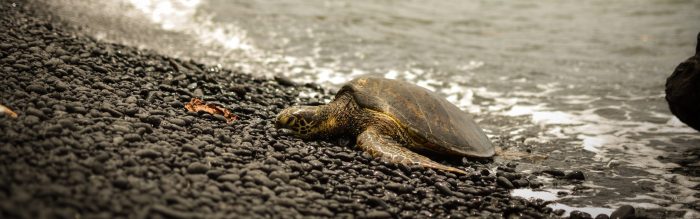
Like many turtles, green turtles' development is affected by temperature. Cooler environments produce more males while warmer nests hatch more females.
Tagged Green TurtleLeave a comment
Green Turtle

Green Turtle

Posted on February 13, 2018March 22, 2019 by Noelle M. Brooks in FaunaFacts

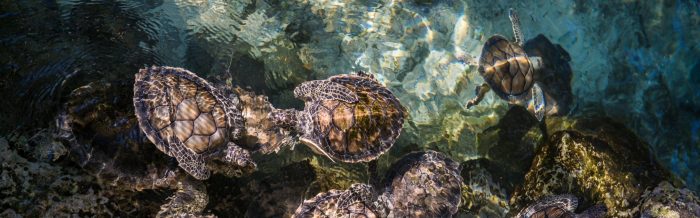
A female green turtle will revisit her birthplace, or a beach with similar sand texture and color, to breed and lay her eggs every 2-4 years.
Tagged Green TurtleLeave a comment
Green Turtle

Green Turtle

Posted on February 12, 2018March 22, 2019 by Noelle M. Brooks in FaunaFacts

Rival green turtles will attack actively mating pairs in order to dislodge the male from the female and take his place.

Tagged Green TurtleLeave a comment
Green Turtle

Green Turtle

Posted on February 11, 2018March 22, 2019 by Noelle M. Brooks in FaunaFacts

Female green turtles have "mating notches" on their shoulders that assist males in grasping and mounting during copulation.
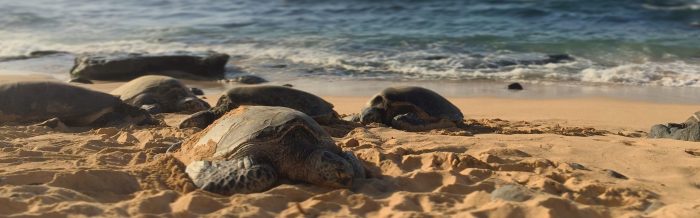
Tagged Green TurtleLeave a comment
Green Turtle

Green Turtle

Posted on February 10, 2018March 22, 2019 by Noelle M. Brooks in FaunaFacts

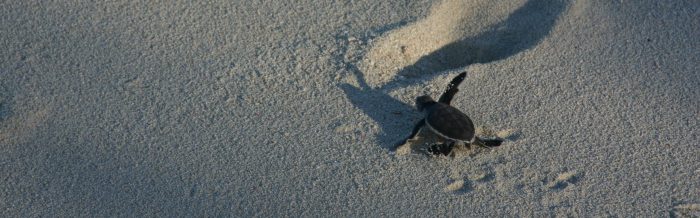
There is no parental investment by green turtles beyond the mother's egg-laying and camouflaging of the nest.
Tagged Green TurtleLeave a comment
Green Turtle

Green Turtle

Posted on February 9, 2018March 22, 2019 by Noelle M. Brooks in FaunaFacts

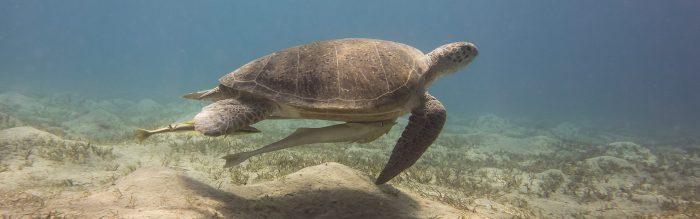
Immediately after juvenile green turtles hatch, they flee to the ocean until they mature and return to their natal beach for mating.
Tagged Green TurtleLeave a comment
Green Turtle

Green Turtle

Posted on February 8, 2018March 22, 2019 by Noelle M. Brooks in FaunaFacts

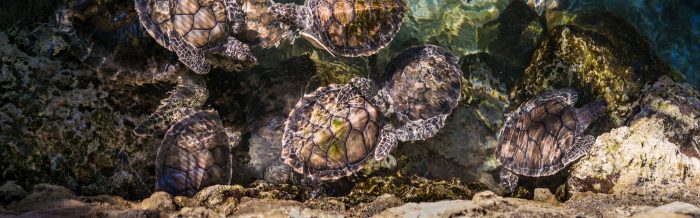
Green turtle hatchlings are at a higher risk of predation than adult green sea turtles.
Tagged Green TurtleLeave a comment
Green Turtle

Green Turtle

Posted on February 7, 2018March 22, 2019 by Noelle M. Brooks in FaunaFacts

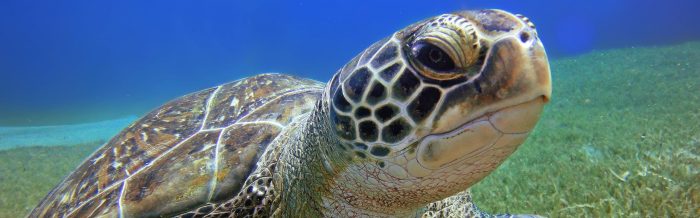
Green turtles are normally solitary, but travel in large groups that usually originate from the same natal beach.
Tagged Green TurtleLeave a comment
Green Turtle

Green Turtle

Posted on February 6, 2018March 22, 2019 by Noelle M. Brooks in FaunaFacts

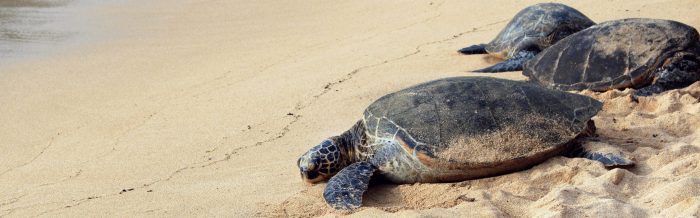
As green turtles graze on sea grass and algae, they play a role in their ecosystem by facilitating nutrient turnover and sea grass regrowth.
Tagged Green TurtleLeave a comment
Green Turtle

Green Turtle

Posted on February 5, 2018March 22, 2019 by Noelle M. Brooks in FaunaFacts

During their summer breeding season, green turtles settle on the beaches of over 140 countries, but are most frequently found on the coastlines of Cyprus and Turkey.

Tagged Green TurtleLeave a comment
Green Turtle

Green Turtle

Posted on February 4, 2018March 22, 2019 by Noelle M. Brooks in FaunaFacts

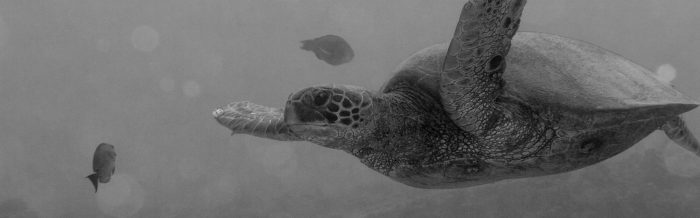
Green turtles use major current systems to migrate to their natal nesting beaches.
Tagged Green TurtleLeave a comment
Green Turtle

Green Turtle

Posted on February 3, 2018March 22, 2019 by Noelle M. Brooks in FaunaFacts

Green turtles begin their lives as omnivores and gradually shift to a more herbivorous diet as they mature.

Tagged Green TurtleLeave a comment
Green Turtle

Green Turtle

Posted on February 2, 2018March 22, 2019 by Noelle M. Brooks in FaunaFacts

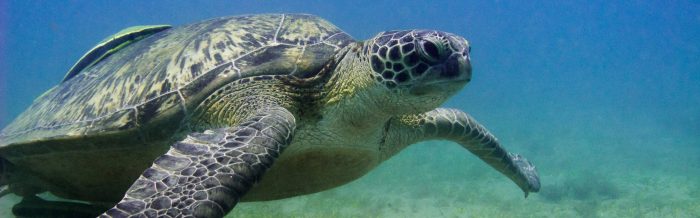
Green turtles are a migratory, cosmopolitan species found in shallow tropical and subtropical waters and coastline beaches within 40 degrees north or south of the equator.
Tagged Green TurtleLeave a comment
Green Turtle

Green Turtle

Posted on February 2, 2018March 22, 2019 by Noelle M. Brooks in FaunaFacts

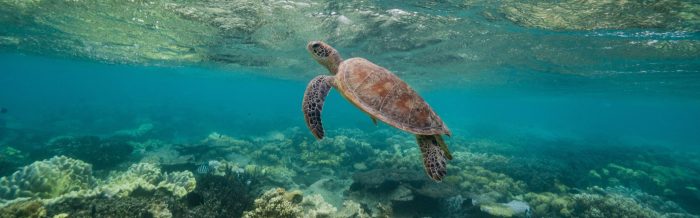
Green turtles are the second largest overall species of sea turtles after the leatherback.
Tagged Green TurtleLeave a comment
Green Turtle

Green Turtle

Posted on February 2, 2018March 22, 2019 by Noelle M. Brooks in FaunaFacts

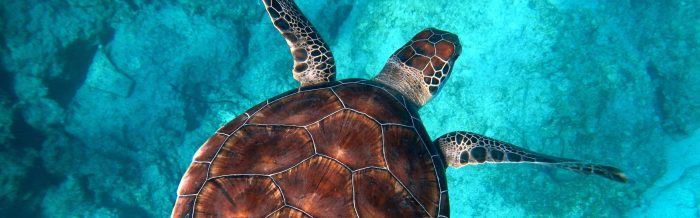
Green turtles maintain home ranges throughout the year, but are not territorial.
Tagged Green TurtleLeave a comment
Green Turtle

Green Turtle

Posted on February 1, 2018March 22, 2019 by Noelle M. Brooks in FaunaFacts

Because green turtles are highly mobile throughout their lives, they are opportunistic feeders.
Tagged Green TurtleLeave a comment
Green Turtle

Green Turtle

Posted on February 1, 2018March 22, 2019 by Noelle M. Brooks in FaunaFacts

There are no known adverse effects of the green turtle on humans.

Tagged Green TurtleLeave a comment
Green Turtle

Green Turtle

Posted on February 1, 2018September 27, 2020 by Noelle M. Brooks in FaunaFacts

Morphological sexual dimorphism isn't completely recognized in green turtles until early adulthood.

Tagged Green TurtleLeave a comment
Green Turtle

Green Turtle

Posted on February 1, 2018March 22, 2019 by Noelle M. Brooks in FaunaFacts

Green turtles are so named because of the greenish color of their subdermal fat.
Tagged Green TurtleLeave a comment
Green Turtle

February 2018: Green Turtle

Posted on February 1, 2018November 10, 2020 by Noelle M. Brooks in FaunaFocus, Updates

Green Turtle (Chelonia mydas)

Tagged Green TurtleLeave a comment
FFA

Free-For-All: Common Palm Civet

Posted on January 31, 2018September 18, 2021 by Noelle M. Brooks in Art, Free-For-All, Updates

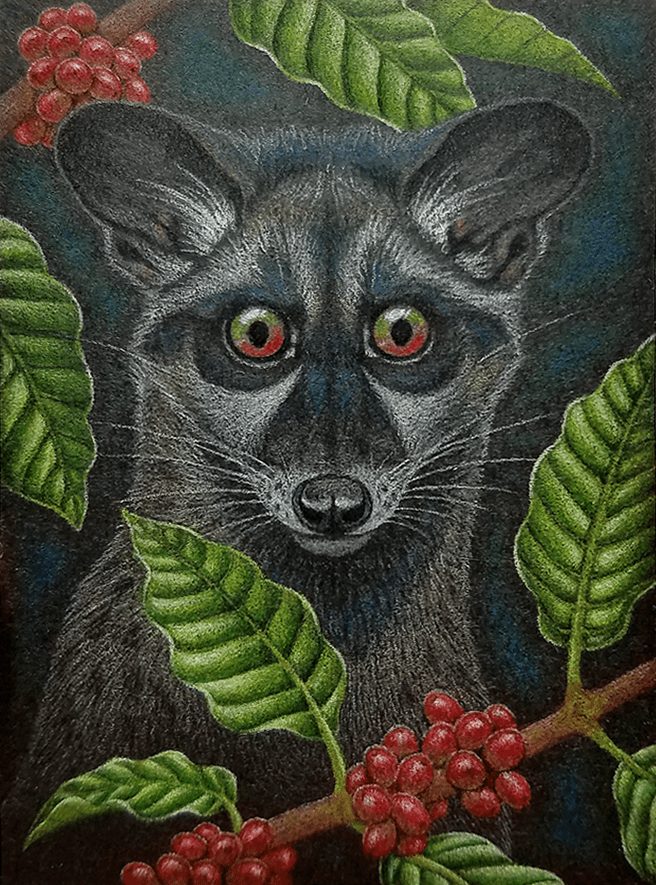
Shane S. (Yodeldog) created a small 2.5″x3.5″ artist trading card featuring the common palm civet amongst branches full of lush coffee cherries. Drawn with Prismacolor colored pencils on a dark background, this artwork displays a carefully constructed composition made up of a rich level of detail.
Tagged Common Palm CivetLeave a comment
Common Palm Civet

Common Palm Civet

Posted on January 31, 2018March 22, 2019 by Noelle M. Brooks in FaunaFacts

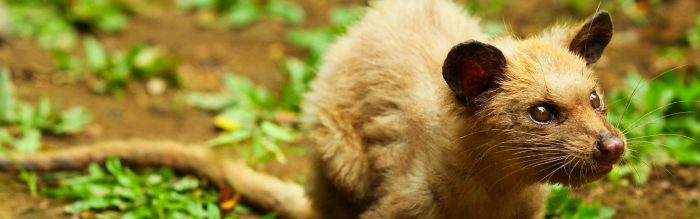
Common palm civets can live in a variety of habitats including forests, parks, gardens, plantations, and orchards.
Tagged Common Palm CivetLeave a comment
Common Palm Civet

Common Palm Civet

Posted on January 30, 2018September 30, 2020 by Noelle M. Brooks in FaunaFacts

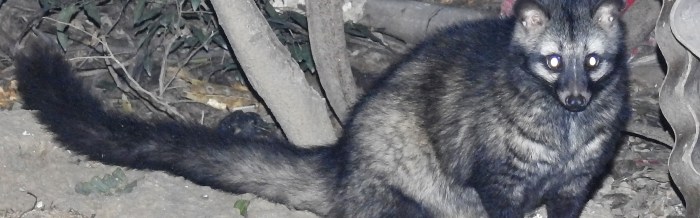
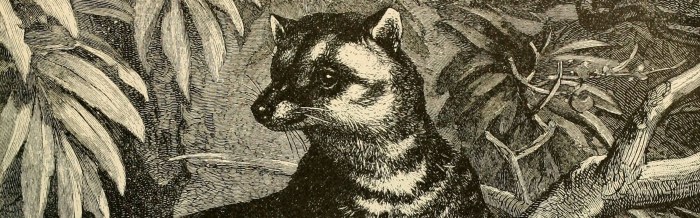
Common palm civets have short, coarse coats of black, gray, and white, however, juveniles lack their distinguishing markings.
Tagged Common Palm CivetLeave a comment
Common Palm Civet

Common Palm Civet

Posted on January 29, 2018March 22, 2019 by Noelle M. Brooks in FaunaFacts

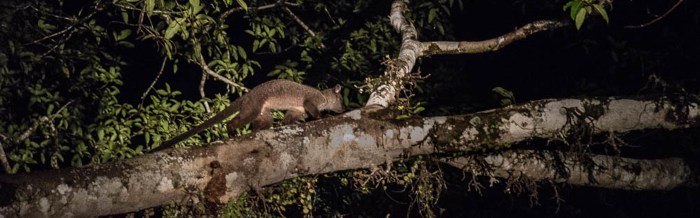
Where common palm civets choose to live depends on the availability of food and presence of coverage.
Tagged Common Palm CivetLeave a comment
Common Palm Civet

Common Palm Civet

Posted on January 28, 2018March 22, 2019 by Noelle M. Brooks in FaunaFacts

Common palm civets are arboreal and prefer the tallest trees with the densest of canopies for seclusion.

Tagged Common Palm CivetLeave a comment
Common Palm Civet

Common Palm Civet

Posted on January 27, 2018March 22, 2019 by Noelle M. Brooks in FaunaFacts

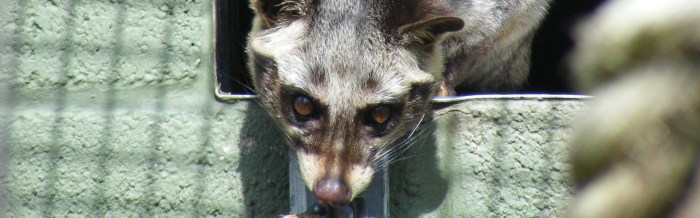
Common palm civets live longer in captivity, living as long as 24 years compared to 15-20 in the wild.
Tagged Common Palm CivetLeave a comment
Common Palm Civet

Common Palm Civet

Posted on January 26, 2018October 4, 2021 by Noelle M. Brooks in FaunaFacts

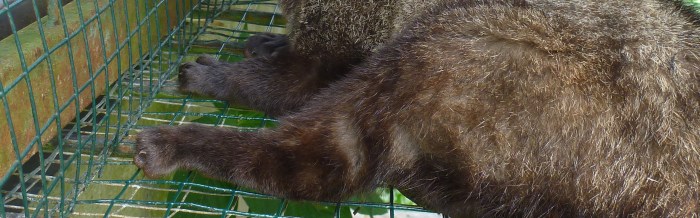
Little is known about parental investment in common palm civets since the young remain in tree hollows until after they are weaned.
Tagged Common Palm CivetLeave a comment
Common Palm Civet

Common Palm Civet

Posted on January 25, 2018September 30, 2020 by Noelle M. Brooks in FaunaFacts

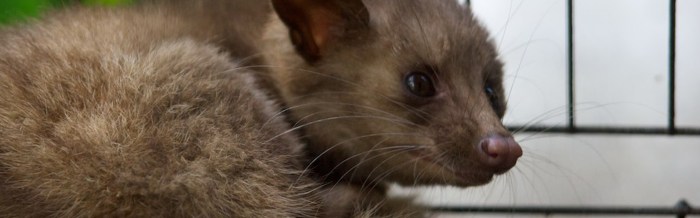
Common palm civets are called Paradoxurus hermaphroditus because both males and femals have a perineal scent gland resembling testicles.
Tagged Common Palm CivetLeave a comment
Common Palm Civet

Common Palm Civet

Posted on January 24, 2018March 22, 2019 by Noelle M. Brooks in FaunaFacts

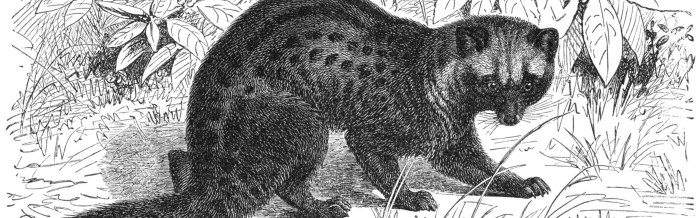
Common palm civets produce a sweet-smelling musk that humans use as perfume and to treat scabies.
Tagged Common Palm CivetLeave a comment
Common Palm Civet

Common Palm Civet

Posted on January 23, 2018March 22, 2019 by Noelle M. Brooks in FaunaFacts

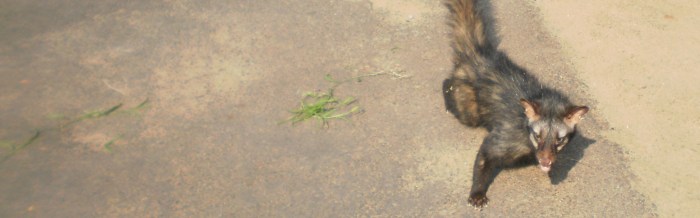
The common palm civet has a wide distribution in South and South-East Asia from Afghanistan in the west to Hainan and the adjacent Chinese coast in the east.
Tagged Common Palm CivetLeave a comment
Common Palm Civet

Common Palm Civet

Posted on January 22, 2018October 4, 2021 by Noelle M. Brooks in FaunaFacts

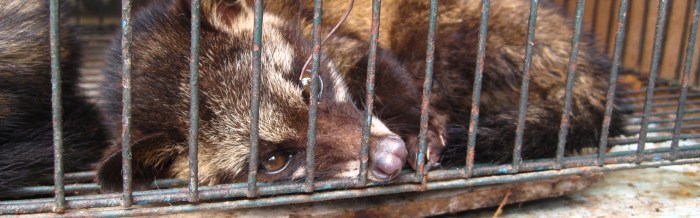
Common palm civets are considered nuisances and are frequently killed or removed by plantation and orchard owners.
Tagged Common Palm CivetLeave a comment
Common Palm Civet

Common Palm Civet

Posted on January 21, 2018March 22, 2019 by Noelle M. Brooks in FaunaFacts

Common palm civet is a large part of the general mammal harvest for eating for subsistence and luxury restaurants in South-East Asia.

Tagged Common Palm CivetLeave a comment

Posts navigation

Older posts
Newer posts
  • Twitter
  • Instagram
  • DeviantArt
  • Discord
  • Twitch
  • YouTube
  • Patreon
  • RedBubble
FaunaFocus

Join a creative community focusing on a unique animal each month. Create art and share it with #FaunaFocus.

This work is licensed under a Creative Commons Attribution 4.0 International License.
Creative Commons License

  • Free-For-All: Deadline March 27, 2026 at 12:00 pm – 12:00 pm faunafocus.com/ffa
  • Free-For-All: Livestream March 28, 2026 at 7:00 pm – 8:30 pm twitch.tv/team/faunafocus
  • Free-For-All: Results March 31, 2026 faunafocus.com
Create a website or blog at WordPress.com
  • Subscribe Subscribed
    • FaunaFocus
    • Join 118 other subscribers
    • Already have a WordPress.com account? Log in now.
    • FaunaFocus
    • Subscribe Subscribed
    • Sign up
    • Log in
    • Report this content
    • View site in Reader
    • Manage subscriptions
    • Collapse this bar
 

Loading Comments...