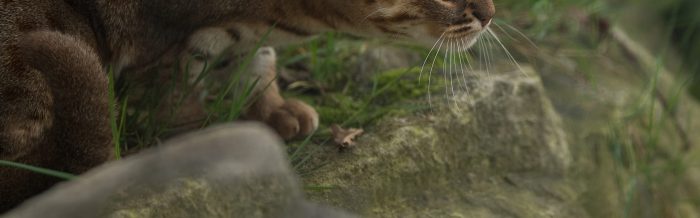
Female rusty-spotted cats prefer to give birth in low-level areas such as within hollow trees or under rock cliffs.
Join a creative community focusing on a unique animal each month.
Female rusty-spotted cats prefer to give birth in low-level areas such as within hollow trees or under rock cliffs.
Rusty-spotted cats are "Near Threatened" as less than 10,000 are estimated to remain with no subpopulations with more than 1,000 breeding individuals.

Although the rusty-spotted cat doesn't fare well in captivity and only a few are held in zoos, observations from the West Berlin Zoo and Frankfurt Zoo have helped provide information about this species.
The mating system of rusty-spotted cats hasn't been explicitly studied; their closest relatives, leopard cats, suggest they may be polygynous, but zoo observations suggest monogamy.
Because they are largely carnivorous, rusty-spotted cats play a role in controlling populations of small vertebrates.

Most interactions between mother rusty-spotted cats and their young are play-oriented which is crucial to locomotion development.

The main threat of the rusty-spotted cat is habitat loss and deforestation characterized by a decline in natural forest environments and an increase in agricultural areas.
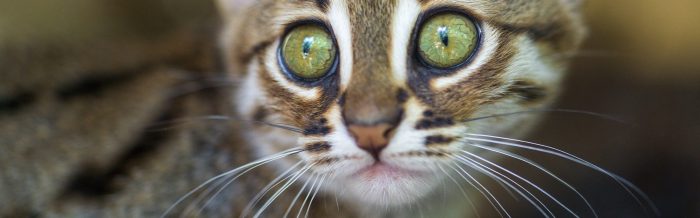
The gestation period of the rusty-spotted cat lasts between 65-79 days and each litter has 1-3 offspring.

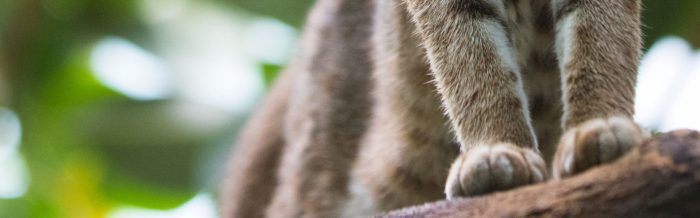
Rusty-spotted cats are solitary animals that are mostly terrestrial, but have arboreal tendencies as they are active, agile, and good at climbing.
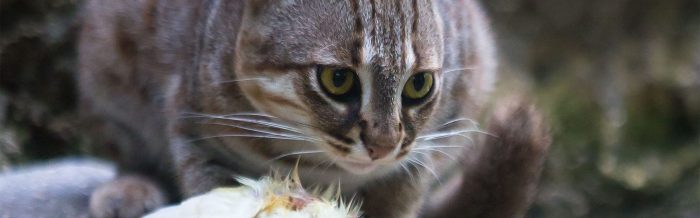
The rusty-spotted cat's diet isn't properly documented, but they're known to be largely carnivorous and eat rodents, poultry, birds, insects, lizards, frogs, and other small mammals.
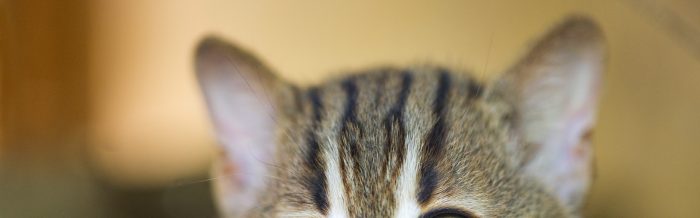
Rusty-spotted cats mate year-round, but 50% of their young are born between July and October.

Rusty-spotted cat communication is scent-oriented and both male and females spray urine for scent-marking.
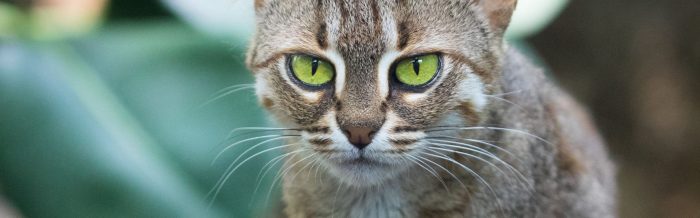
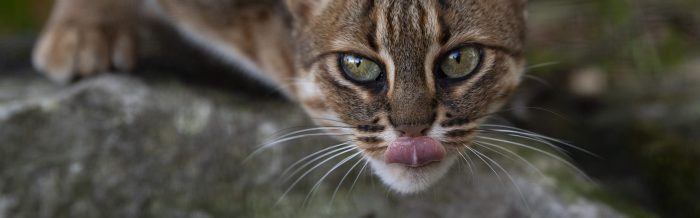
The rusty-spotted cat has relatively large eyes, which may be an adapatation to its seemingly nocturnal behavior.
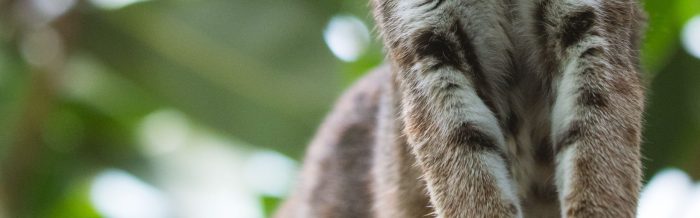
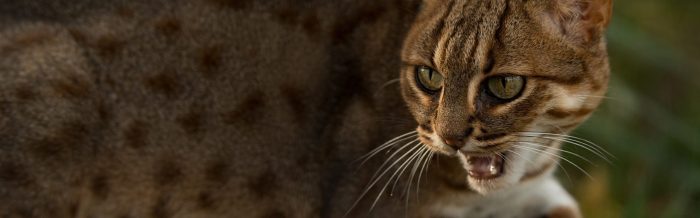
Rusty-spotted cats have short, brownish gray coats with a rusty tinge, but the Sri Lankan supspecies is less gray and more of a russet color.
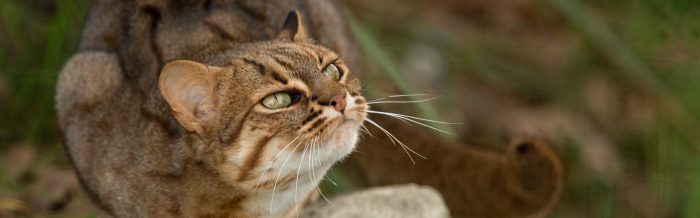
The mating activity of the rusty-spotted cat lasts from 1-11 days and includes nape biting and straddling.
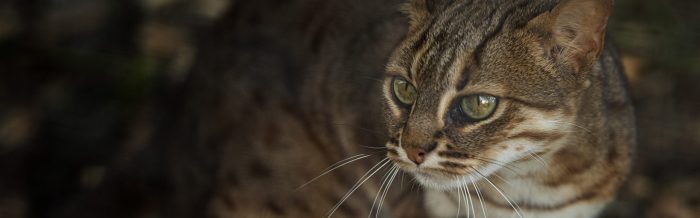
Three subspecies of the rusty-spotted cat are recognized.
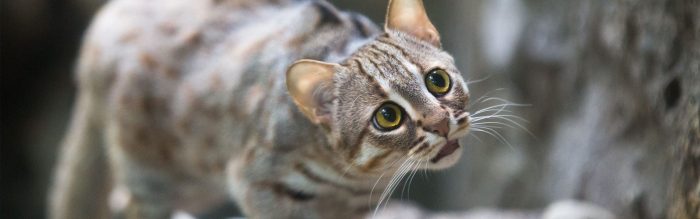
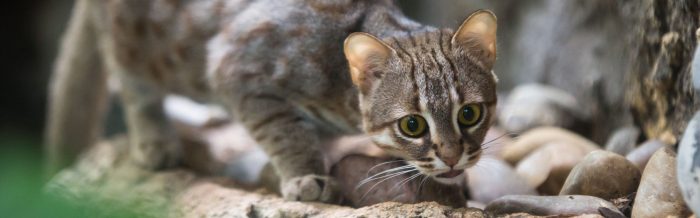
At about half the size of a domestic cat, the rusty-spotted cat is considered the smallest cat species.

Arvemis created a unified composition of a lemur resting on a tree branch. This digital illustration blended the warm brown tones of the lemur and branches with the cool tones of the foliage surrounding them to create a pleasantly calming color palette. With a dappled lighting effect, the entire scene was painted with a soft, warm light that highlighted the bright fur of the lemur. With a curled, striped tail, the lemur allows the viewer to focus on its detailed face, move down along the composition, and return to the main focal point.

A newborn ring-tailed lemur relies completely on its mother until five months of age and will ride on her underbelly or back until then.
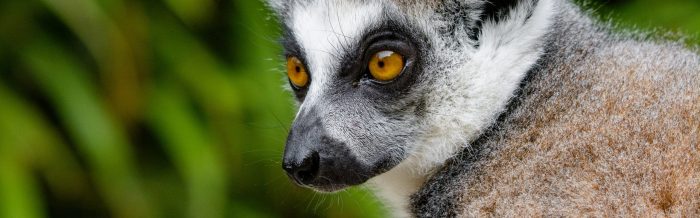
Due to habitat loss and limited resources, ring-tailed lemurs typically live to 16 years, though the oldest lived to 33 years in captivity, and females live longer than males.
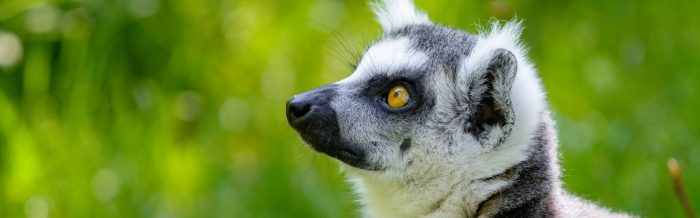
Ring-tailed lemurs are sympatric with 9 other primates within their range, but there is little direct competition for food, even during the dry season when resources are limited.

Ring tailed lemurs use scent in a variety of social contexts and will "handstand" and engage in "stink battles" in order to leave visual and olfactory signs.

Ring-tailed lemurs have long, narrow, specialized teeth in their lower jaws that project straight forward to form a dental comb to aid in grooming.
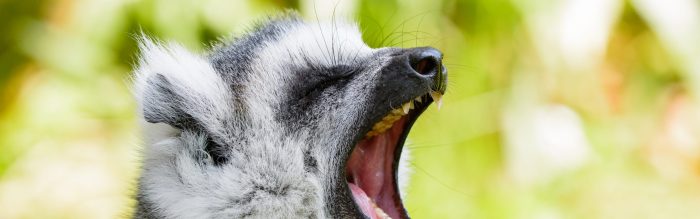
Ring-tailed lemur communication is complex as they utilize visual, vocal, olfactory, and tactile communication.
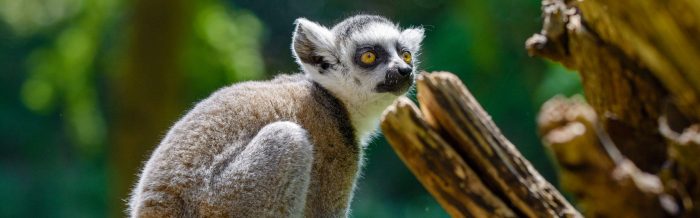
There is a high infant mortality rate in ring-tailed lemurs as 30-50% don't survive their first year.
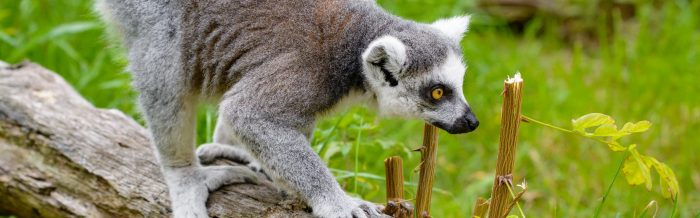
Ring-tailed lemurs travel in troops to deter predators that hunt singular prey, but are still predated by birds, fossas, civets, cats, snakes, and even other lemurs.

In the driest parts of the ring-tailed lemur's range, water availability is a serious issue as vegetation availability is linked to rainfall.
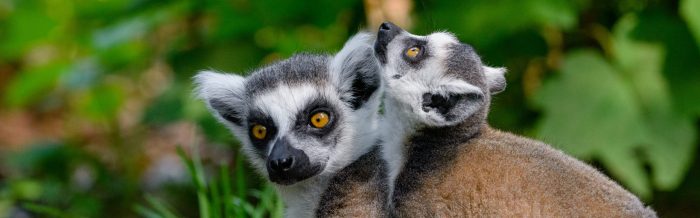
Mother ring-tailed lemurs are the only ones to provide care for the young and will even care for the offspring of other females in the troop.
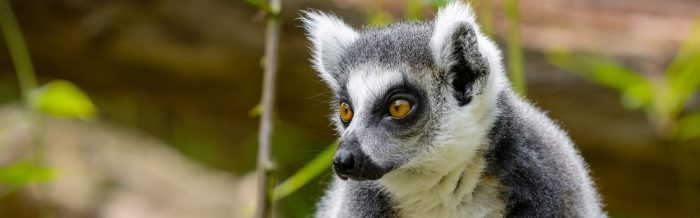
Ring-tailed lemurs contribute to the ecosystem by spreading seeds through their feces and acting as a food source for numerous animals.
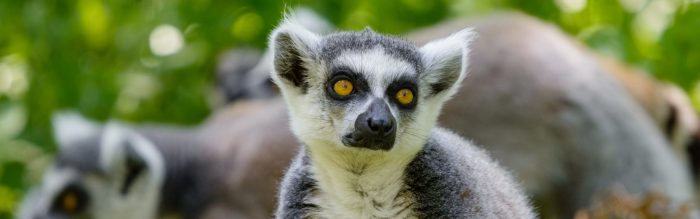
Female ring-tailed lemurs are reproductively active at 2.5 years, but have a higher chance of conceiving and giving birth to healthy offspring at 3-4 years.

The tamarind tree is considered a keystone resource for ring-tailed lemurs and can provide up to 50% of the lemur's diet.
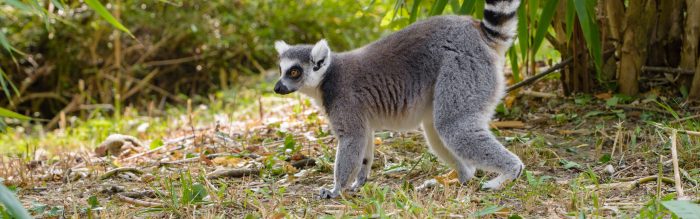
Ring-tailed lemurs are the most terrestrial of lemurs; 70% of their travel is terrestrial as they walk quadrupedally with their tails held vertically.