African penguins feed on up to 18 species of crustaceans, primarily on small shoaling pelagic fish.
Join a creative community focusing on a unique animal each month.
African penguins feed on up to 18 species of crustaceans, primarily on small shoaling pelagic fish.

African penguins are largely resident, but some movements occur in response to prey movements.

African penguin courtship involves visual and auditory displays, such as head-swinging, neck extensions, harsh vocal calls, and bowing.
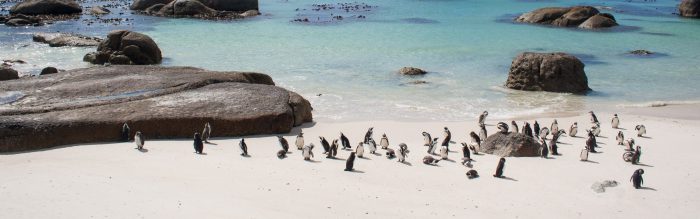
African penguins are marine and usually found within 40 km of the coast, but can remain at sea for up to 4 months.
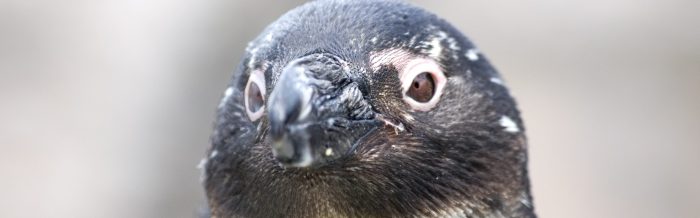
At 2-4 months, juvenile African penguins leave the colony and later return to breed at 4-6 years.
African penguins breed throughout the year with peak months varying locally.

African penguins gather in breeding areas, called "rookeries," that range from flat, sandy islands with varying degrees of vegetation to steep, rocky islands with little foliage.
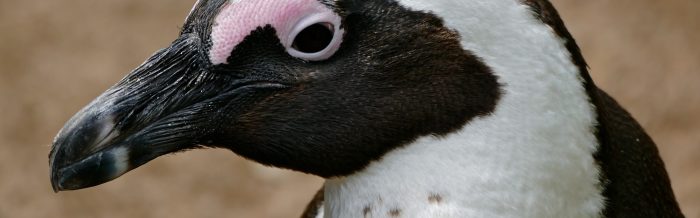
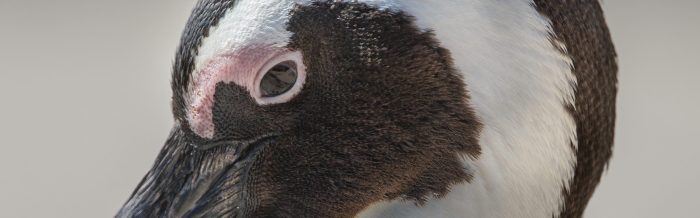
African penguins have white, bare skin over their eyes that becomes bright pinkish-red in very hot conditions.

While foraging for food, African penguins leave their hatchlings in crèches, characteristic groups common to birds that breed in colonies.

Fighting between African penguins occurs occasionally and involves the beating of wings and biting.
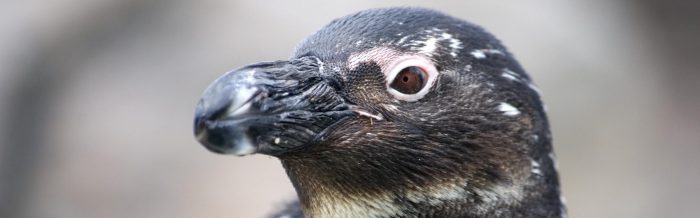
African penguins are susceptible to four types of blood parasites.
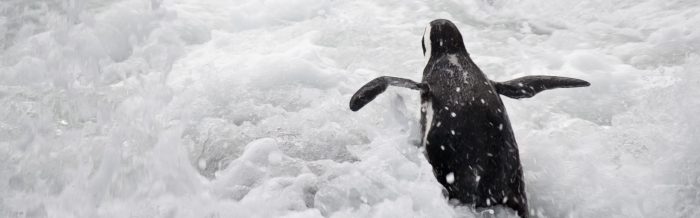
African penguins are diurnal and spend much of the day feeding in the water.
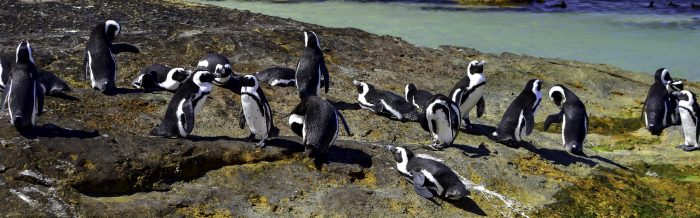
African penguins are social creatures that live in large colonies of up to 2,000, on the rocky coastlines of southwest Africa.
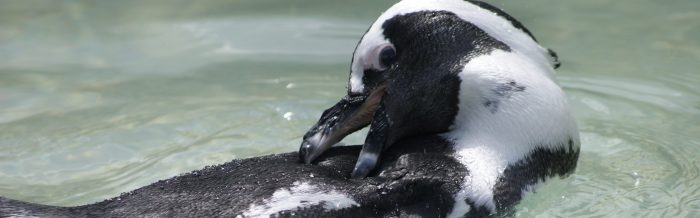
African penguins cannot easily preen their own heads and necks, and as such, participate in allopreening, or the preening of each other.

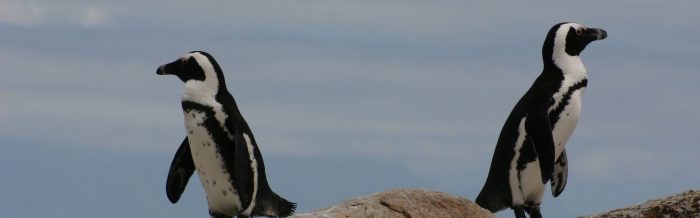
The African penguin is the only penguin species found on the African continent.
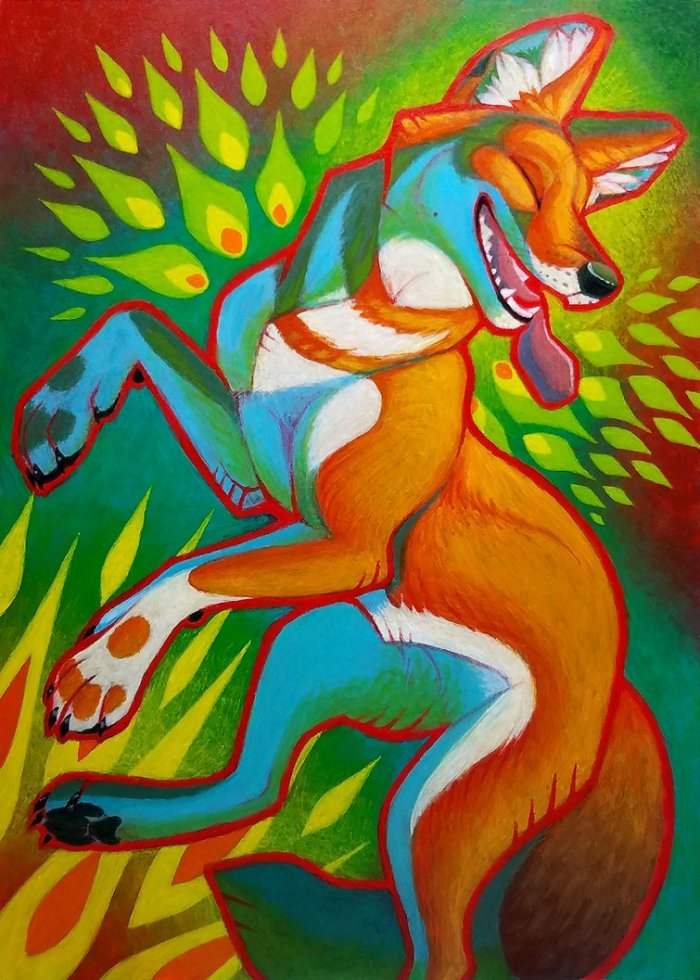
Shane S. (Yodeldog) painted an ecstatic and vibrant depiction of a dancing dhole loving life and surrounded by a rainbow of colors. Inspired by the Hopi Festival that takes place in India, a natural habitat for the Indian wild dog, this piece highlighted the culture that surrounds this animal in a pleasing and stylized fashion. With neon hues and graphic shapes, this piece was skillfully composed and clearly demonstrated joy.

Researchers are utilizing GPS collars to track movement patterns and population trends of wild dholes.

People from the jungles of Asia will follow hunting dholes and steal their captured prey as a food source.

Dholes use body language to communicate, such as wagging their tails or greeting each other by snapping at one another.
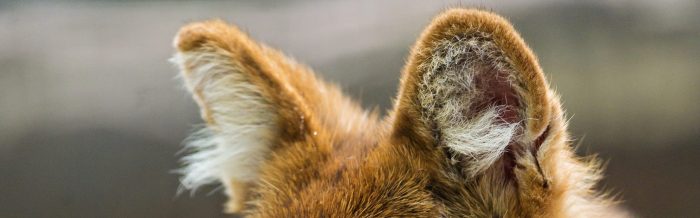
Dholes are so uniformly marked that it's difficult to identify individuals and distinguish between sexes.

Historically, dholes have had a poor reputation, leading to conflicts with humans, such as intentional poisonings and the stealing of their prey.

An adult dhole can eat up to 4 kilograms, or 8.8 pounds, of meat in one hour.

In order to help the endangered dhole, San Diego Zoo Global has been breeding pups since 2001, with 20 having been born to 4 mothers.

Dholes have clear hierarchy in their packs and feed in order of dominance, allowing pups to eat first, unlike wolves.
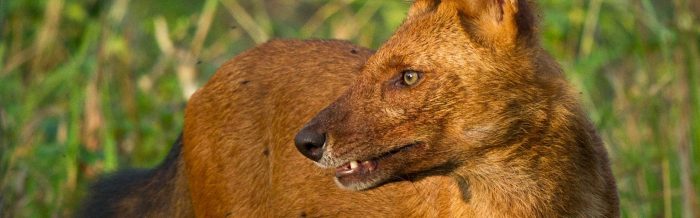
Dholes are sensitive animals, skittish to the point of potentially overheating under stress.

Dhole immediately disembowel their prey and feast while the animal is still alive, causing it to die from blood loss and shock, rather than the actual attack.

Female dholes have more teats than other canids in order to raise larger litters of up to 16 pups.
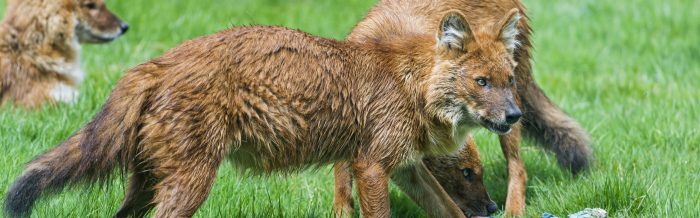
Dholes are effective when hunting in packs and can kill a 110 pound deer in less than 2 minutes with just 2-3 hunters.
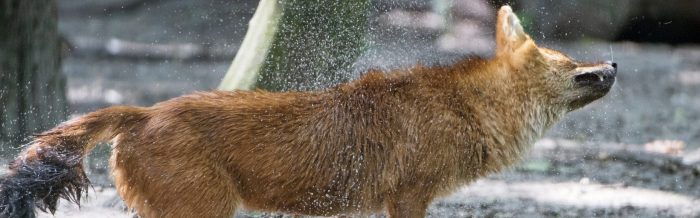
Dholes are fond of water and sit in shallow pools of water regardless of the temperature.

The dhole's area of occupancy in Asia has significantly declined 50% since 2008.

Dholes are born a sooty brown color and acquire their distinctive red coat at three months of age.
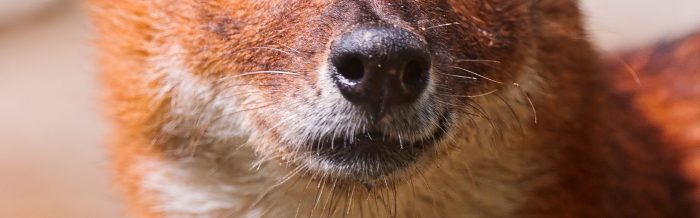
Dholes compete with larger apex predators for prey and space and have been witnessed stealing kills from tigers and even killing the big cat.